
Initial assessment

Maydell Law · Lawyer in Vienna

Blog posts

Category Archives: Vehicle law

Hyundai Bayon: dealer denied a defect, court expert measures abnormal quiescent current
Four failures to start after battery discharge, three replacement batteries and a new control unit: why an intermittent electronic fault became objectively visible only through sufficiently long quiescent-current measurements.

Modern vehicle faults cannot always be reproduced during a brief workshop check. A car may start normally on the inspection day yet have a significant electronic defect, particularly one appearing only after two or three weeks parked.

This is the issue in ongoing proceedings from my practice involving a Hyundai Bayon Trendline 1.0 T-GDi DCT first registered in 2022. After longer periods parked, the starter battery repeatedly discharged so far that the car would not start. Dealer and importer denied a technical defect. The court-appointed vehicle expert's written report reaches a different conclusion.

Two perspectives, one case. As a lawyer and trained motor mechanic, I assess workshop records, measurements and expert evidence legally and technically.

Four flat batteries, three replacements and a control unit

The Bayon was bought new in 2022 with twenty kilometres. At the court expert's inspection in July 2026, it had covered 44,502 kilometres. The records show four similar incidents:

  • February 2023: failure to start after a longer standstill; battery replaced.
  • January 2024: the same problem; battery and battery sensor replaced.
  • January 2025: another battery failure; third replacement battery.
  • January 2026: battery flat again; fuses and wiring checked, and the Integrated Body Control Unit, a fuse box with integrated control unit, replaced.

The buyer requested cancellation out of court. The dealer refused and offered a newer-generation battery free of charge. In proceedings, dealer and importer argued that the vehicle currently worked properly and mere concern about future failures was not a warranty defect.

Why a short battery test is insufficient

Regular driving recharges the starter battery. Excessive or unstable quiescent current can therefore remain unnoticed until a longer standstill leaves the battery discharged, even if it previously tested as serviceable.

The question is not only whether the battery is healthy, but whether the vehicle electronics correctly enter sleep mode after parking and reach a stable resting current.

Measurements: up to 80 mA rather than a stable resting value

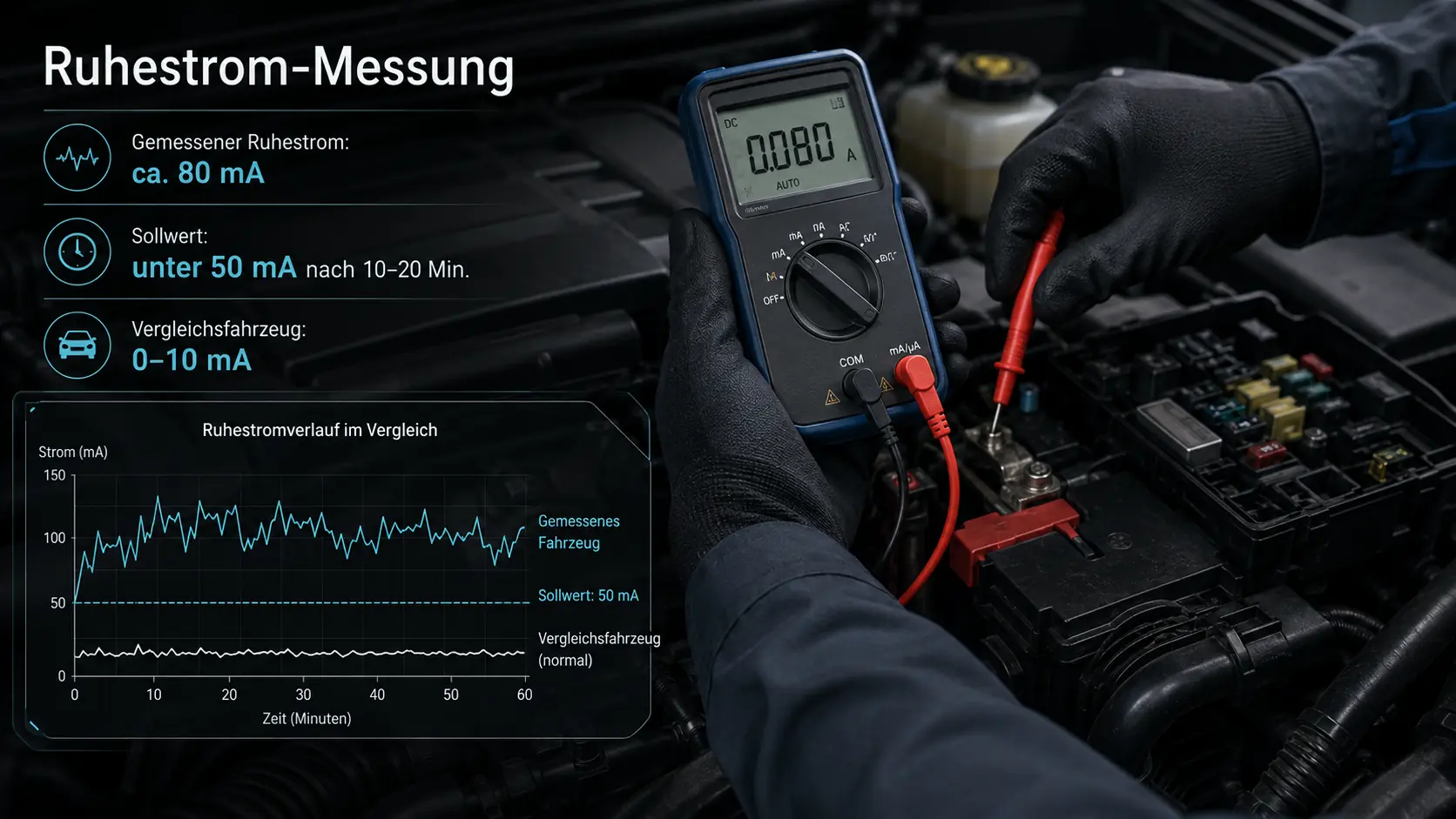
The vehicle had a 12-volt, 45 Ah, 450 A starter battery. Initial voltage was 12.26 V and the fault memory recorded low battery voltage. Technical documents used during the inspection specified quiescent current below 50 mA after approximately ten to twenty minutes.

Measurement time / instrument Affected vehicle Comparison vehicle
After about 5 minutes 19–80 mA, fluctuating —
After 30 minutes 24–79 mA, fluctuating —
After about 45 minutes 22–80 mA, fluctuating —
Second instrument, after about 15 minutes 10–60 mA; repeatedly 50–60 mA —
After about 10 minutes — 0–10 mA, then stable

Measurements from the written vehicle expert report submitted in the proceedings.

The comparison was especially informative: another petrol-engined Hyundai Bayon settled at 0–10 mA after about ten minutes and remained stable. The affected vehicle continued fluctuating, at times reaching 80 mA even after an extended period.

The expert confirms an electronic defect

Based on these measurements and the comparison vehicle, the court expert found an electronic defect. Values partly exceeded tolerance, and fluctuations between 19 and 80 mA were technically inconsistent with proper quiescent current.

The written report has not yet conclusively identified the component causing the fluctuations. Establishing a defect technically requires objective departure from proper condition; locating the exact source may remain important for a later repair.

Why the problem had not recently reappeared

At inspection, the owner reported no further starting problems since January 2026. The vehicle was now used regularly rather than left in the garage for fourteen days or three weeks. The expert considered this consistent with the measurements: regular driving recharges the battery and can temporarily conceal the consequences of abnormal quiescent current.

Was the battery the cause or only the consequence?

A starter battery can itself be defective. But when the same pattern returns over several years despite repeated replacements, the cause of discharge must be systematically investigated. Replacing the battery restores starting temporarily but does not fix another electrical consumer or control fault imposing an excessive load while parked.

This demonstrates the importance of sufficiently long measurements. “It drives and starts now” does not exclude an intermittent electronic defect.

The report is not yet a judgment

The 2022 consumer purchase falls under the Austrian Consumer Warranty Act (VGG). Repair or replacement generally comes first. A price reduction or cancellation is available under section 12 VGG where the relevant conditions are met, for example if restoration to a defect-free condition fails, is not performed or cannot reasonably be expected of the consumer. Cancellation is excluded for a merely minor defect.

Four repairs were carried out here. The court must assess all circumstances to determine whether cancellation is justified. The expert report answers the central technical question in the buyer's favour but does not predetermine the legal outcome.

What buyers should document after repeated battery discharge

  • date, mileage and length of the preceding standstill;
  • roadside assistance reports and whether jump-starting was needed;
  • all repair orders and workshop invoices;
  • battery tests, quiescent-current measurements and fault-memory records;
  • all replaced batteries, sensors and control units;
  • written workshop statements about the suspected cause.

If the problem returns after battery replacement, do not hastily assume another isolated battery failure. Investigate whether an electrical consumer or vehicle control system is responsible.

Conclusion: measurements can reveal an invisible defect

Intermittent electronic faults are especially frustrating: the car works at the workshop, the fault memory may offer no clear clue, and a replacement battery initially appears to solve everything. Weeks or months later, it is flat again.

This case shows that sufficiently long measurements and direct comparison with a technically normal vehicle can make a disputed fault objectively measurable.

If your battery repeatedly discharges and the dealer or workshop finds no defect, a combined legal and technical assessment is worthwhile.

Free initial assessment

As a lawyer and trained motor mechanic, I review both aspects. Send the purchase contract, repair orders and available battery tests, quiescent-current measurements or expert reports for a free initial telephone assessment.

I look forward to hearing from you.

Mag. Patrick Maydell, LL.M.
Attorney at Law
Neustiftgasse 17/1/9
A-1070 Vienna
Telephone: +43 1 295 4251
Email: office@maydell-law.at

Categories: Vehicle law

Tags: Car purchase, Battery discharge, Dealer warranty, Quiescent current, Car purchase rescission

Usage compensation when reversing a car purchase: a formula worth thousands of euros

As a lawyer and trained motor mechanic, I am frequently asked about usage compensation. When returning a seriously defective car and seeking a refund, buyers are often shocked by the dealer's substantial deduction for kilometres already driven.

The calculation can make a difference of several thousand euros. Without knowing the case law and formula, buyers often accept excessive deductions proposed by dealers or insurers.

Why is usage compensation payable?

When a purchase is reversed, whether under warranty law or for mistake, each side returns what it received: the buyer the car and the seller the price.

Use of the vehicle has consumed some of its value. The Supreme Court therefore regularly requires usage compensation to be deducted from the refund.

The Supreme Court formula

Total lifetime mileage is often incorrectly used as the denominator in every case. That is correct only for a new car. For a used car, the relevant figure is expected remaining mileage at the time of purchase.

Usage compensation = purchase price × kilometres driven ÷ expected remaining mileage.

For a used car, expected remaining mileage equals expected total lifetime mileage minus the odometer reading at purchase.

Three values determine the result:

  • Purchase price: the actual gross amount paid.
  • Kilometres driven: the difference between mileage at delivery and at return.
  • Expected remaining mileage: the distance this particular vehicle could reasonably have covered from purchase until the end of its technical life.

The key dispute: expected total mileage

This is often the most contested and financially significant issue. Dealers and insurers may use low total-life figures, often only 150,000 kilometres, increasing the deduction and reducing the refund.

Case law frequently uses higher figures for modern vehicles:

  • Petrol and diesel vehicles: commonly 200,000–250,000 kilometres, sometimes more for high-quality or particularly durable engines.
  • Electric vehicles: case law is developing, with the calendar and cycle life of the traction battery increasingly considered as a separate, often long-lasting factor.

Example: a new car

A new vehicle costs EUR 30,000 and covers 40,000 kilometres before reversal.

Variant 1: the dealer's low-mileage calculation

Using only 150,000 kilometres as expected total mileage:

  • price: EUR 30,000;
  • distance driven: 40,000 kilometres;
  • usage deduction: EUR 8,000;
  • refund: EUR 22,000.

Variant 2: a technically realistic mileage figure

Using a court-accepted total mileage of 250,000 kilometres:

  • price: EUR 30,000;
  • distance driven: 40,000 kilometres;
  • usage deduction: EUR 4,800;
  • refund: EUR 25,200.

The more realistic, technically supported mileage figure reduces the deduction and produces an additional EUR 3,200 refund in this example.

Important Supreme Court decisions

1. Scratches, dents and wheel damage do not belong in the formula: 2 Ob 82/23g

Dealers sometimes seek higher usage compensation because the car acquired scratches, dents or wheel damage. The Court distinguishes these from the pure transport benefit measured by the formula. A dealer seeking compensation for damage must make and prove a separate damages claim, which can face legal obstacles.

2. The low-mileage adjustment is impermissible: 9 Ob 67/24d

A buyer purchased a Skoda Fabia with the emissions-scandal EA189 engine in 2010 and drove only about 63,700 kilometres over more than thirteen years.

The lower courts reduced expected total mileage to 94,380 kilometres by multiplying annual mileage of about 4,719 by an assumed twenty-year ownership period. This pushed usage compensation above EUR 10,700, more than three times the buyer's calculation.

The Supreme Court rejected this method. Limited use must not alter the formula to the buyer's disadvantage: only actual transport use is compensated, not kilometres never driven. The full technical lifetime figure, 250,000 kilometres in that case, remains relevant irrespective of infrequent use. The correction saved the buyer EUR 6,680.08.

3. Business purchases and electric cars: 3 Ob 188/24d

The Court confirmed linear calculation for vehicle-purchase reversals, expressly including business-to-business purchases and electric vehicles. Although the case used a general figure of 250,000 kilometres, the specific cycle and ageing characteristics of traction batteries are likely to be increasingly important to expert assessments of remaining life.

The same decision highlights a costly risk: continuing to use the car after asserting withdrawal, while knowing of the right to return it, can in the worst case create liability for accidental damage such as a windscreen stone chip, around EUR 1,500 in that case. Continued use and damage risks therefore need careful consideration.

Other factors that can materially affect the refund

  • Interest: following successful reversal, the dealer may owe 4% interest on the purchase price from purchase under Supreme Court decision 10 Ob 2/23a. For EUR 35,000 over four years, a simplified calculation gives EUR 5,600, potentially offsetting much or all of the usage deduction.
  • Workshop downtime: unsuccessful repairs over several weeks add no mileage, but deprive the buyer of use. Under general damages principles, this may form a separate loss, for example replacement-car hire costs.

A common mistake: accepting the opposing calculation too quickly

I regularly see uncertain buyers sign the dealer's calculation without checking it. Expected mileage is not a fixed statutory number; if disputed, the court estimates it with expert assistance. A combined legal and technical review is therefore usually worthwhile.

Online usage-compensation calculator

For initial guidance, enter the purchase price, mileage at purchase and return, and vehicle type. The calculator offers an initial estimate, but cannot replace assessment of the vehicle's technical features and the legal details of your case.

Usage-compensation calculator

250,000 km is the indicative figure used here for modern engines; the individual vehicle must be assessed.

Your estimated result
Estimated usage deduction:EUR 0.00
Possible purchase-price refund:EUR 0.00

Important legal information

This is a mathematical calculation only. Dealers and insurers may seek inappropriate damage deductions or use an artificially low total-mileage figure.

Under Supreme Court decision 10 Ob 2/23a, a 4% interest claim from purchase may also significantly increase the refund.

Have the result reviewed. Contact me for a free initial legal and technical assessment.

Conclusion

Usage compensation is not an unquestionable fixed deduction. Uncritically accepting the other side's figures can cost money. Before agreeing to reversal or signing a settlement, have the calculation checked by an experienced vehicle lawyer who also understands workshop practice as a trained mechanic.

Free initial assessment

I assess your case legally and technically. Send the purchase contract and available inspection reports for a free initial telephone assessment. I look forward to hearing from you.

Mag. Patrick Maydell, LL.M.
Attorney at Law
Neustiftgasse 17/1/9
1070 Vienna
Telephone: +43 1 2954251
office@maydell-law.at

Categories: Vehicle law

Tags: Vehicles, Reversal of a purchase, Return, Rescission

Undisclosed accident damage: recovering your money even with a warranty exclusion

If a vehicle is sold as “accident-free”, this is an essential characteristic affecting its value. Discovering substantial previous damage later is frustrating, but buyers have remedies. Alongside statutory warranty, avoidance for mistake is often the most effective route to reversing the purchase, even where warranty was contractually excluded.

I frequently see clients who bought a used car relying on an accident-free assurance. Months or years later, a section 57a inspection or workshop visit reveals filler beneath the paint, non-original welds or a badly replaced wing. This is a substantial discrepancy between the agreed condition and reality. In such cases, we seek reversal for our clients.

When is a car legally accident-damaged?

Not every scratch makes a car accident-damaged in law. Austrian case law distinguishes:

  • Minor damage: light paint damage or superficial parking scratches repairable without filler or welding often need not be disclosed without being asked.
  • Damage requiring disclosure: replacement parts, deformed panels or chassis-straightening work indicate an accident-damaged car. Selling such a vehicle as “accident-free” or “immaculately maintained” misrepresents an essential characteristic.

Recovering your money: avoidance for mistake under section 871 ABGB

Many buyers assume they have no chance because warranty has expired or was excluded. That is often wrong. If you bought the car believing it was accident-free, you were mistaken about an essential characteristic. If that mistake was decisive — you would not have bought it, or would have paid much less — we can challenge the contract.

The legal result is cancellation with retroactive effect (ex tunc). You return the car and the seller must refund the purchase price less usage compensation, plus 4% interest.

Why a warranty exclusion does not apply here

This is a key advantage over an ordinary warranty claim:

  • Dealer purchases: dealers often validly shorten warranty on used vehicles to one year. Discover the damage after thirteen months and many refuse assistance.
  • Private purchases: private sellers often exclude warranty entirely with terms such as “bought as inspected”.

Section 871 ABGB: warranty exclusions generally do not cover promised characteristics

If accident-free condition was promised in the advertisement or contract, you can rely on the mistake even where statutory warranty was excluded.

Watch the deadline: the three-year rule

While warranty may end after one year, avoidance for mistake has a longer period: under section 1487 ABGB, the right becomes time-barred three years after the contract was concluded. Discovering damage after two years may therefore still permit a successful claim based on mistake.

After three years, a challenge remains possible only if fraudulent deception can be proved. The period for that is thirty years.

Evidence: how we uncover the damage

Allegations alone are insufficient in court. Previous damage must be proved. As a lawyer and motor mechanic, I recommend:

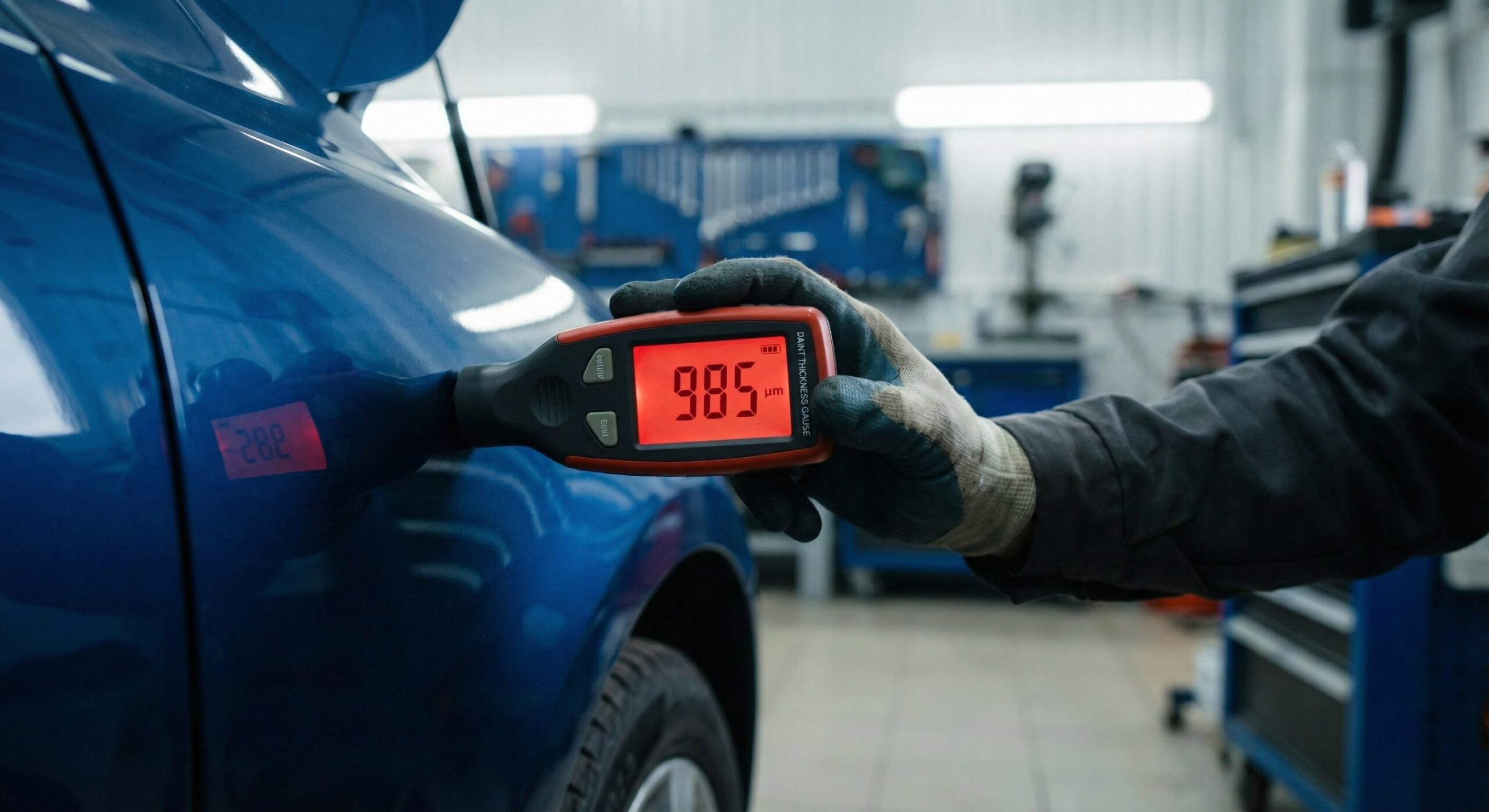
  • Paint thickness measurement: original paint is commonly about 100–160 micrometres. Around 200 or more suggests repainting; 500 or 1,000 indicates filler beneath the paint.
  • Panel gaps and spot welds: irregular gaps or missing original welds indicate substantial repairs.
  • Contract analysis: preserve the advertisement and correspondence as evidence of the accident-free assurance.

Conclusion: act promptly

If you suspect your supposedly accident-free car was in fact damaged in an accident, do not accept excuses. Whether a dealer or a private individual, a seller who misrepresents the facts must answer for it.

Free initial assessment

Contact me for a free initial assessment. I will review the contract and advise whether we can recover your money.

Mag. Patrick Maydell, LL.M.
Attorney at Law
Neustiftgasse 17/1/9, 1070 Vienna
Telephone: +43 1 2954251
Email: office@maydell-law.at

Categories: Vehicle law

Tags: Car purchase, Vehicles, Accident-damaged car, Rescission

VW T5 Multivan using 2–3 litres of oil: why dealers reject warranty claims and what you can do

As a lawyer and trained motor mechanic, I repeatedly encounter serious technical defects, including those affecting the VW T5 with the 2.0 BiTDI engine, code CFCA. A recent case illustrates the gap between theory and practice in the used-car market.

Even when a court expert report confirms a disastrous technical condition, dealers often continue resisting warranty claims to the very end.

The starting point: a dream Multivan becomes a nightmare

Our client bought a 2013 VW T5 Multivan with approximately 213,000 kilometres in January 2024 for EUR 23,000. Extremely high oil consumption became apparent shortly after delivery in February 2024.

The dealer's response was typical of many Austrian cases: a blanket denial that the vehicle had been defective at delivery and refusal to repair. The dealer also demanded compensation for kilometres driven if the purchase were reversed. With no agreement possible, we sued for rescission and requested a court-appointed expert report.

The facts established by the expert

The sworn, court-certified expert conducted a precise oil-consumption test drive in October 2025. The results dated 8 November 2025 were clear:

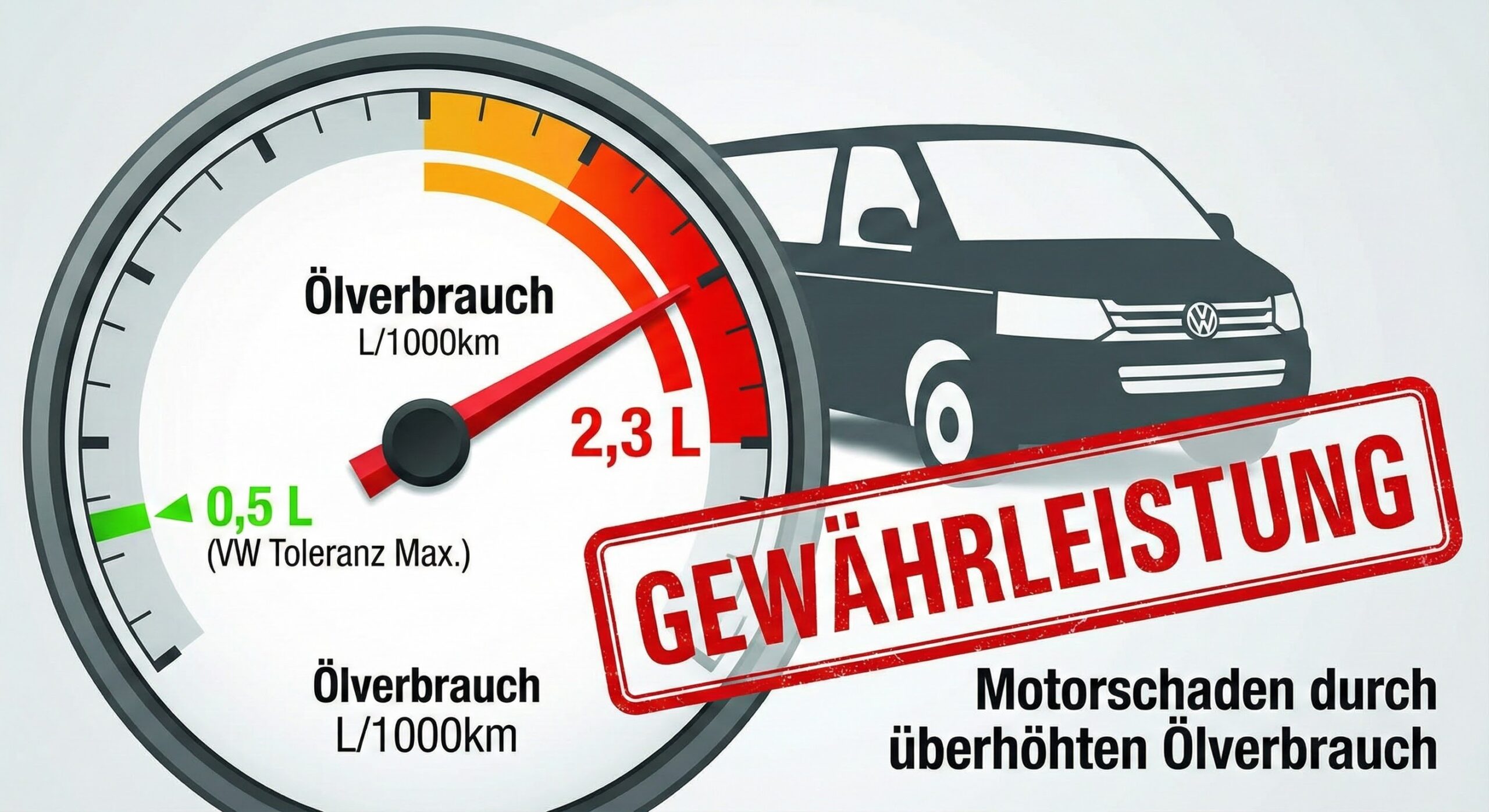
  • Actual consumption: over 576 kilometres, the oil level fell below minimum, corresponding to 2.3 litres per 1,000 kilometres.
  • Manufacturer's limit: VW permits a maximum of 0.5 litres, so consumption was almost five times the limit.
  • Technical diagnosis: worn cylinder bores and piston rings.

The expert unequivocally concluded that the engine had to be replaced to remedy the defect. The estimate put the cost at EUR 14,352.58.

The legal position: why the dealer remains liable

Dealers often dismiss such damage as wear and tear or as arising after delivery. The report technically refuted this and substantially strengthened the buyer's position:

  • The defect existed at delivery: the expert explained that this wear develops slowly over long periods. Technically, the damage must therefore be assumed to have existed when the car was purchased.
  • Repair is economically unreasonable: repair costs exceeding EUR 14,000 against a EUR 23,000 purchase price can make repair disproportionate. The aim is rescission: cancellation, refund of the price less reasonable usage compensation, and return of the vehicle to the dealer.

The three most common dealer excuses — and why they fail

The defendant used arguments we hear almost daily. Do not be intimidated: this case shows that they often fail in court.

1. “The car was fine at delivery.”

The dealer claims the defect arose through your use. In reality, as the expert confirmed, cylinder-bore wear develops gradually. This kind of damage does not suddenly appear after three weeks.

2. “You drove too much: usage compensation.”

Here, the dealer sought compensation for over 10,000 kilometres and effectively argued that a car driven that far could not have engine damage. But a car still being able to drive does not mean its engine is healthy; failure often develops slowly. We also scrutinise whether the compensation calculation is reasonable and reject arbitrary figures.

3. “That is normal wear at this age.”

Consumption of 2.3 litres per 1,000 kilometres is not normal wear. It is a technical defect seriously impairing road suitability and far outside the manufacturer's tolerance.

Frequently asked question about VW T5 oil consumption

Must the engine be dismantled to prove the defect? No. In this case, the test result of 2.3 litres per 1,000 kilometres was so clear that the expert could establish engine damage without costly dismantling. The measurements provided compelling evidence.

Conclusion

This case demonstrates that oil consumption of 2.3 litres can amount to an economic total loss. Dealers nevertheless often refuse to acknowledge the problem until a court report is available.

If your vehicle consumes excessive oil and the dealer denies liability, a thorough assessment is needed. As a lawyer and trained motor mechanic, I review the legal and technical aspects. Send me the purchase contract and any inspection reports for a free initial telephone assessment.

I look forward to hearing from you.

Mag. Patrick Maydell, LL.M.
Attorney at Law
Neustiftgasse 17/1/9
1070 Vienna
Telephone: +43 1 2954251
office@maydell-law.at

Categories: Vehicle law

Tags: Traffic lawyer in Vienna, Dealer warranty, CFCA engine damage, Lawyer for VW T5 oil consumption, VW T5 oil consumption, Car purchase rescission

Supreme Court: reversing an electric car purchase when the promised range is not achieved

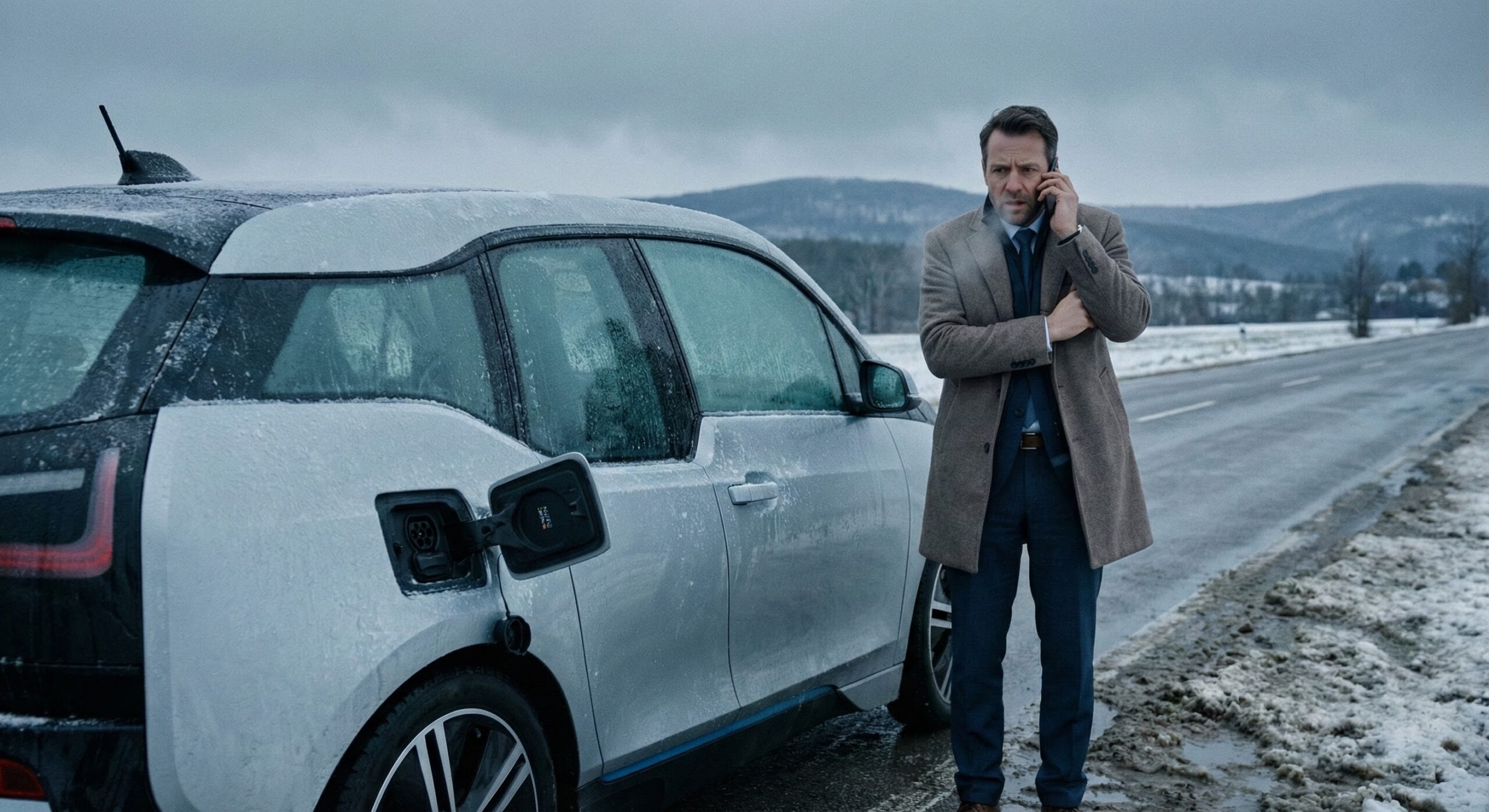
In decision 3 Ob 188/24d of 24 June 2025, the Austrian Supreme Court clarified that electric car buyers need not accept inaccurate range promises. If a seller promises specific ranges during consultation and the car subsequently fails to achieve them, the contract may be cancelled even if the written agreement requires additional agreements to be in writing.

A company bought an electric car for field work. The seller orally promised approximately 250 kilometres in summer and at least 200 in winter. These figures were decisive for the buyer. In reality, the car managed only about 195–205 kilometres at average temperatures and substantially less in freezing conditions, insufficient for its intended use.

Despite a strict written-form clause, the Court upheld the oral promise. It would be contrary to good faith to rely on that clause after making a specific assurance known to be decisive for the other party's purchase. Range therefore became part of the contract, and the buyer could challenge it for an essential mistake under section 871 ABGB.

The contract was consequently cancelled. The buyer receives the price back and returns the car, but must pay usage compensation for kilometres driven. As in other decisions, the Court calculates this linearly using distance driven and expected total vehicle mileage. There was also a dispute about liability for a stone chip in the windscreen.

Tips for buyers

Buyers should also take care before any dispute arises. Brochure range figures are generally ideal values. Cold, heating, lights and individual driving style can reduce actual range considerably, especially in winter. They should not automatically be treated as a binding promise.

Ask specifically about realistic summer and winter ranges and, wherever possible, obtain confirmation, especially if range is crucial for your journeys. If promised figures are later not achieved, legal remedies up to cancellation may be available. However, expect usage compensation for kilometres already driven.

The decision strengthens buyers who rely on specific promises. Good documentation and realistic expectations also help avoid later disputes.

If your electric car appears not to meet what was promised, I will gladly assess whether cancellation or other remedies are available.

Free initial assessment — call now

Contact me for a free, non-binding first conversation. I will explain whether rescission, laesio enormis or other remedies apply and pursue your rights consistently.

As a lawyer, I know the legal options and have successfully represented dozens of car buyers in court. As a trained motor mechanic, I identify technical problems, assess expert reports and uncover hidden weaknesses, giving you a clear and realistic initial assessment.

I look forward to hearing from you.

Mag. Patrick Maydell, LL.M.
Attorney at Law
Neustiftgasse 17/1/9
1070 Vienna
Telephone: +43 1 2954251
office@maydell-law.at

Categories: Vehicle law

Tags: Cancelling an electric car purchase, Vehicles