

Undisclosed accident damage: recovering your money even with a warranty exclusion
If a vehicle is sold as “accident-free”, this is an essential characteristic affecting its value. Discovering substantial previous damage later is frustrating, but buyers have remedies. Alongside statutory warranty, avoidance for mistake is often the most effective route to reversing the purchase, even where warranty was contractually excluded.
I frequently see clients who bought a used car relying on an accident-free assurance. Months or years later, a section 57a inspection or workshop visit reveals filler beneath the paint, non-original welds or a badly replaced wing. This is a substantial discrepancy between the agreed condition and reality. In such cases, we seek reversal for our clients.
When is a car legally accident-damaged?
Not every scratch makes a car accident-damaged in law. Austrian case law distinguishes:
- Minor damage: light paint damage or superficial parking scratches repairable without filler or welding often need not be disclosed without being asked.
- Damage requiring disclosure: replacement parts, deformed panels or chassis-straightening work indicate an accident-damaged car. Selling such a vehicle as “accident-free” or “immaculately maintained” misrepresents an essential characteristic.
Recovering your money: avoidance for mistake under section 871 ABGB
Many buyers assume they have no chance because warranty has expired or was excluded. That is often wrong. If you bought the car believing it was accident-free, you were mistaken about an essential characteristic. If that mistake was decisive — you would not have bought it, or would have paid much less — we can challenge the contract.
The legal result is cancellation with retroactive effect (ex tunc). You return the car and the seller must refund the purchase price less usage compensation, plus 4% interest.
Why a warranty exclusion does not apply here
This is a key advantage over an ordinary warranty claim:
- Dealer purchases: dealers often validly shorten warranty on used vehicles to one year. Discover the damage after thirteen months and many refuse assistance.
- Private purchases: private sellers often exclude warranty entirely with terms such as “bought as inspected”.
Section 871 ABGB: warranty exclusions generally do not cover promised characteristics
If accident-free condition was promised in the advertisement or contract, you can rely on the mistake even where statutory warranty was excluded.
Watch the deadline: the three-year rule
While warranty may end after one year, avoidance for mistake has a longer period: under section 1487 ABGB, the right becomes time-barred three years after the contract was concluded. Discovering damage after two years may therefore still permit a successful claim based on mistake.
After three years, a challenge remains possible only if fraudulent deception can be proved. The period for that is thirty years.
Evidence: how we uncover the damage
Allegations alone are insufficient in court. Previous damage must be proved. As a lawyer and motor mechanic, I recommend:
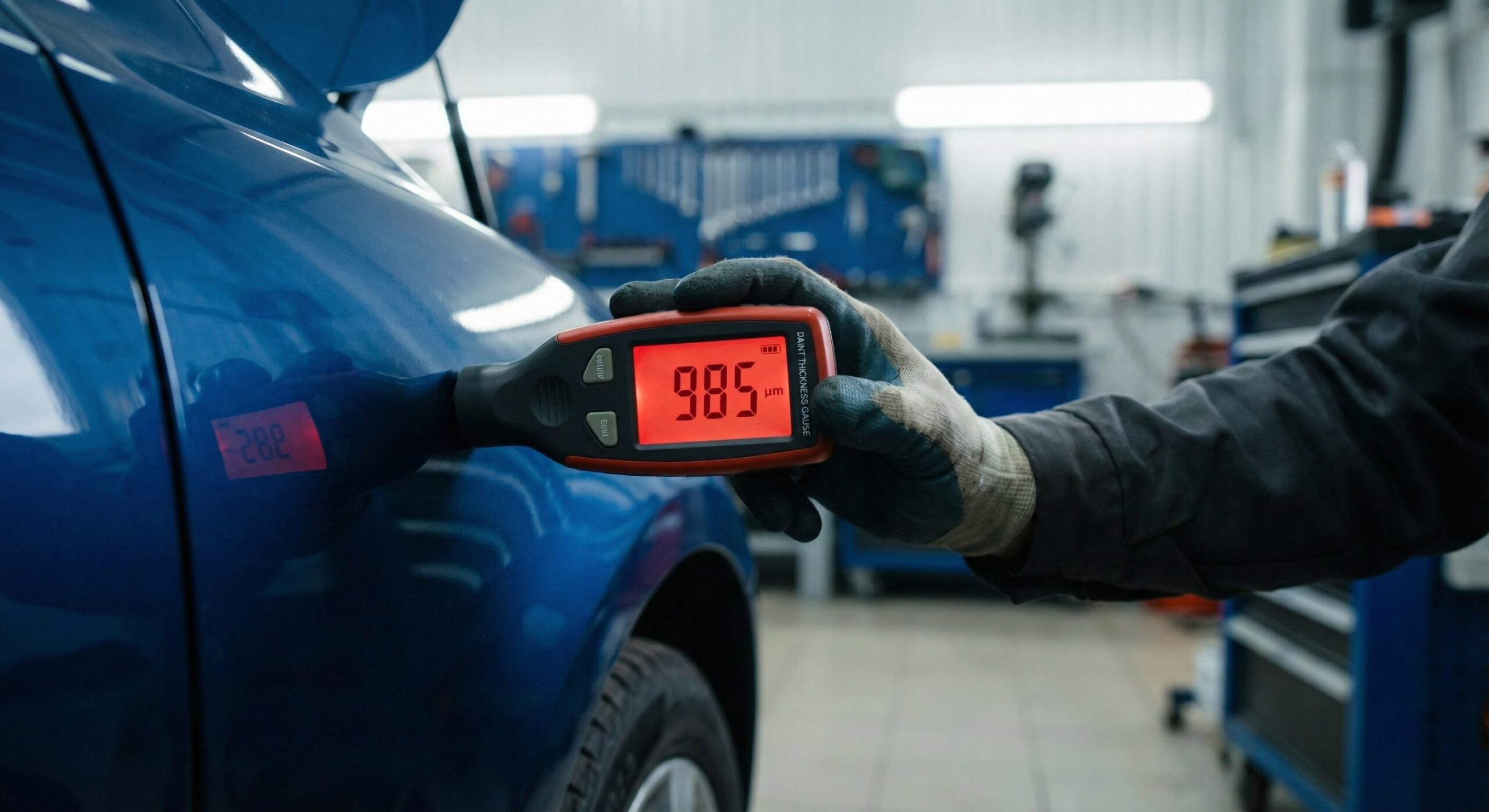
- Paint thickness measurement: original paint is commonly about 100–160 micrometres. Around 200 or more suggests repainting; 500 or 1,000 indicates filler beneath the paint.
- Panel gaps and spot welds: irregular gaps or missing original welds indicate substantial repairs.
- Contract analysis: preserve the advertisement and correspondence as evidence of the accident-free assurance.
Conclusion: act promptly
If you suspect your supposedly accident-free car was in fact damaged in an accident, do not accept excuses. Whether a dealer or a private individual, a seller who misrepresents the facts must answer for it.
Free initial assessment
Contact me for a free initial assessment. I will review the contract and advise whether we can recover your money.
Mag. Patrick Maydell, LL.M.
Attorney at Law
Neustiftgasse 17/1/9, 1070 Vienna
Telephone: +43 1 2954251
Email: office@maydell-law.at
Categories: Vehicle law
Tags: Car purchase, Vehicles, Accident-damaged car, Rescission

Mag. Patrick Maydell, LL.M.
Lawyer in Vienna.
Property law, vehicle law and inheritance law.