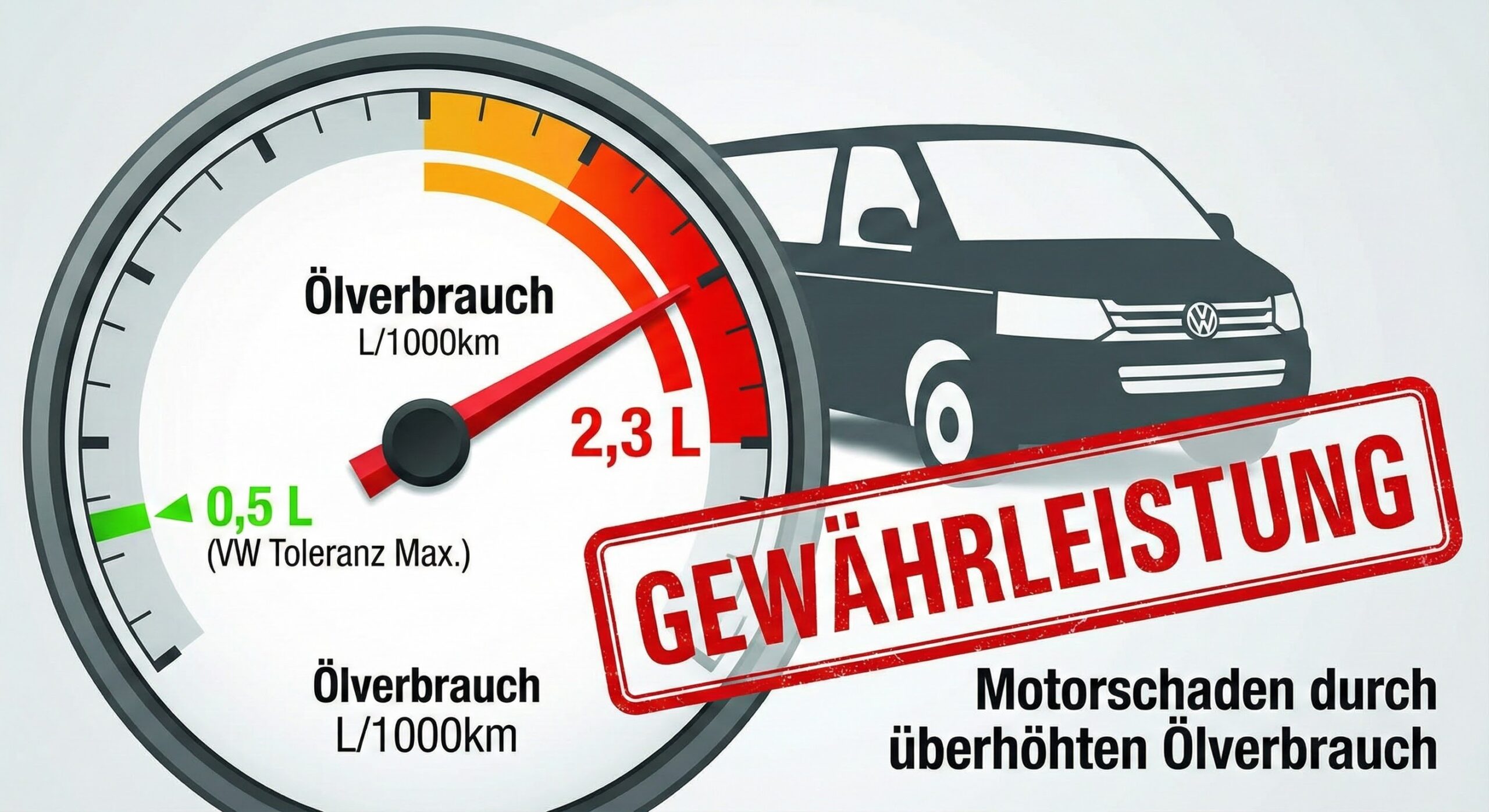

Hyundai Bayon: dealer denied a defect, court expert measures abnormal quiescent current
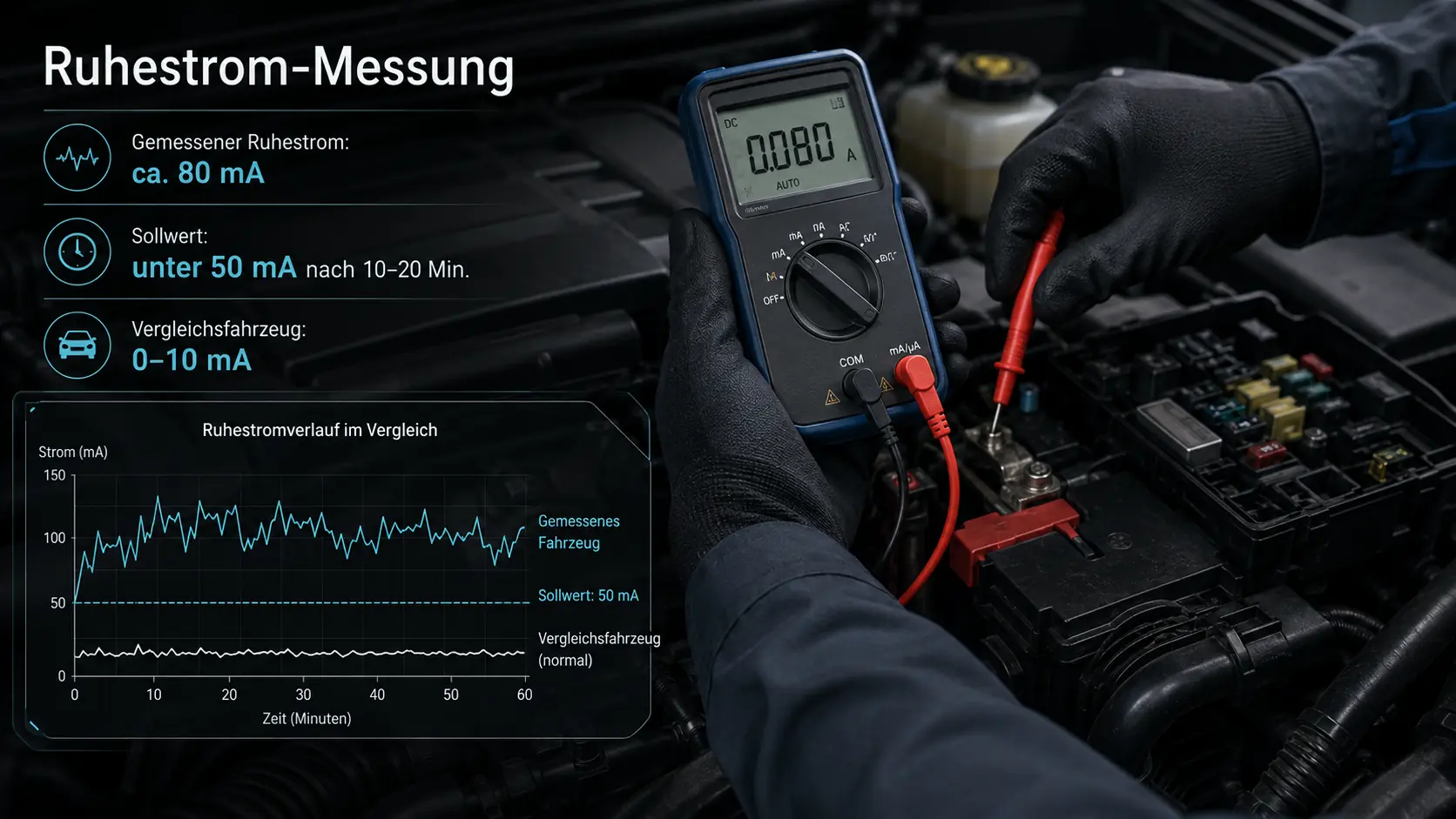
Four failures to start after battery discharge, three replacement batteries and a new control unit: why an intermittent electronic fault became objectively visible only through sufficiently long quiescent-current measurements.
Modern vehicle faults cannot always be reproduced during a brief workshop check. A car may start normally on the inspection day yet have a significant electronic defect, particularly one appearing only after two or three weeks parked.
This is the issue in ongoing proceedings from my practice involving a Hyundai Bayon Trendline 1.0 T-GDi DCT first registered in 2022. After longer periods parked, the starter battery repeatedly discharged so far that the car would not start. Dealer and importer denied a technical defect. The court-appointed vehicle expert's written report reaches a different conclusion.
Two perspectives, one case. As a lawyer and trained motor mechanic, I assess workshop records, measurements and expert evidence legally and technically.
Four flat batteries, three replacements and a control unit
The Bayon was bought new in 2022 with twenty kilometres. At the court expert's inspection in July 2026, it had covered 44,502 kilometres. The records show four similar incidents:
- February 2023: failure to start after a longer standstill; battery replaced.
- January 2024: the same problem; battery and battery sensor replaced.
- January 2025: another battery failure; third replacement battery.
- January 2026: battery flat again; fuses and wiring checked, and the Integrated Body Control Unit, a fuse box with integrated control unit, replaced.
The buyer requested cancellation out of court. The dealer refused and offered a newer-generation battery free of charge. In proceedings, dealer and importer argued that the vehicle currently worked properly and mere concern about future failures was not a warranty defect.
Why a short battery test is insufficient
Regular driving recharges the starter battery. Excessive or unstable quiescent current can therefore remain unnoticed until a longer standstill leaves the battery discharged, even if it previously tested as serviceable.
The question is not only whether the battery is healthy, but whether the vehicle electronics correctly enter sleep mode after parking and reach a stable resting current.
Measurements: up to 80 mA rather than a stable resting value
The vehicle had a 12-volt, 45 Ah, 450 A starter battery. Initial voltage was 12.26 V and the fault memory recorded low battery voltage. Technical documents used during the inspection specified quiescent current below 50 mA after approximately ten to twenty minutes.
| Measurement time / instrument | Affected vehicle | Comparison vehicle |
|---|---|---|
| After about 5 minutes | 19–80 mA, fluctuating | — |
| After 30 minutes | 24–79 mA, fluctuating | — |
| After about 45 minutes | 22–80 mA, fluctuating | — |
| Second instrument, after about 15 minutes | 10–60 mA; repeatedly 50–60 mA | — |
| After about 10 minutes | — | 0–10 mA, then stable |
Measurements from the written vehicle expert report submitted in the proceedings.
The comparison was especially informative: another petrol-engined Hyundai Bayon settled at 0–10 mA after about ten minutes and remained stable. The affected vehicle continued fluctuating, at times reaching 80 mA even after an extended period.
The expert confirms an electronic defect
Based on these measurements and the comparison vehicle, the court expert found an electronic defect. Values partly exceeded tolerance, and fluctuations between 19 and 80 mA were technically inconsistent with proper quiescent current.
The written report has not yet conclusively identified the component causing the fluctuations. Establishing a defect technically requires objective departure from proper condition; locating the exact source may remain important for a later repair.
Why the problem had not recently reappeared
At inspection, the owner reported no further starting problems since January 2026. The vehicle was now used regularly rather than left in the garage for fourteen days or three weeks. The expert considered this consistent with the measurements: regular driving recharges the battery and can temporarily conceal the consequences of abnormal quiescent current.
Was the battery the cause or only the consequence?
A starter battery can itself be defective. But when the same pattern returns over several years despite repeated replacements, the cause of discharge must be systematically investigated. Replacing the battery restores starting temporarily but does not fix another electrical consumer or control fault imposing an excessive load while parked.
This demonstrates the importance of sufficiently long measurements. “It drives and starts now” does not exclude an intermittent electronic defect.
The report is not yet a judgment
The 2022 consumer purchase falls under the Austrian Consumer Warranty Act (VGG). Repair or replacement generally comes first. A price reduction or cancellation is available under section 12 VGG where the relevant conditions are met, for example if restoration to a defect-free condition fails, is not performed or cannot reasonably be expected of the consumer. Cancellation is excluded for a merely minor defect.
Four repairs were carried out here. The court must assess all circumstances to determine whether cancellation is justified. The expert report answers the central technical question in the buyer's favour but does not predetermine the legal outcome.
What buyers should document after repeated battery discharge
- date, mileage and length of the preceding standstill;
- roadside assistance reports and whether jump-starting was needed;
- all repair orders and workshop invoices;
- battery tests, quiescent-current measurements and fault-memory records;
- all replaced batteries, sensors and control units;
- written workshop statements about the suspected cause.
If the problem returns after battery replacement, do not hastily assume another isolated battery failure. Investigate whether an electrical consumer or vehicle control system is responsible.
Conclusion: measurements can reveal an invisible defect
Intermittent electronic faults are especially frustrating: the car works at the workshop, the fault memory may offer no clear clue, and a replacement battery initially appears to solve everything. Weeks or months later, it is flat again.
This case shows that sufficiently long measurements and direct comparison with a technically normal vehicle can make a disputed fault objectively measurable.
If your battery repeatedly discharges and the dealer or workshop finds no defect, a combined legal and technical assessment is worthwhile.
Free initial assessment
As a lawyer and trained motor mechanic, I review both aspects. Send the purchase contract, repair orders and available battery tests, quiescent-current measurements or expert reports for a free initial telephone assessment.
I look forward to hearing from you.
Mag. Patrick Maydell, LL.M.
Attorney at Law
Neustiftgasse 17/1/9
A-1070 Vienna
Telephone: +43 1 295 4251
Email: office@maydell-law.at
Categories: Vehicle law
Tags: Car purchase, Battery discharge, Dealer warranty, Quiescent current, Car purchase rescission