
Initial assessment

Maydell Law · Lawyer in Vienna

Blog posts

Tag Archives: Rescission

Audi S6 with engine damage: what the expert report revealed about the software tuning
By Mag. Patrick Maydell, LL.M. – lawyer and trained motor vehicle mechanic

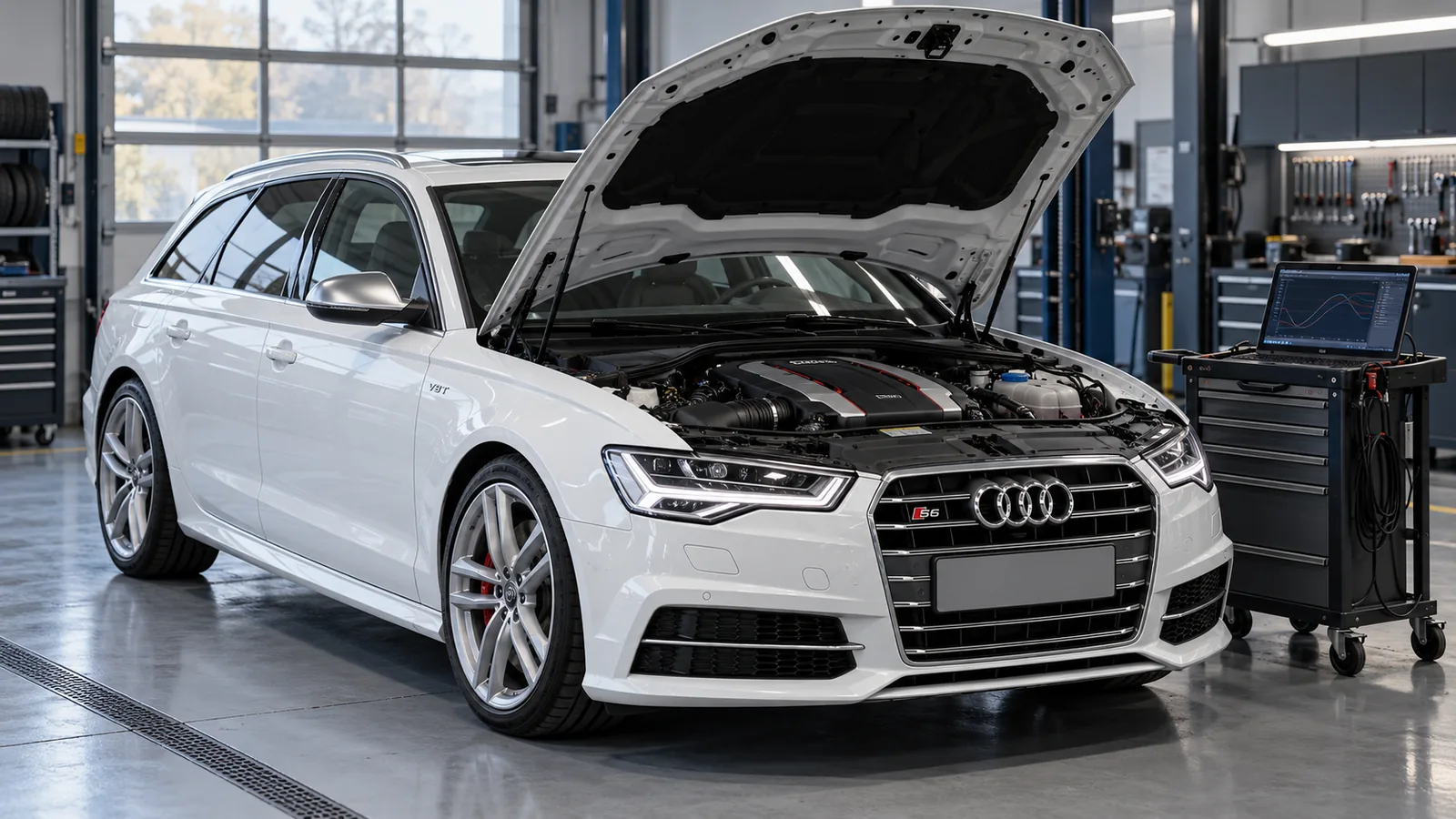
A used Audi S6 Avant bought for EUR 31,890, and later a car that could no longer be driven. In proceedings I conducted before the Regional Court of Linz, the dispute concerned alleged engine damage. The central question was which changes to the engine software had already been present before the purchase. The court-appointed expert found modifications to several protective functions, from the component-protection lambda settings to the rev limiter.

The software modifications in the state read from the control unit were established. Whether they had caused the engine damage remained unresolved without dismantling the engine. Following the hearing to discuss the expert report, the parties agreed on a settlement: EUR 25,000 in exchange for returning the car, plus reimbursement of litigation costs. The settlement, initially subject to a right of revocation, has now become legally effective. The case illustrates how technical findings, questions of evidence and an economically sensible solution are connected.

As a lawyer and trained motor vehicle mechanic, I assess such cases legally while also understanding engine management, diagnostics and damage patterns. For buyers, the important questions are: what does an expert report actually establish, and what further examination would be needed?

The vehicle: Audi S6 Avant, type 4G, with a 4.0-litre V8

My client bought the Audi from a vehicle dealer. According to the expert report, it was an Audi S6 Avant quattro, type 4G, with an engine capacity of 3,993 cm³. Its registered power output was 309 kW at 5,500 rpm, equivalent to around 420 metric horsepower. It was first registered in 2013. The manufacturer's data extract included in the report lists engine code CEUC and sales type 4G5S3Y. The technical overview uses the abbreviated engine designation CEU.

The purchase contract recorded 160,535 kilometres and a price of EUR 31,890. At a subsequent private damage assessment, the mileage was 166,156 kilometres, an increase of 5,621 kilometres. These figures describe only the period up to that assessment. They do not establish when damage began or what caused it.

At the court expert's inspection, the vehicle was not operational. The expert read the fault memory, examined the engine's interior using an endoscope and retained the engine control unit for further examination.

Bosch MED17.1.1: comparison with the factory software

The engine control unit was a Bosch MED17.1.1. The expert compared the extracted data with original reference software. This made it possible to identify deviations in the stored calibration maps.

A calibration map determines which value the engine management system uses under particular conditions, for example depending on engine speed and load. The modifications affected several functions that the manufacturer uses to protect the engine and exhaust system. Simply stating that “tuning is present” does not explain these findings. The individual findings are therefore set out below.

1. Component-protection lambda: reduced enrichment at high load

The expert found that, at higher engine speeds and loads, the mixture had been made leaner compared with the intended protection strategy. The factory enrichment was reduced in these operating ranges.

Lambda describes the ratio between the air actually present and the air required for complete combustion. Here, “made leaner” means that the mixture is leaner than in the factory calibration. It does not automatically mean that the engine was running with a lean mixture at a lambda value above 1 throughout.

According to the report, this modification increases exhaust gas temperatures. It can expose the turbochargers, catalytic converter, pistons and valves to greater thermal loads. This matters because the modified function is specifically intended to provide protection under demanding operating conditions.

2. Catalytic converter protection: modified temperature maps

The temperature maps for catalytic converter protection had also been edited. According to the report, this allowed the engine management system to permit higher exhaust gas temperatures than in the factory calibration. The catalytic converter protection strategy had been partly reduced.

This must be considered together with the modified mixture enrichment. The expert assessed several modifications whose effects on thermal loading may reinforce one another. The report contains no temperature measured during a test drive. The calibration-map analysis therefore does not establish a specific exhaust gas temperature.

3. Catalytic converter functions: disabled in the software

The report also describes modified deactivation maps and disabled catalytic converter control. Among other things, the software analysis shows switches for catalytic converter diagnostics with the states “1 = ON” and “0 = OFF”.

The expert regarded this as a substantial intervention in emissions-related protection and monitoring functions. It does not establish that the catalytic converter had been removed or its internal components taken out. Whether hardware had also been modified could not be conclusively determined during the examination.

4. Rev limiter: raised by 500 rpm

A particularly clear finding was that the engine rev limiter had been raised by 500 rpm. This changed an operating limit stored in the engine control unit.

The expert considered this an additional strain on rotating and reciprocating engine components. The altered limit permits higher engine speeds. The analysis does not show whether my client actually ran the engine up to that limit or whether this damaged a particular component.

5. Ignition maps: ignition timing advanced by up to 3°

In the ignition maps, the expert identified an advance of up to 3 degrees of crankshaft rotation compared with the reference calibration. Top dead centre is the highest point in the piston's travel. Ignition angles are expressed relative to that piston position.

“Advanced by up to 3°” means that ignition occurs earlier than in the factory calibration. It does not mean that the engine always fires at exactly 3° before top dead centre. The comparison in the report shows different changes depending on engine speed and load.

According to the report, these modifications may increase the tendency to knock, as well as thermal and mechanical loads. Again, a modification that may contribute to damage is not in itself an established cause of the particular damage in question.

What the fault memory and endoscope also revealed

The fault memory contained, among other entries, combustion misfires (P030000) and an entry for cylinder 7 (P030700). There were also entries relating to ignition control for cylinders 5 to 8 and several electrical faults affecting the camshaft adjustment actuators.

Context is crucial: when was a fault recorded? At what mileage? What work or checks had taken place beforehand? A fault code initially reports only a deviation detected by the system. It does not replace a mechanical diagnosis of damage and does not establish who caused a defect.

According to the report, the visual inspection with the endoscope revealed no clear damage inside the engine. The expert considered dismantling the engine necessary to establish specific mechanical damage and its cause. This did not take place during the proceedings. The significance of improperly installed wiring found in the engine compartment also remained unresolved.

A specific piston or valve defect has therefore not been established by the court as the cause of the damage. What has been established is software that differed from the factory state, with the modifications described above.

Was the tuning already present before the purchase?

The timing mattered for the dispute with the dealer. The documents examined by the expert contained indications of tuning as early as the period between 13 December 2021 and 16 May 2022, at mileages between 153,510 and 156,027 kilometres. The purchase contract was not concluded until 24 June 2023.

There were therefore specific indications of a tuning history before the purchase. However, the dealer disputed that the software complained of had been present or active at handover. My client denied making any changes to the engine software after handover.

During the supplementary discussion, the expert explained the limits of the examination. He could establish the state read from the control unit and the parameter deviations. A complete history of all software versions could not be reconstructed from this. He considered it theoretically possible that the software had been removed in the meantime and subsequently reinstalled. He had not established that such a sequence of events had occurred.

This distinction is central to my work as a lawyer. A theoretically possible alternative sequence is not an established fact. Conversely, an earlier indication of tuning cannot simply be assumed to apply to every setting read from the control unit at a later date.

Why “reinstalling the factory software” does not automatically resolve the case

The expert estimated the cost of restoring the engine software to its factory state at EUR 200 to EUR 300. However, this relatively small amount answered only part of the question: the cost of the software work.

Possible additional hardware modifications, mechanical damage and whether the car would have been fully usable again following reprogramming alone remained unresolved. Different software cannot, of course, repair components that are already damaged.

The valuation also had limits. Based on the circumstances established at the time, the expert estimated the vehicle's value when the contract was concluded at EUR 30,500. Engine damage that had not been conclusively examined and possible further modifications could not be taken into account. The report therefore did not confirm that the car had only scrap value.

“Unapproved tuning” is consequently not simply synonymous with a “worthless vehicle”. A reliable assessment of the claims requires separate consideration of the software state, approval issues, mechanical condition and the work needed to restore the vehicle.

My approach: translating technical questions into legal arguments

On behalf of my client, I sought cancellation of the purchase contract and repayment of the purchase price in exchange for returning the vehicle. The issues were the alleged engine damage, the undisclosed tuning and the condition the buyer was entitled to expect when concluding the contract.

Several legal questions had to be clarified: did the software modification, which had not been agreed, itself constitute a defect? What was the significance of the lack of approval? What remedy was possible and had been requested? And for which claims did it additionally need to be established that the tuning itself had caused mechanical damage? Not every finding of tuning automatically leads to reversal of the purchase.

The modifications established in the report also affected emissions and protective functions. The expert classified them as requiring approval; without the relevant documentation, he could not assess whether approval was possible at all. The legal framework for vehicle modifications is set out in section 33 of the Austrian Motor Vehicles Act (KFG).

My advantage as a trained motor vehicle mechanic is that I can put technical terminology and examination results into context. In proceedings, this helps me ask targeted questions. Does the analysis show a software deviation, an actual overload or already a damaged component? Has a cause been established or merely described as a possibility? What further examination would close a decisive gap?

As a lawyer, I must determine which arguments the available evidence supports and whether further examinations are economically worthwhile. The court-appointed expert's report remains an independent source of evidence. My technical training helps me use it critically and precisely when representing my client.

The settlement: EUR 25,000 in exchange for returning the Audi

After discussing the expert report, the parties concluded a settlement subject to a right of revocation. It provides for:

  • Payment of EUR 25,000 to the buyer through his legal representative, concurrently with the return of the Audi S6 Avant.
  • Collection of the vehicle from the buyer's home at the dealer's expense.
  • An additional EUR 9,345.06 in reimbursement of the litigation costs agreed in the settlement.

The obligations must be performed within 14 days of the settlement becoming legally effective. The revocation period ended on 30 September 2026. As no revocation was received by the court, the settlement became effective.

Payment and the return of the vehicle are now to be completed within that period. The settlement does not establish that the tuning caused the engine damage.

For the buyer, the solution means returning the vehicle for a specified amount without having to continue litigating the unresolved technical questions of evidence. The settlement amount is below the original purchase price. This, too, is part of an accurate account. The difference cannot simply be characterised as compensation for use on the basis of the settlement.

What buyers can learn from this case

Where engine problems and suspected tuning are involved, it is important to preserve evidence of the actual condition. The following documents and information are particularly useful for an initial assessment:

  • The purchase contract, advertisement and written assurances concerning the vehicle's condition.
  • The mileage at handover, when the defects first appeared and at each examination.
  • Complete diagnostic records with dates and mileage, as well as any available manufacturer checks relating to the software state.
  • Workshop reports, maintenance records and documentation of subsequent repairs or software changes.
  • The correspondence with the seller to date and the seller's response to the defects complained of.

Clarify how the existing data will be preserved before the fault memory is cleared, a software update is carried out or the control unit is replaced. Where there is a specific suspicion of damage, you should also obtain technical advice on continued use. Whether dismantling is necessary depends on the unresolved evidential question and the costs.

I explain the general requirements for returning a vehicle in the guide “Reversing a car purchase: returning a car because of defects”. For possible deductions for use of the vehicle, see the article on compensation for use when reversing a purchase.

Engine problems or suspected tuning after buying a car?

I review your purchase contract, correspondence and the available technical documents. We then discuss the claims and next steps that follow from them. I consider the legal questions and technical findings together.

For an enquiry, please send me the purchase contract, any workshop reports or expert reports and a brief account stating the purchase date, mileages and the problems that have arisen.

Contact: office@maydell-law.at · +43 1 2954251

Categories: Vehicle law

Tags: Vehicles, Reversal of a purchase, Rescission, Tuning

Usage compensation when reversing a car purchase: a formula worth thousands of euros

As a lawyer and trained motor mechanic, I am frequently asked about usage compensation. When returning a seriously defective car and seeking a refund, buyers are often shocked by the dealer's substantial deduction for kilometres already driven.

The calculation can make a difference of several thousand euros. Without knowing the case law and formula, buyers often accept excessive deductions proposed by dealers or insurers.

Why is usage compensation payable?

When a purchase is reversed, whether under warranty law or for mistake, each side returns what it received: the buyer the car and the seller the price.

Use of the vehicle has consumed some of its value. The Supreme Court therefore regularly requires usage compensation to be deducted from the refund.

The Supreme Court formula

Total lifetime mileage is often incorrectly used as the denominator in every case. That is correct only for a new car. For a used car, the relevant figure is expected remaining mileage at the time of purchase.

Usage compensation = purchase price × kilometres driven ÷ expected remaining mileage.

For a used car, expected remaining mileage equals expected total lifetime mileage minus the odometer reading at purchase.

Three values determine the result:

  • Purchase price: the actual gross amount paid.
  • Kilometres driven: the difference between mileage at delivery and at return.
  • Expected remaining mileage: the distance this particular vehicle could reasonably have covered from purchase until the end of its technical life.

The key dispute: expected total mileage

This is often the most contested and financially significant issue. Dealers and insurers may use low total-life figures, often only 150,000 kilometres, increasing the deduction and reducing the refund.

Case law frequently uses higher figures for modern vehicles:

  • Petrol and diesel vehicles: commonly 200,000–250,000 kilometres, sometimes more for high-quality or particularly durable engines.
  • Electric vehicles: case law is developing, with the calendar and cycle life of the traction battery increasingly considered as a separate, often long-lasting factor.

Example: a new car

A new vehicle costs EUR 30,000 and covers 40,000 kilometres before reversal.

Variant 1: the dealer's low-mileage calculation

Using only 150,000 kilometres as expected total mileage:

  • price: EUR 30,000;
  • distance driven: 40,000 kilometres;
  • usage deduction: EUR 8,000;
  • refund: EUR 22,000.

Variant 2: a technically realistic mileage figure

Using a court-accepted total mileage of 250,000 kilometres:

  • price: EUR 30,000;
  • distance driven: 40,000 kilometres;
  • usage deduction: EUR 4,800;
  • refund: EUR 25,200.

The more realistic, technically supported mileage figure reduces the deduction and produces an additional EUR 3,200 refund in this example.

Important Supreme Court decisions

1. Scratches, dents and wheel damage do not belong in the formula: 2 Ob 82/23g

Dealers sometimes seek higher usage compensation because the car acquired scratches, dents or wheel damage. The Court distinguishes these from the pure transport benefit measured by the formula. A dealer seeking compensation for damage must make and prove a separate damages claim, which can face legal obstacles.

2. The low-mileage adjustment is impermissible: 9 Ob 67/24d

A buyer purchased a Skoda Fabia with the emissions-scandal EA189 engine in 2010 and drove only about 63,700 kilometres over more than thirteen years.

The lower courts reduced expected total mileage to 94,380 kilometres by multiplying annual mileage of about 4,719 by an assumed twenty-year ownership period. This pushed usage compensation above EUR 10,700, more than three times the buyer's calculation.

The Supreme Court rejected this method. Limited use must not alter the formula to the buyer's disadvantage: only actual transport use is compensated, not kilometres never driven. The full technical lifetime figure, 250,000 kilometres in that case, remains relevant irrespective of infrequent use. The correction saved the buyer EUR 6,680.08.

3. Business purchases and electric cars: 3 Ob 188/24d

The Court confirmed linear calculation for vehicle-purchase reversals, expressly including business-to-business purchases and electric vehicles. Although the case used a general figure of 250,000 kilometres, the specific cycle and ageing characteristics of traction batteries are likely to be increasingly important to expert assessments of remaining life.

The same decision highlights a costly risk: continuing to use the car after asserting withdrawal, while knowing of the right to return it, can in the worst case create liability for accidental damage such as a windscreen stone chip, around EUR 1,500 in that case. Continued use and damage risks therefore need careful consideration.

Other factors that can materially affect the refund

  • Interest: following successful reversal, the dealer may owe 4% interest on the purchase price from purchase under Supreme Court decision 10 Ob 2/23a. For EUR 35,000 over four years, a simplified calculation gives EUR 5,600, potentially offsetting much or all of the usage deduction.
  • Workshop downtime: unsuccessful repairs over several weeks add no mileage, but deprive the buyer of use. Under general damages principles, this may form a separate loss, for example replacement-car hire costs.

A common mistake: accepting the opposing calculation too quickly

I regularly see uncertain buyers sign the dealer's calculation without checking it. Expected mileage is not a fixed statutory number; if disputed, the court estimates it with expert assistance. A combined legal and technical review is therefore usually worthwhile.

Online usage-compensation calculator

For initial guidance, enter the purchase price, mileage at purchase and return, and vehicle type. The calculator offers an initial estimate, but cannot replace assessment of the vehicle's technical features and the legal details of your case.

Usage-compensation calculator

250,000 km is the indicative figure used here for modern engines; the individual vehicle must be assessed.

Your estimated result
Estimated usage deduction:EUR 0.00
Possible purchase-price refund:EUR 0.00

Important legal information

This is a mathematical calculation only. Dealers and insurers may seek inappropriate damage deductions or use an artificially low total-mileage figure.

Under Supreme Court decision 10 Ob 2/23a, a 4% interest claim from purchase may also significantly increase the refund.

Have the result reviewed. Contact me for a free initial legal and technical assessment.

Conclusion

Usage compensation is not an unquestionable fixed deduction. Uncritically accepting the other side's figures can cost money. Before agreeing to reversal or signing a settlement, have the calculation checked by an experienced vehicle lawyer who also understands workshop practice as a trained mechanic.

Free initial assessment

I assess your case legally and technically. Send the purchase contract and available inspection reports for a free initial telephone assessment. I look forward to hearing from you.

Mag. Patrick Maydell, LL.M.
Attorney at Law
Neustiftgasse 17/1/9
1070 Vienna
Telephone: +43 1 2954251
office@maydell-law.at

Categories: Vehicle law

Tags: Vehicles, Reversal of a purchase, Return, Rescission

Undisclosed accident damage: recovering your money even with a warranty exclusion

If a vehicle is sold as “accident-free”, this is an essential characteristic affecting its value. Discovering substantial previous damage later is frustrating, but buyers have remedies. Alongside statutory warranty, avoidance for mistake is often the most effective route to reversing the purchase, even where warranty was contractually excluded.

I frequently see clients who bought a used car relying on an accident-free assurance. Months or years later, a section 57a inspection or workshop visit reveals filler beneath the paint, non-original welds or a badly replaced wing. This is a substantial discrepancy between the agreed condition and reality. In such cases, we seek reversal for our clients.

When is a car legally accident-damaged?

Not every scratch makes a car accident-damaged in law. Austrian case law distinguishes:

  • Minor damage: light paint damage or superficial parking scratches repairable without filler or welding often need not be disclosed without being asked.
  • Damage requiring disclosure: replacement parts, deformed panels or chassis-straightening work indicate an accident-damaged car. Selling such a vehicle as “accident-free” or “immaculately maintained” misrepresents an essential characteristic.

Recovering your money: avoidance for mistake under section 871 ABGB

Many buyers assume they have no chance because warranty has expired or was excluded. That is often wrong. If you bought the car believing it was accident-free, you were mistaken about an essential characteristic. If that mistake was decisive — you would not have bought it, or would have paid much less — we can challenge the contract.

The legal result is cancellation with retroactive effect (ex tunc). You return the car and the seller must refund the purchase price less usage compensation, plus 4% interest.

Why a warranty exclusion does not apply here

This is a key advantage over an ordinary warranty claim:

  • Dealer purchases: dealers often validly shorten warranty on used vehicles to one year. Discover the damage after thirteen months and many refuse assistance.
  • Private purchases: private sellers often exclude warranty entirely with terms such as “bought as inspected”.

Section 871 ABGB: warranty exclusions generally do not cover promised characteristics

If accident-free condition was promised in the advertisement or contract, you can rely on the mistake even where statutory warranty was excluded.

Watch the deadline: the three-year rule

While warranty may end after one year, avoidance for mistake has a longer period: under section 1487 ABGB, the right becomes time-barred three years after the contract was concluded. Discovering damage after two years may therefore still permit a successful claim based on mistake.

After three years, a challenge remains possible only if fraudulent deception can be proved. The period for that is thirty years.

Evidence: how we uncover the damage

Allegations alone are insufficient in court. Previous damage must be proved. As a lawyer and motor mechanic, I recommend:

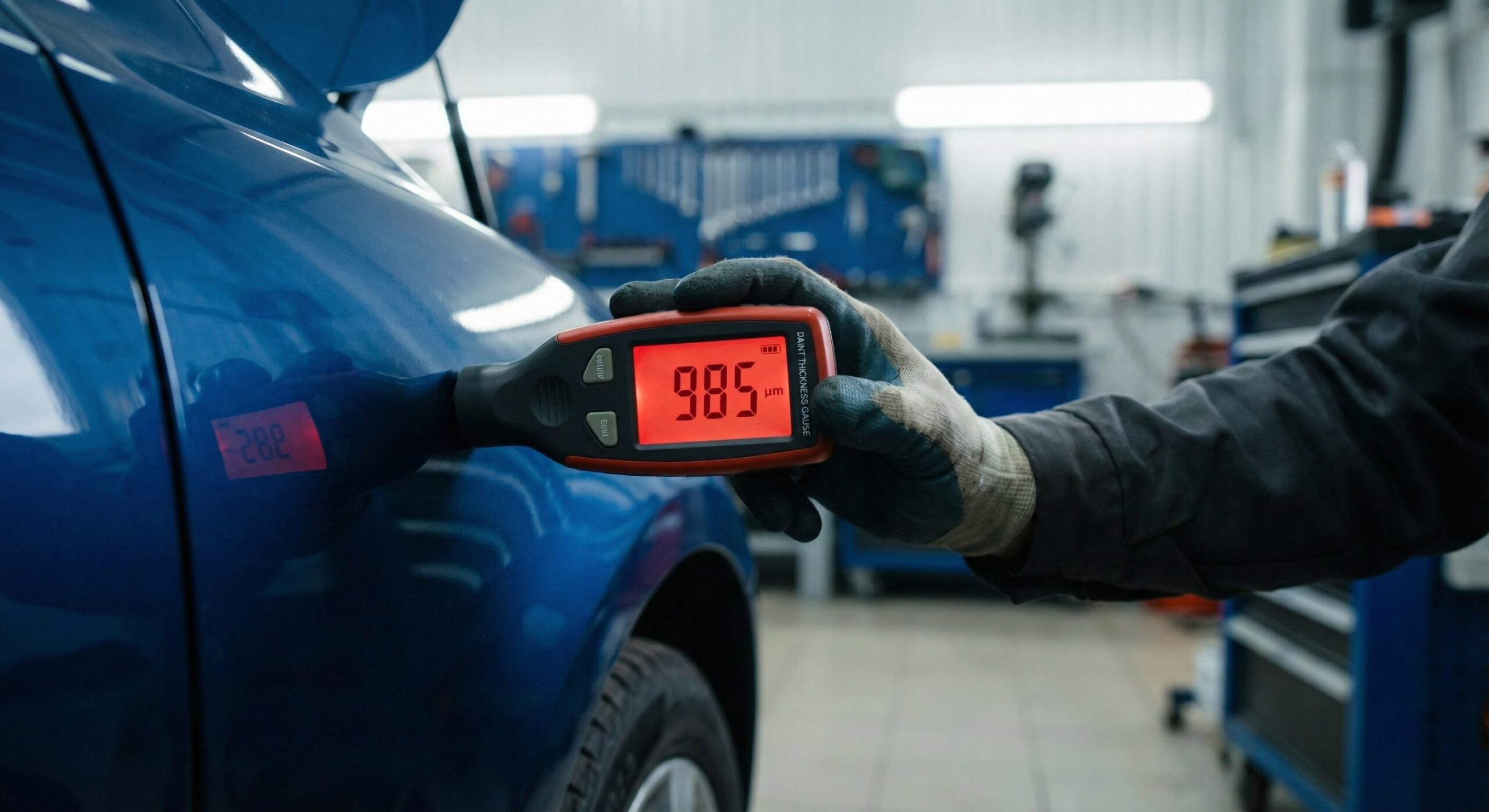
  • Paint thickness measurement: original paint is commonly about 100–160 micrometres. Around 200 or more suggests repainting; 500 or 1,000 indicates filler beneath the paint.
  • Panel gaps and spot welds: irregular gaps or missing original welds indicate substantial repairs.
  • Contract analysis: preserve the advertisement and correspondence as evidence of the accident-free assurance.

Conclusion: act promptly

If you suspect your supposedly accident-free car was in fact damaged in an accident, do not accept excuses. Whether a dealer or a private individual, a seller who misrepresents the facts must answer for it.

Free initial assessment

Contact me for a free initial assessment. I will review the contract and advise whether we can recover your money.

Mag. Patrick Maydell, LL.M.
Attorney at Law
Neustiftgasse 17/1/9, 1070 Vienna
Telephone: +43 1 2954251
Email: office@maydell-law.at

Categories: Vehicle law

Tags: Car purchase, Vehicles, Accident-damaged car, Rescission

Cancelling a car purchase in Austria: returning a defective car

By Mag. Patrick Maydell, LL.M. – lawyer and trained motor mechanic

At a glance: A defect may entitle you to reverse a car purchase. When a consumer buys from a dealer, repair or replacement generally takes priority. Cancellation of the contract may be available, for example, where a remedy is refused or unsuccessful, or a defect is particularly serious. A merely minor defect is insufficient. In a private sale, it is also necessary to check whether statutory warranty liability was validly excluded.

What is wrong with the car – and what rights does that give you? As a lawyer and trained motor mechanic, I combine the technical and legal assessment.

Would you like to return your car because of a defect? Call me for a free initial telephone assessment on 01/2954251, or email office@maydell-law.at.

1. Can I return my car because of a defect?

A defect in the legal sense exists where the car does not have the agreed characteristics or meet the requirements that can reasonably be expected. For a used car, its age, mileage, price, description and disclosed damage are particularly relevant.

Wear consistent with the car’s age must be distinguished from a defect. However, a component subject to wear is not automatically excluded from statutory warranty protection: its condition must meet the agreed requirements and reasonable expectations.

Possible disputes include engine and gearbox damage, excessive oil consumption, serious corrosion, undisclosed accident damage or mileage that differs from what was represented. For electric cars, the agreed battery condition or specific range promises may also be relevant. A shorter range in winter does not, by itself, prove a defect.

Statutory warranty liability generally requires neither fault nor knowledge on the seller’s part. As a rule, the defect or its underlying condition must already have existed at delivery. Damage subsequently caused by misuse is not covered.

2. Buying from a dealer: must I first allow a repair?

Since 2022, the Austrian Consumer Warranty Act (VGG) has generally applied to car purchases by consumers from businesses. Older contracts and business purchases must be assessed separately. An additional commercial guarantee does not replace statutory warranty rights.

In principle, you may first request repair or replacement. Your choice is restricted if one option is impossible or disproportionately costly compared with the other. An equivalent replacement is not always possible for an individually specified used car, so repair is often the main remedy. The statutory order of remedies is set out in section 12 VGG.

The remedy must be provided within a reasonable time, free of charge and without significant inconvenience. There is no universal rule allowing two or three repair attempts in every case.

Notify the seller of the defect and, in principle, allow inspection and a remedy. Commissioning a repair on your own initiative may make claims and evidence more difficult. If the car cannot be driven, clarify transport arrangements and costs in advance.

3. When may I actually cancel the purchase contract?

In a consumer purchase from a dealer, moving to a price reduction or cancellation may be permitted, in particular, where:

  • the defect is sufficiently serious to justify immediate cancellation;
  • the dealer refuses to bring the car into conformity;
  • the dealer’s statements or the circumstances show that the defect will not be remedied in time or without significant inconvenience;
  • the remedy is not carried out properly or the reasonable period expires;
  • a defect still occurs despite an attempt to repair it.

Cancellation is unavailable for merely minor defects; doubts as to whether a defect is minor are resolved against the business. In addition, one of the statutory grounds for moving to cancellation must be present. The legal basis is section 12(4) and (5) VGG.

Even with engine damage, therefore, the repair bill alone is not decisive. Available remedies, the dealer’s response and the burden caused by the repair also matter. There is no fixed monetary threshold for returning the car.

Under the VGG, cancellation of the contract, often also called Wandlung, takes effect by a declaration to the seller. For evidential purposes, make the declaration in writing and explain the reasons. If the seller objects, court proceedings may be necessary. Agree the return arrangements rather than simply leaving the car at the dealership.

4. Private purchases: what does “no warranty, no returns” mean?

Statutory warranty rights under the Austrian Civil Code (ABGB) generally also exist in private sales. However, private contracting parties can exclude them to a considerable extent. The precise contract wording, the advertisement and statements made before the purchase are therefore particularly important.

A comprehensive warranty exclusion may also cover hidden defects. The fact that you could not identify the damage during inspection does not, by itself, invalidate the exclusion. In principle, however, it does not cover characteristics expressly or implicitly assured, nor does it protect against the consequences of fraudulent concealment.

“No guarantee” and “no returns” do not necessarily exclude statutory warranty rights. They may refer to an additional commercial guarantee or a voluntary return arrangement. The interpretation of the agreement as a whole is decisive.

If the car was represented as accident-free, the precise scope of that statement and the actual previous damage must be examined. Not every advertisement contains a comprehensive assurance. Preserve the advertisement and messages early.

Where statutory warranty rights are available, the ABGB also generally requires repair or replacement to take priority, followed by price reduction or cancellation. Exceptions must be assessed under section 932 ABGB; the VGG rules cannot simply be applied unchanged to a private purchase.

Other possible grounds include avoidance for mistake, fraudulent misrepresentation or laesio enormis, a shortfall exceeding half the value. The latter generally requires the car’s value at the time the contract was concluded to have been less than half the purchase price. Under section 934 ABGB, the seller may avert cancellation by making the corresponding adjustment in value; section 935 ABGB contains exceptions. A high repair bill alone does not establish this value ratio.

5. Engine damage, electronic faults and accident damage: what matters?

The following three cases come from my practice and are presented without naming the parties. They illustrate how technical investigations can help clarify disputed vehicle defects. The first two cases are described in more detail in separate articles.

Case study 1: VW T5 Multivan with greatly increased oil consumption

A used VW T5 Multivan showed high oil consumption shortly after delivery. The dealer denied that a defect had existed at delivery and refused a repair. During court proceedings, a consumption test drive recorded oil consumption of 2.3 litres per 1,000 kilometres. The expert attributed the damage to worn cylinder bores and piston rings and considered that it had developed over a longer period.

The case illustrates how measurement can clarify the cause of damage and when it developed. Whether the expert’s report also supports cancellation requires a separate legal assessment.

I explain the case and the importance of the consumption test in VW T5: high oil consumption and refusal of statutory warranty remedies.

Case study 2: Hyundai Bayon with repeated battery discharge

A Hyundai Bayon repeatedly failed to start after longer periods parked because its battery had discharged. Despite several battery replacements and other repairs, the cause remained disputed. The dealer and importer denied a technical defect during the proceedings. At the court-appointed inspection, a longer quiescent-current measurement showed unusual fluctuations, whereas a comparison vehicle reached a stable, low resting current.

A brief workshop check can miss an intermittent fault. The repair history, the circumstances in which the problem occurs and the measurement method are therefore important for the evidence. The published article describes the expert evidence in ongoing proceedings, not a successful reversal established by a final judgment.

More on the investigation and the procedural position described: Hyundai Bayon: repeated battery discharge and abnormal quiescent current.

Case study 3: undisclosed accident history of an Audi A5

In a case from my practice, a client bought a used Audi A5 Sportback from a private seller. On the very next day, an independent motor mechanic found indications of accident damage and repainting. My client alleged that the accident history had not been disclosed before the purchase, either in conversation or in the contract. In the proceedings, the seller relied, among other things, on an alleged exclusion of statutory warranty liability.

The court-commissioned expert’s report documented several instances of previous damage. Restoration costs exceeding EUR 11,000 were recorded for the most serious documented damage, affecting the left rear of the vehicle. On inspection, the expert also found extensive repainting and clearly inconsistent panel gaps. The assessment therefore drew on both the documented damage history and the vehicle’s actual condition on examination.

My client seeks cancellation of the purchase contract and repayment of the price against return of the car. The court must assess whether the seller fraudulently concealed the accident history; the technical findings alone do not decide that question. No final judgment was available in the case file reviewed.

6. Who must prove that the defect existed at delivery?

In a consumer purchase governed by the VGG, a defect that becomes apparent within one year after delivery is generally presumed to have existed at delivery. The presumption does not apply where it is incompatible with the nature of the goods or the defect. The seller may also rebut it.

You must be able to prove that a defect became apparent within that year. After that period, you generally also have to establish that the defect or its underlying condition existed at delivery. The presumption period must be distinguished from the statutory warranty period.

For private purchases under the ABGB, the statutory presumption period is generally six months. However, a valid warranty exclusion may already remove the basis for the claim.

Document the first symptoms as soon as they appear. Workshop visits, written complaints and photographs of warning messages help establish the sequence of events. Distinguish your observations from a cause of damage that has not yet been established.

7. What time limits apply to reversing the purchase?

A consumer purchase of a car is generally subject to a statutory warranty period of two years from delivery. For used vehicles, a reduction to one year is only valid if individually negotiated and more than one year has passed since first registration. A blanket statement such as “used cars: one-year warranty” is therefore not automatically sufficient.

Under section 28 VGG, statutory warranty rights and claims arising from price reduction or cancellation generally become time-barred three months after the relevant warranty period expires. This is not an additional period during which any new defect may first appear. Merely making a complaint does not automatically preserve the limitation period. Have the deadline checked in good time, particularly if discussions with the seller continue for a lengthy period.

For private purchases, the contract and any exclusions or agreed time limits must also be examined. Repairs, acknowledgements and other circumstances may affect the calculation of the applicable deadlines.

Change already enacted: for contracts concluded from 1 October 2026, the warranty period under the VGG is extended once by one year where a repair is carried out under section 12(2) VGG. The new rule does not apply generally to all older car purchases. Its basis is the Austrian Act implementing the Directive on the Repair of Goods (Warenreparaturrichtlinie-Umsetzungsgesetz).

8. How much money will I get back – and must I pay for mileage?

Where the contract is validly cancelled, the purchase is reversed: you return the car and the seller refunds the price. Under the VGG, the business bears the costs of return and may generally withhold repayment until it receives the vehicle or evidence that it has been sent back.

There may also be a dispute over compensation for using the car. Whether a deduction is justified, and in what amount, requires a separate assessment. Do not accept a dealer’s flat mileage charge without checking it.

For a mileage-based calculation, the purchase price, kilometres driven and expected remaining mileage at delivery are particularly relevant. The specific car’s condition and mileage matter. The amount refunded may therefore differ from the original purchase price.

I explain the calculation and common points of dispute in Usage compensation when reversing a car purchase.

Towing costs, diagnostic costs, repairs already paid for and other losses must each be assessed separately. Cancellation alone does not automatically make them recoverable. Where the purchase was financed, coordination with the credit agreement must also be clarified.

9. What should you do now?

  • Avoid damage and danger: do not simply keep driving if warning signs appear or roadworthiness is in doubt. Obtain technical assistance and document the reason and the vehicle’s condition.
  • Preserve documents: collect the purchase contract, advertisement, messages, delivery date, mileage readings, service records, invoices and workshop findings.
  • Inform the seller in writing: describe the symptoms, when they first appeared and the steps already taken. Keep a verifiable record of receipt of your message.
  • Clarify inspection and the remedy: in principle, allow an opportunity to inspect and provide the remedy owed. Where urgent action is needed, coordinate it beforehand if possible and document the urgency.
  • Preserve evidence: avoid unnecessary disposal of removed parts or avoidable changes to the vehicle’s condition before securing evidence. An expert examination may be useful where there is a dispute.
  • Check the claim, deadlines and costs: before a final cancellation declaration or settlement, establish what can be claimed and which course of action makes financial sense.

Four details are particularly helpful for an initial legal assessment: who sold the car, when it was delivered, what defect occurred and how the seller responded. Add the purchase price, mileage readings and any findings already available.

10. What does enforcing my claims cost?

Costs depend, among other things, on the amount in dispute, the extent of the legal work, the technical evidence and any court proceedings. In addition to legal fees, court fees and expert costs may arise.

A party who loses civil proceedings entirely must generally also reimburse the opposing party’s necessary litigation costs. Reimbursement follows statutory rules and tariffs; it does not necessarily cover every expense actually agreed.

Legal expenses insurance may cover costs depending on the policy. Before taking steps that incur costs, clarify cover, any excess and possible exclusions. Having a policy does not mean that every dispute is automatically covered.

Whether a repair, price reduction, settlement or court proceedings make sense therefore depends not only on the legal position, but also on the evidence and the financial outcome.

Lawyer and motor mechanic: assessing your case legally and technically

I assess the contract documents and technical findings together: which claims may be available, what evidence is missing and what course of action makes sense?

My training as a motor mechanic helps me identify the decisive technical questions. It does not replace an expert’s report where one is required.

Would you like to have your options assessed? Contact me for a free initial telephone assessment. The document checklist above will help you prepare.

Mag. Patrick Maydell, LL.M. · Lawyer and trained motor mechanic

Telephone: 01/2954251 · Email: office@maydell-law.at

Neustiftgasse 17/1/9, 1070 Vienna

Frequently asked questions about buying a defective car

Can I return a used car to a dealer?

Yes, where there is a defect for which the dealer is liable and the requirements for cancellation are met. Often, an opportunity to provide a remedy must be given first.

Can I withdraw even though I have signed the purchase contract?

Yes, statutory rights relating to defects exist even after a contract has been signed. A mere change of mind, however, generally does not entitle you to withdraw.

Is there a 14-day right of withdrawal when buying a car?

There is no general 14-day right of withdrawal for an ordinary purchase at a dealership or from a private seller. Such a right may exist under section 11 of the Austrian Distance and Off-Premises Contracts Act (FAGG) for distance contracts or consumer contracts concluded away from business premises, subject to statutory exceptions. Finding an advertisement online does not, by itself, make a purchase subsequently concluded at a dealership a distance contract.

Is engine damage enough for an immediate reversal?

Not automatically. The cause, severity and available remedies are decisive. A particularly serious defect may justify immediate cancellation in a consumer purchase.

How many times must I let the dealer repair the car?

There is no fixed number applicable to every case. The statutory requirements, the particular defect and the course of previous remedial work are decisive.

Do I have rights in a private purchase despite a warranty exclusion?

That may be the case, for example, where assured characteristics are missing or damage was fraudulently concealed. However, a comprehensive exclusion may also cover hidden defects. The contract, advertisement and assurances must be considered together.

Who must prove that the defect already existed when the car was bought?

Delivery is generally the decisive point. The VGG generally provides a one-year presumption period, and the ABGB generally provides six months. The requirements, exceptions and possibility of rebuttal must still be considered.

How much is usage compensation?

That depends on the legal basis of the claim and the circumstances. In a mileage-based calculation, the distance driven and expected remaining mileage are particularly important. Check any proposed deduction before agreeing to it.

Mag. Patrick Maydell, LL.M., Lawyer
Neustiftgasse 17/1/9
1070 Vienna
Telephone: 01/2954251
office@maydell-law.at

Categories: Vehicle law

Tags: Car purchase, Vehicles, Return, Rescission

Used car worth less after repair: buyer entitled to a refund

The Austrian Supreme Court ruled in case 6 Ob 240/19s that a car buyer is entitled to money back if the repaired car is worth less than an equivalent defect-free vehicle. This also applies to used cars and concerns the vehicle's commercial diminution in value.

Mag. Patrick Maydell, LL.M., vehicle lawyer and trained motor mechanic, explains the main points.

1) Buyer discovers a leaking windscreen in a three-year-old car

The buyer purchased a three-year-old car from a dealer for EUR 33,500. During the test drive, he heard sloshing but assumed it was diesel in the tank. In fact, water had collected inside because the windscreen leaked. A small gap had remained in the seal between the glass and body when installed at the factory: a manufacturing defect. The water caused an oxidation layer on some electronic components. The buyer took the car to the dealer's specialist workshop for repair under the guarantee.

2) Even a used car must keep water out

The contract described the mechanical condition as class 2, good, with minor wear, no repairs needed, and minor adjustment or inspection required. Electrical and electronic equipment was also class 2, good, with the propulsion battery within its guarantee period and convenience electronics functional.

The Supreme Court held that a vehicle must have the characteristics ordinarily expected in trade, including roadworthiness and operational safety. This includes keeping moisture out, even for a used car.

3) After repair, the buyer seeks a refund

The buyer sued to return the car and recover the price through rescission (Wandlung). He argued that the water damage had not been properly repaired because wiring harnesses had merely been dried rather than cleaned, checked and replaced. He said the workshop had warned that the oxidation would cause future problems, that repairing the electronic defects was barely economical, and that the car was unsafe. He therefore claimed an irremediable defect and unsuccessful repair entitled him to rescission.

The dealer disputed this, saying it had properly repaired the car by replacing the windscreen and drying the vehicle.

Free initial assessment — call now

Call +43 1 2954251 or email office@maydell-law.at.

4) Supreme Court: the car was defective

The Court found that the vehicle was defective at delivery because the windscreen was not sealed to the body, causing water ingress and starting oxidation. A progressive oxidation process is a defect even before it reaches a stage capable of causing component failures.

The process was at least latent when risk passed to the buyer, so the buyer was entitled to repair.

5) The remaining oxidation was a minor defect: no right to return the car

The repair sealed the windscreen, dried the car and stopped the oxidation process. The court found that all components worked and no further oxidation was expected.

An oxidation layer on individual electronic components that neither impairs function nor continues to spread is a minor defect. The limited seriousness of these effects, without loss of function, had to be weighed against the impact of cancellation on the dealer. Rescission was therefore unavailable on this ground.

6) But the repair reduced the car's value, entitling the buyer to a partial refund

Although the repair was proper and stopped water ingress and functional problems, the car was worth less afterwards. This commercial diminution in value arose because it now had a value-reducing repair history that the parties had not agreed to.

In such circumstances, a buyer may be entitled to rescission or a price reduction, depending on whether the defect is serious or minor. Here, the loss in value was not sufficiently high relative to the purchase price to make it more than minor. Assessed in the context of this transaction, the remaining defect in the form of lost value was minor.

The buyer therefore could not return the car for a full refund, but could recover part of the price through a price reduction.

7) What the decision means

If a repaired vehicle is worth less than the equivalent vehicle without defects, the buyer may be entitled either to rescission, returning the vehicle for a full refund, or a price reduction. The extent of the loss in value is decisive. This applies to used vehicles too.

Mag. Maydell will discuss your legal options in a personal consultation. He works with vehicle experts to provide a quick, cost-effective assessment of the amount you may recover.

8) Problems with your vehicle?

Whether a seller concealed defects, you are a seller facing a buyer's complaints, or a repair has gone wrong, contact Mag. Patrick Maydell for a free initial assessment at +43 1 2954251 or office@maydell-law.at.

He specialises in vehicle law in Vienna and the surrounding area and is also a trained motor mechanic. His legal and technical knowledge assists particularly where:

  • a purchased vehicle has technical defects concealed by the seller;
  • a seller faces allegations of defects from the buyer;
  • a workshop refuses repairs under a guarantee or statutory warranty;
  • you were injured in a road accident and seek damages and compensation for pain and suffering;
  • an insurer refuses to pay after an accident;
  • you have problems with a leased vehicle or leasing company;
  • other vehicle-related disputes arise.

Free initial assessment — call now

Call +43 1 2954251 or email office@maydell-law.at.

Mag. Patrick Maydell, LL.M.
Vehicle lawyer
Neustiftgasse 17/1/9
1070 Vienna
Telephone: +43 1 2954251
office@maydell-law.at

Image source: Quality Repair

Categories: Vehicle law

Tags: Lawyer, Car, Money back, Vehicles, Defect, Price reduction, Repair, Reversal of a purchase, Rescission