
Initial assessment

Maydell Law · Lawyer in Vienna

Blog posts

Category Archives: Vehicle law

Jaguar I-PACE: two ongoing cases involving recalls, charge limits and contract termination
By Mag. Patrick Maydell, LL.M. – lawyer and trained automotive mechanic

Last updated: 31 October 2026

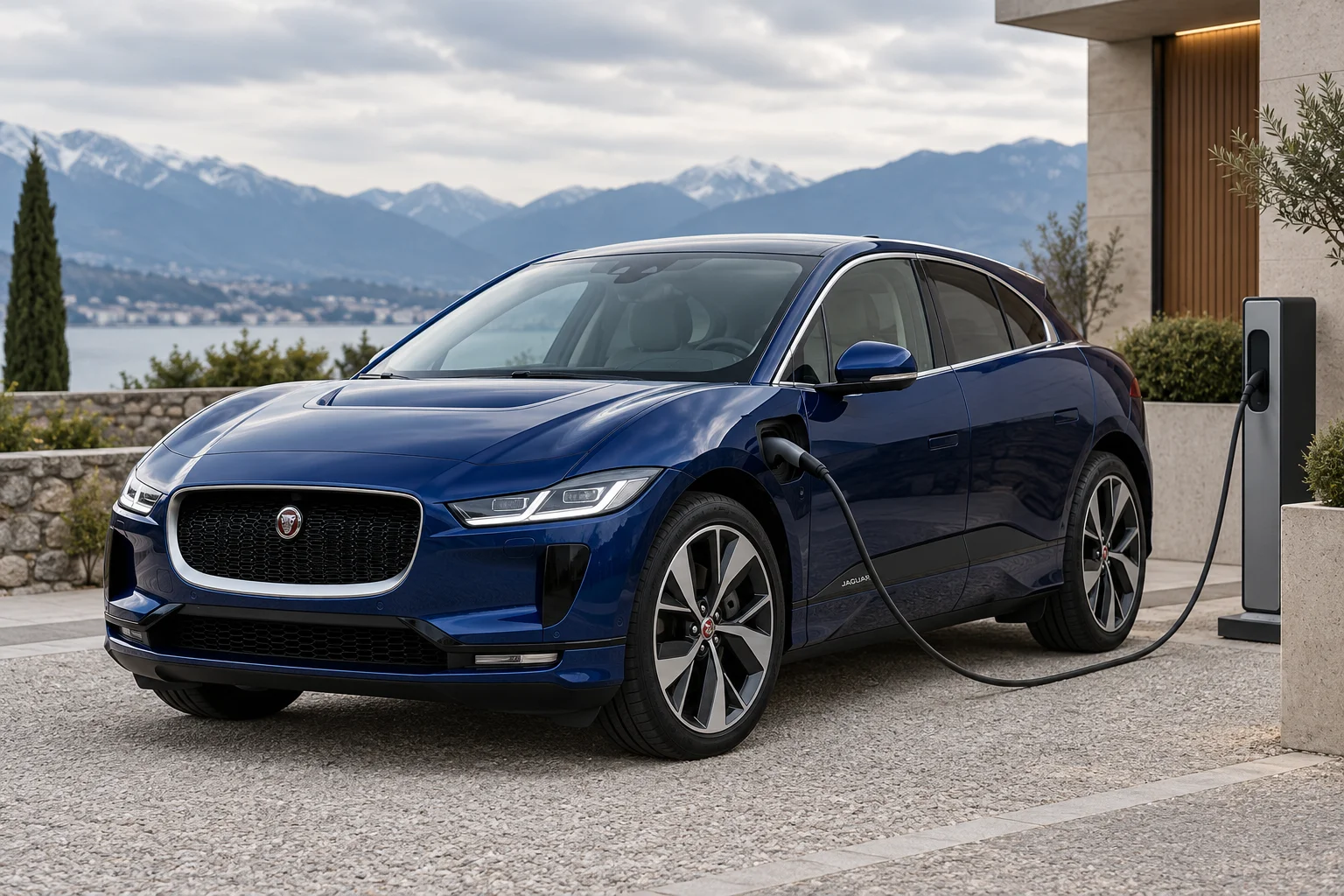
I currently represent two buyers of Jaguar I-PACE vehicles whose cases involve high-voltage battery problems, safety recall H570 and a 90 per cent charge limit. I am seeking to reverse the purchase in both cases. The cases share some features, but differ in their repair histories, evidence and procedural progress.

Claims have now been filed in court in both cases. The outcome of both proceedings remains open. Drawing on these ongoing matters, I explain the technical and legal questions that can be decisive for affected buyers, without anticipating a court decision.

Two Jaguar I-PACE vehicles, two different starting points

Case 1: a battery module was replaced, but the charge limit remains

In the first case, a defective module in the high-voltage battery was replaced following charging problems. A measure relating to safety recall H570 was also carried out. According to my client's latest report, the vehicle nevertheless remains limited to a maximum state of charge of 90 per cent.

In the ongoing court proceedings, I argue that replacing the defective module does not resolve the separate question of the recall and the remaining restriction. The issues include how the charge limit affects use, what remedy is actually available and whether the conditions for the requested termination of the contract are met.

I distinguish between the individual technical questions. A module defect and a safety measure affecting the same battery pack do not establish that they have the same cause. Whether a defect was already inherent at a particular point in time is also a question of evidence. I have requested an expert report on these issues. There has been no final judicial determination.

Case 2: battery work and a charge limit before the purchase

In the second case, a workshop record documents replacement of the high-voltage battery and a measure concerning the charge limit in connection with H570 before the sale. Shortly after taking delivery, the buyer complained that the Jaguar would charge only to 90 per cent. In the exchange with the seller at that time, reference was made to a future update.

An air-conditioning failure and an insulation fault in the high-voltage system recorded in an ÖAMTC diagnostic report were subsequently raised. The technical cause of this fault and any connections between the issues remain to be clarified. My client has not used the vehicle since that finding. I treat these issues separately from the pre-existing charge limit.

For this client, I declared termination of the contract out of court. After the deadline passed without a satisfactory response, I have now filed a claim. There is no court outcome in this case either.

What the two cases have in common

For my clients, both cases involve more than a percentage on a display. What condition was the buyer entitled to expect? What was disclosed before the purchase? What restriction actually remains? Must the buyer continue to wait for a remedy? My role is to assess these questions legally and technically against the individual purchase contract, workshop records and history.

What can lie behind a charge limit?

A user-selected charging limit is different from a restriction imposed by the manufacturer. A driver who chooses to charge only to 80 or 90 per cent in the vehicle menu can normally change that setting again. A technical restriction imposed as a safety measure is not equivalent.

A publicly available US recall report submitted by Jaguar Land Rover on 5 February 2026 describes a risk of thermal overload in the high-voltage battery of certain US-market I-PACE vehicles from model years 2020 and 2021. As an interim measure, it provided for software limiting the maximum state of charge to 90 per cent while a permanent remedy was being developed. The report's chronology refers to vehicles with battery packs from model year 2021 or earlier. The interim restriction is administered under manufacturer campaigns H570 for earlier model years and H571 for model year 2021, with the permanent remedy envisaged under H572. [1]

This is documented technical background, but does not establish that every I-PACE registered in Austria is affected. The vehicle identification number, battery version and manufacturer information applicable to the individual vehicle are decisive. Whether a remedy has since become available must likewise be checked for that vehicle.

When does a legal defect exist?

The following explanation of Austria's Consumer Warranty Act (Verbrauchergewährleistungsgesetz, VGG) concerns purchases by consumers from businesses under contracts concluded on or after 1 January 2022. Older contracts and purchases from private sellers require a separate assessment. [2]

In a consumer sale, a car must have both the agreed characteristics and those ordinarily expected. These include functionality and safety. With a used car, its age, mileage, price and the specific agreement also matter. [2]

A mandatory charge limit can affect use: less charge is available, journeys may require different planning and additional charging stops may be needed. The exact reduction in driving range cannot, however, be calculated from the displayed limit alone. Another key question is whether the measure permanently resolves a safety risk or only limits it temporarily.

If the restriction was disclosed before purchase, the precise contract terms must be examined. Under section 6 VGG, a departure from the objectively required characteristics requires specific information and the consumer's express and separate agreement. A general reference to the vehicle being used or to an exclusion of warranty is not a substitute. [2]

Whom should I contact?

The seller is generally the party responsible for statutory warranty claims under the purchase contract. A manufacturer's guarantee and a recall campaign are separate matters. A report to Jaguar or an authorised workshop should therefore be accompanied by a clear written notification of the defect to the seller.

Describe the specific restriction and when it began. Keep replies, workshop orders and announcements of updates. Whether the seller can remedy the cause itself or needs the manufacturer's support is distinct from the question of your rights against the seller.

Must I wait for a repair or an update?

Under the VGG, repair or replacement is generally the first remedy. Which remedy can be requested also depends on feasibility and proportionality. It must be provided within a reasonable time, free of charge and without significant inconvenience. [3], [4]

There is no single waiting period that applies to every case. Relevant factors include the nature of the defect, whether the car can be used, specific safety instructions and how long the restriction has already lasted. A non-binding prospect of a future update therefore does not by itself answer whether the required remedy is being provided in time.

Buyers should seek clear written answers: what measure is planned, when can it be carried out, will it fully remove the restriction, and what instructions apply to driving, charging and parking until then?

When can the purchase be reversed?

Section 12 VGG permits a move to a price reduction or termination of the contract in defined circumstances. These include refusal to provide a remedy, failure to remedy within a reasonable time, or a defect despite an attempt to remedy it. A particularly serious defect can also justify immediate termination. A merely minor defect is insufficient for termination. [3]

Two questions must be kept separate: is the defect more than minor, and is there already a statutory reason to move from repair or replacement to termination? Answering the first question does not settle the second.

A safety issue does not automatically entitle the buyer to return the car immediately. In its decision of 20 July 2026, 3 Ob 122/26a, the Austrian Supreme Court required a closer assessment; the safety aspect alone was insufficient in that case. It was not a Jaguar case. The decision illustrates why the nature and severity of the risk and the specific remedies available must be carefully assessed. [5]

In my two cases, the interaction between the safety concern, the remaining charge limit, the repair history and the availability of a permanent remedy is therefore important. The claims to reverse the purchases are based on each vehicle's circumstances. Whether the conditions are satisfied has not yet been finally determined. A blanket promise that a recall means a refund would be misleading.

What happens after effective termination?

Following effective termination, the purchase is unwound: the vehicle is returned and the purchase price refunded. The VGG also governs return costs and the seller's right to withhold repayment pending the relevant return requirements. Termination may be exercised by declaration; a written declaration giving reasons is advisable for evidential purposes. [2]

Whether compensation for use is deductible and whether further expenses can be recovered require separate assessment. Buyers who financed the car must also consider the credit arrangement. Do not simply leave the vehicle at the seller's premises: clarify return arrangements, transport and payment.

Documents that help with the assessment

For an initial assessment, try to preserve the following:

  • The purchase contract, advertisement and written assurances about the battery, range and vehicle condition.
  • Recall letters and confirmation of whether the vehicle is affected, based on its vehicle identification number.
  • Workshop orders and records of battery replacement, software measures and charge limits.
  • Photographs of the display, the date and mileage when the problem first appeared, and a description of its practical effects.
  • Defect notifications to the seller and its replies, especially announced repair or update dates.

Follow the manufacturer's and workshop's safety instructions. Do not independently bypass a safety limit. If warning messages appear or there are doubts about safe operation, obtain a professional assessment of whether and how the vehicle may be used or transported.

The legal basis and time limits also depend on the purchase date. Amendments to the VGG effective from October 2026 do not apply indiscriminately to older purchase contracts. Mere correspondence with the seller or manufacturer does not automatically preserve a claim against limitation. [2]

Similar problems with your Jaguar I-PACE?

These two ongoing matters illustrate the importance of combining technical assessment with legal argument. As a lawyer and trained automotive mechanic, I identify which restrictions are documented, what a repair has actually resolved and which questions still require an expert's opinion.

Send me your purchase contract, recall letter and available workshop records for a free initial telephone assessment. We can then discuss whether repair, a price reduction or reversal of the purchase may be appropriate.

Mag. Patrick Maydell, LL.M. | Lawyer
Neustiftgasse 17/1/9, 1070 Vienna

Telephone: +43 1 2954251 · Email: office@maydell-law.at

Sources and further reading

[1] Jaguar Land Rover: US recall report 26V067, 5 February 2026 (H570/H571/H572)

[2] Austrian Consumer Warranty Act (VGG), especially sections 1, 3–6, 10–11, 15 and 28–29

[3] Section 12 VGG: statutory warranty remedies

[4] Section 13 VGG: repair and replacement

[5] Austrian Supreme Court, 20 July 2026, 3 Ob 122/26a: assessing immediate termination

Further reading: Reversing an electric car purchase when the promised range is not achieved, cancelling a car purchase and compensation for use when reversing a purchase.

Categories: Vehicle law

Tags: Cancelling an electric car purchase, Vehicles, Reversal of a purchase
Audi S6 with engine damage: what the expert report revealed about the software tuning

By Mag. Patrick Maydell, LL.M. – lawyer and trained motor vehicle mechanic

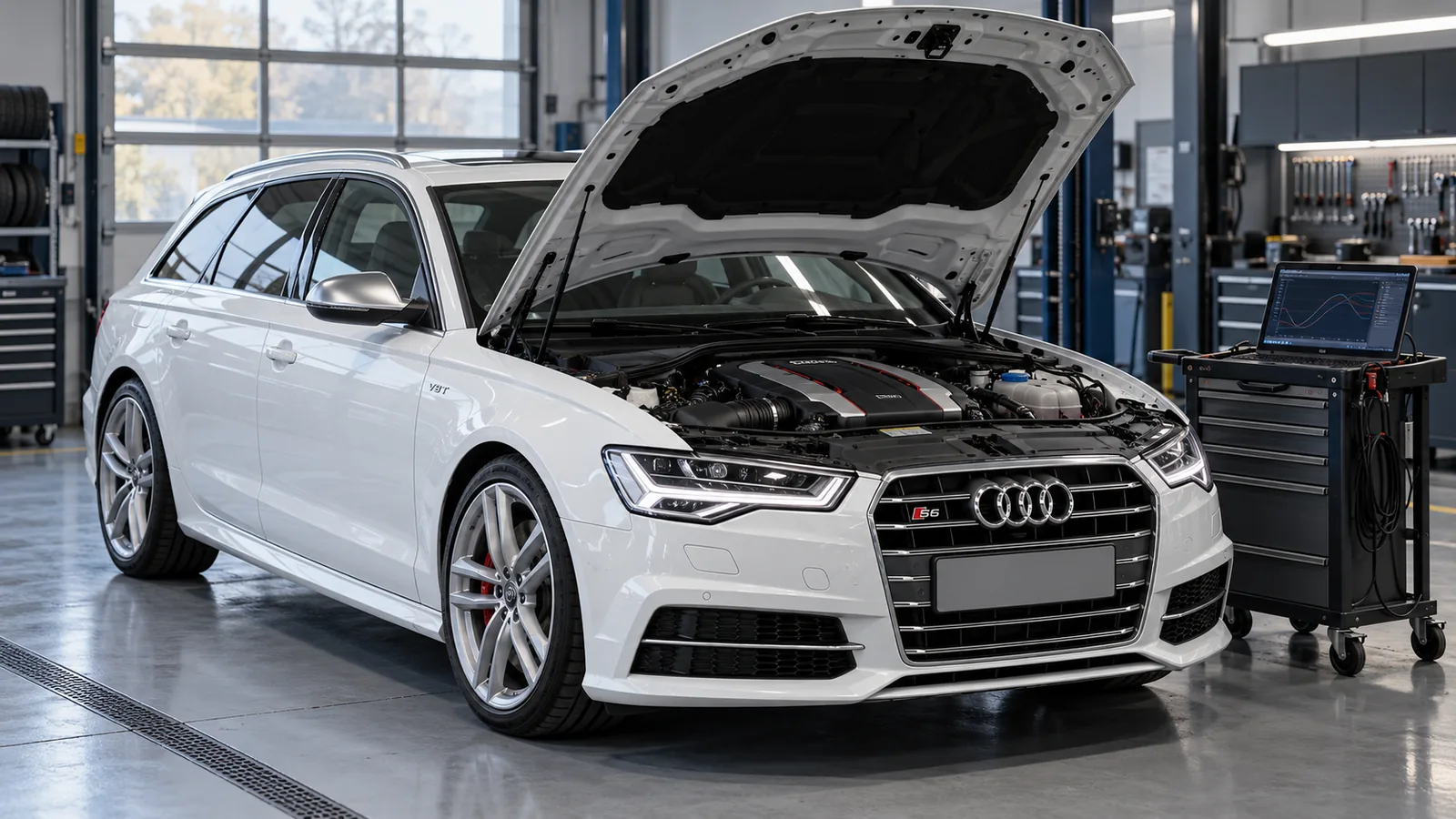
A used Audi S6 Avant bought for EUR 31,890, and later a car that could no longer be driven. In proceedings I conducted before the Regional Court of Linz, the dispute concerned alleged engine damage. The central question was which changes to the engine software had already been present before the purchase. The court-appointed expert found modifications to several protective functions, from the component-protection lambda settings to the rev limiter.

The software modifications in the state read from the control unit were established. Whether they had caused the engine damage remained unresolved without dismantling the engine. Following the hearing to discuss the expert report, the parties agreed on a settlement: EUR 25,000 in exchange for returning the car, plus reimbursement of litigation costs. The settlement, initially subject to a right of revocation, has now become legally effective. The case illustrates how technical findings, questions of evidence and an economically sensible solution are connected.

As a lawyer and trained motor vehicle mechanic, I assess such cases legally while also understanding engine management, diagnostics and damage patterns. For buyers, the important questions are: what does an expert report actually establish, and what further examination would be needed?

The vehicle: Audi S6 Avant, type 4G, with a 4.0-litre V8

My client bought the Audi from a vehicle dealer. According to the expert report, it was an Audi S6 Avant quattro, type 4G, with an engine capacity of 3,993 cm³. Its registered power output was 309 kW at 5,500 rpm, equivalent to around 420 metric horsepower. It was first registered in 2013. The manufacturer's data extract included in the report lists engine code CEUC and sales type 4G5S3Y. The technical overview uses the abbreviated engine designation CEU.

The purchase contract recorded 160,535 kilometres and a price of EUR 31,890. At a subsequent private damage assessment, the mileage was 166,156 kilometres, an increase of 5,621 kilometres. These figures describe only the period up to that assessment. They do not establish when damage began or what caused it.

At the court expert's inspection, the vehicle was not operational. The expert read the fault memory, examined the engine's interior using an endoscope and retained the engine control unit for further examination.

Bosch MED17.1.1: comparison with the factory software

The engine control unit was a Bosch MED17.1.1. The expert compared the extracted data with original reference software. This made it possible to identify deviations in the stored calibration maps.

A calibration map determines which value the engine management system uses under particular conditions, for example depending on engine speed and load. The modifications affected several functions that the manufacturer uses to protect the engine and exhaust system. Simply stating that “tuning is present” does not explain these findings. The individual findings are therefore set out below.

1. Component-protection lambda: reduced enrichment at high load

The expert found that, at higher engine speeds and loads, the mixture had been made leaner compared with the intended protection strategy. The factory enrichment was reduced in these operating ranges.

Lambda describes the ratio between the air actually present and the air required for complete combustion. Here, “made leaner” means that the mixture is leaner than in the factory calibration. It does not automatically mean that the engine was running with a lean mixture at a lambda value above 1 throughout.

According to the report, this modification increases exhaust gas temperatures. It can expose the turbochargers, catalytic converter, pistons and valves to greater thermal loads. This matters because the modified function is specifically intended to provide protection under demanding operating conditions.

2. Catalytic converter protection: modified temperature maps

The temperature maps for catalytic converter protection had also been edited. According to the report, this allowed the engine management system to permit higher exhaust gas temperatures than in the factory calibration. The catalytic converter protection strategy had been partly reduced.

This must be considered together with the modified mixture enrichment. The expert assessed several modifications whose effects on thermal loading may reinforce one another. The report contains no temperature measured during a test drive. The calibration-map analysis therefore does not establish a specific exhaust gas temperature.

3. Catalytic converter functions: disabled in the software

The report also describes modified deactivation maps and disabled catalytic converter control. Among other things, the software analysis shows switches for catalytic converter diagnostics with the states “1 = ON” and “0 = OFF”.

The expert regarded this as a substantial intervention in emissions-related protection and monitoring functions. It does not establish that the catalytic converter had been removed or its internal components taken out. Whether hardware had also been modified could not be conclusively determined during the examination.

4. Rev limiter: raised by 500 rpm

A particularly clear finding was that the engine rev limiter had been raised by 500 rpm. This changed an operating limit stored in the engine control unit.

The expert considered this an additional strain on rotating and reciprocating engine components. The altered limit permits higher engine speeds. The analysis does not show whether my client actually ran the engine up to that limit or whether this damaged a particular component.

5. Ignition maps: ignition timing advanced by up to 3°

In the ignition maps, the expert identified an advance of up to 3 degrees of crankshaft rotation compared with the reference calibration. Top dead centre is the highest point in the piston's travel. Ignition angles are expressed relative to that piston position.

“Advanced by up to 3°” means that ignition occurs earlier than in the factory calibration. It does not mean that the engine always fires at exactly 3° before top dead centre. The comparison in the report shows different changes depending on engine speed and load.

According to the report, these modifications may increase the tendency to knock, as well as thermal and mechanical loads. Again, a modification that may contribute to damage is not in itself an established cause of the particular damage in question.

What the fault memory and endoscope also revealed

The fault memory contained, among other entries, combustion misfires (P030000) and an entry for cylinder 7 (P030700). There were also entries relating to ignition control for cylinders 5 to 8 and several electrical faults affecting the camshaft adjustment actuators.

Context is crucial: when was a fault recorded? At what mileage? What work or checks had taken place beforehand? A fault code initially reports only a deviation detected by the system. It does not replace a mechanical diagnosis of damage and does not establish who caused a defect.

According to the report, the visual inspection with the endoscope revealed no clear damage inside the engine. The expert considered dismantling the engine necessary to establish specific mechanical damage and its cause. This did not take place during the proceedings. The significance of improperly installed wiring found in the engine compartment also remained unresolved.

A specific piston or valve defect has therefore not been established by the court as the cause of the damage. What has been established is software that differed from the factory state, with the modifications described above.

Was the tuning already present before the purchase?

The timing mattered for the dispute with the dealer. The documents examined by the expert contained indications of tuning as early as the period between 13 December 2021 and 16 May 2022, at mileages between 153,510 and 156,027 kilometres. The purchase contract was not concluded until 24 June 2023.

There were therefore specific indications of a tuning history before the purchase. However, the dealer disputed that the software complained of had been present or active at handover. My client denied making any changes to the engine software after handover.

During the supplementary discussion, the expert explained the limits of the examination. He could establish the state read from the control unit and the parameter deviations. A complete history of all software versions could not be reconstructed from this. He considered it theoretically possible that the software had been removed in the meantime and subsequently reinstalled. He had not established that such a sequence of events had occurred.

This distinction is central to my work as a lawyer. A theoretically possible alternative sequence is not an established fact. Conversely, an earlier indication of tuning cannot simply be assumed to apply to every setting read from the control unit at a later date.

Why “reinstalling the factory software” does not automatically resolve the case

The expert estimated the cost of restoring the engine software to its factory state at EUR 200 to EUR 300. However, this relatively small amount answered only part of the question: the cost of the software work.

Possible additional hardware modifications, mechanical damage and whether the car would have been fully usable again following reprogramming alone remained unresolved. Different software cannot, of course, repair components that are already damaged.

The valuation also had limits. Based on the circumstances established at the time, the expert estimated the vehicle's value when the contract was concluded at EUR 30,500. Engine damage that had not been conclusively examined and possible further modifications could not be taken into account. The report therefore did not confirm that the car had only scrap value.

“Unapproved tuning” is consequently not simply synonymous with a “worthless vehicle”. A reliable assessment of the claims requires separate consideration of the software state, approval issues, mechanical condition and the work needed to restore the vehicle.

My approach: translating technical questions into legal arguments

On behalf of my client, I sought cancellation of the purchase contract and repayment of the purchase price in exchange for returning the vehicle. The issues were the alleged engine damage, the undisclosed tuning and the condition the buyer was entitled to expect when concluding the contract.

Several legal questions had to be clarified: did the software modification, which had not been agreed, itself constitute a defect? What was the significance of the lack of approval? What remedy was possible and had been requested? And for which claims did it additionally need to be established that the tuning itself had caused mechanical damage? Not every finding of tuning automatically leads to reversal of the purchase.

The modifications established in the report also affected emissions and protective functions. The expert classified them as requiring approval; without the relevant documentation, he could not assess whether approval was possible at all. The legal framework for vehicle modifications is set out in section 33 of the Austrian Motor Vehicles Act (KFG).

My advantage as a trained motor vehicle mechanic is that I can put technical terminology and examination results into context. In proceedings, this helps me ask targeted questions. Does the analysis show a software deviation, an actual overload or already a damaged component? Has a cause been established or merely described as a possibility? What further examination would close a decisive gap?

As a lawyer, I must determine which arguments the available evidence supports and whether further examinations are economically worthwhile. The court-appointed expert's report remains an independent source of evidence. My technical training helps me use it critically and precisely when representing my client.

The settlement: EUR 25,000 in exchange for returning the Audi

After discussing the expert report, the parties concluded a settlement subject to a right of revocation. It provides for:

  • Payment of EUR 25,000 to the buyer through his legal representative, concurrently with the return of the Audi S6 Avant.
  • Collection of the vehicle from the buyer's home at the dealer's expense.
  • An additional EUR 9,345.06 in reimbursement of the litigation costs agreed in the settlement.

The obligations must be performed within 14 days of the settlement becoming legally effective. The revocation period ended on 30 September 2026. As no revocation was received by the court, the settlement became effective.

Payment and the return of the vehicle are now to be completed within that period. The settlement does not establish that the tuning caused the engine damage.

For the buyer, the solution means returning the vehicle for a specified amount without having to continue litigating the unresolved technical questions of evidence. The settlement amount is below the original purchase price. This, too, is part of an accurate account. The difference cannot simply be characterised as compensation for use on the basis of the settlement.

What buyers can learn from this case

Where engine problems and suspected tuning are involved, it is important to preserve evidence of the actual condition. The following documents and information are particularly useful for an initial assessment:

  • The purchase contract, advertisement and written assurances concerning the vehicle's condition.
  • The mileage at handover, when the defects first appeared and at each examination.
  • Complete diagnostic records with dates and mileage, as well as any available manufacturer checks relating to the software state.
  • Workshop reports, maintenance records and documentation of subsequent repairs or software changes.
  • The correspondence with the seller to date and the seller's response to the defects complained of.

Clarify how the existing data will be preserved before the fault memory is cleared, a software update is carried out or the control unit is replaced. Where there is a specific suspicion of damage, you should also obtain technical advice on continued use. Whether dismantling is necessary depends on the unresolved evidential question and the costs.

I explain the general requirements for returning a vehicle in the guide “Reversing a car purchase: returning a car because of defects”. For possible deductions for use of the vehicle, see the article on compensation for use when reversing a purchase.

Engine problems or suspected tuning after buying a car?

I review your purchase contract, correspondence and the available technical documents. We then discuss the claims and next steps that follow from them. I consider the legal questions and technical findings together.

For an enquiry, please send me the purchase contract, any workshop reports or expert reports and a brief account stating the purchase date, mileages and the problems that have arisen.

Contact: office@maydell-law.at · +43 1 2954251

Categories: Vehicle law

Tags: Vehicles, Reversal of a purchase, Rescission, Tuning

VW Sharan 2.0 TDI: defective sunroof – why describing the defect matters

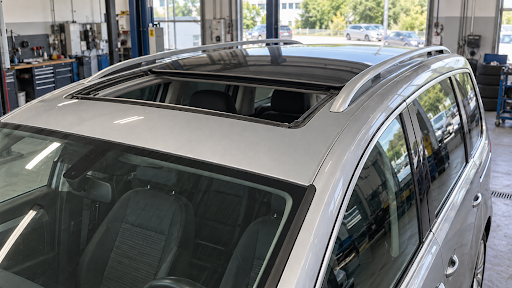
The electric glass roof of a VW Sharan 2.0 TDI reverses when closing and remains open. Yet the inspection report refers to the “roof blind control unit” – and the court proceedings turn on which defect that description covers. A case from my practice shows how a seemingly minor difference in terminology can become a decisive legal issue. The proceedings ended in a settlement covering repairs to the sunroof and auxiliary heater, together with a contribution towards the expert’s fees.

Roof blind or glass roof: a word with consequences

Our client had purchased a VW Sharan 2.0 TDI Highline of the 7N generation: a seven-seat diesel with 130 kW (177 PS), model year 2015, with an electric glass roof and an interior sunblind. The purchase price was EUR 20,500. According to his account, he noticed the roof fault just three or four days after buying the car. He pressed the switch and the glass roof moved all the way back. When he then tried to close it, it moved forwards but stopped just short of closing fully and moved back again.

The ÖAMTC inspection report recorded fault code “2907 roof blind control unit – malfunction”. The statement of claim adopted the description “fault in the roof blind control system”. It later became a point of dispute whether this also covered the reported problem with the glass roof’s closing function.

For the buyer, these were all aspects of the same roof problem. Technically, however, a distinction must be made: the interior sunblind shields the cabin from sunlight, while the movable glass roof sits above it. According to my client, when he later collected the vehicle after several weeks in the workshop, he and the dealer tested both functions. The blind opened and closed. It was then retracted again so that the glass roof was visible. During the test, the roof could be opened and closed once, but he perceived it as moving very stiffly and making an unusual noise. He recalls that, despite his enquiry, the dealer confirmed that the roof had been repaired. This account reflects the buyer’s perception.

What the court-appointed expert actually found

At the court-appointed inspection in a workshop, the Sharan’s odometer read 157,893 kilometres. The buyer, the parties’ legal representatives, a workshop technician and the court-appointed expert were present. The sunblind was tested first and worked properly. Tilting the glass roof and closing it from that position also worked. The fault appeared when the roof was slid fully open and then closed: the glass moved forwards to its stop, but its rear edge did not lower and it automatically reopened by approximately 20 centimetres. Several attempts produced the same result. The sunroof’s basic setting procedure could not be completed even with the manufacturer’s diagnostic equipment.

At that point, no fault relating to the sunroof or roof blind was stored in the fault memory. Nevertheless, the malfunction could be observed directly. On this particular vehicle, this demonstrated that a fault memory without relevant entries is no substitute for testing the function actually complained of.

Partial dismantling revealed signs of earlier repairs. The right-hand guide rail was photographed. The expert found material loss on the motor’s drive pinions and the moving rails. Swarf was clearly visible around these small drive gears. The glass roof could only be closed again after removing the motor and carrying out several adjustments. Full dismantling was initially avoided: my client wanted to continue using the Sharan, and with an open roof the vehicle would have been unusable in the rain. The roof was then closed and watertight again, but it was not to be opened until repaired.

The subsequent estimate for repairing the roof amounted to EUR 3,696.77 including VAT. It included work on cables and guides, removal of the headlining and two sunroof motors. This was an estimate prepared before full dismantling; it did not establish which parts would actually need replacing. If the roof frame also needed to be replaced, the expert’s report indicated an additional EUR 1,839.60 including VAT. Overall, the expert estimated the roof repair at approximately EUR 3,500 to EUR 5,500. Diagnosis of the heating problem revealed another specific distinction: the affected component was the auxiliary heater, not the air conditioning. Its repair was estimated at EUR 1,730.09 including VAT.

These findings alone did not, however, establish who had caused the mechanical damage or whether the earlier fault code reflected the same technical cause. Those questions must be distinguished from establishing the current defect.

The legal question: clarification or amendment of the claim?

During the proceedings, it was explained in greater detail that the complaint concerned the glass roof’s closing function. The opposing party objected that this introduced a different defect into the proceedings and also raised a limitation defence.

At the oral hearing, the judge stated that she considered the previous description sufficient and did not regard the clarification as an amendment of the claim.

The statutory starting point is section 235(4) of the Austrian Code of Civil Procedure (ZPO): factual allegations in a claim may be supplemented, explained or corrected without this constituting an amendment of the claim, provided that the basis of the claim remains unchanged. Whether that condition is met depends on the previous submissions and the particular additional explanation.

For car buyers, there is a practical lesson: describe what does not work on the vehicle as early and as clearly as possible. Technical terms and diagnostic codes are useful clues, but they should be considered alongside the observed symptoms. Merely changing the name of a fault does not automatically cover every defect subsequently identified.

The judge’s oral assessment was not a final determination by judgment. The proceedings ended in a settlement, so the disputed legal questions were not decided in a reasoned judgment.

The settlement: two repairs and a EUR 2,300 contribution to costs

In the settlement, the seller undertook to:

  • Repair the auxiliary heater and remedy the sunroof defect, in each case in accordance with the findings in the expert’s report.
  • Complete both repairs within four weeks of the buyer handing the vehicle over to the seller.
  • Pay a contribution of EUR 2,300 towards the expert’s fees to the claimant’s lawyer within 14 days.

The settlement also provides for a final resolution of all mutual claims and demands between the parties. The contribution to costs is an agreed partial reimbursement of the expert’s fees.

What to document if you encounter a similar vehicle defect

  • The specific behaviour: which function fails? What happens when you open, close or operate a switch? Does the problem occur constantly or only occasionally?
  • The timing: record the date and mileage when the problem first occurs and on subsequent occasions.
  • Photographs or short videos: record the fault where it is safe to do so. Avoid further operation if this could cause damage.
  • Your notification to the seller: describe the problem in writing and keep the replies. Supplement any fault code with your own observations.
  • The history of attempted repairs: keep work orders and invoices. Record which work was promised and whether the same fault persists after the vehicle is returned.

A sentence such as “The glass roof reverses when closing and remains open” makes the complaint immediately understandable to the seller, the workshop and the court. It is precisely this connection between the buyer’s observations, the technical documents and the legal claim that matters in vehicle disputes.

Free initial assessment

Is your sunroof sticking, is another vehicle function failing, or does the dealer say a defect has been repaired despite continuing problems? As a lawyer and trained motor mechanic, I assess your case from both a legal and a technical perspective.

Send me your purchase contract, any inspection reports and correspondence about repairs for a free initial telephone assessment. You can reach my firm on 01/295 4251 or office@maydell-law.at.

If you are considering returning your vehicle rather than having it repaired, you will find further information in the article “Cancelling a car purchase in Austria: returning a defective car”.

Categories: Vehicle law

Tags: VW Sharan; vehicle; defect

Hyundai Bayon: dealer denied a defect, court expert measures abnormal quiescent current

Four failures to start after battery discharge, three replacement batteries and a new control unit: why an intermittent electronic fault became objectively visible only through sufficiently long quiescent-current measurements.

Modern vehicle faults cannot always be reproduced during a brief workshop check. A car may start normally on the inspection day yet have a significant electronic defect, particularly one appearing only after two or three weeks parked.

This is the issue in ongoing proceedings from my practice involving a Hyundai Bayon Trendline 1.0 T-GDi DCT first registered in 2022. After longer periods parked, the starter battery repeatedly discharged so far that the car would not start. Dealer and importer denied a technical defect. The court-appointed vehicle expert's written report reaches a different conclusion.

Two perspectives, one case. As a lawyer and trained motor mechanic, I assess workshop records, measurements and expert evidence legally and technically.

Four flat batteries, three replacements and a control unit

The Bayon was bought new in 2022 with twenty kilometres. At the court expert's inspection in July 2026, it had covered 44,502 kilometres. The records show four similar incidents:

  • February 2023: failure to start after a longer standstill; battery replaced.
  • January 2024: the same problem; battery and battery sensor replaced.
  • January 2025: another battery failure; third replacement battery.
  • January 2026: battery flat again; fuses and wiring checked, and the Integrated Body Control Unit, a fuse box with integrated control unit, replaced.

The buyer requested cancellation out of court. The dealer refused and offered a newer-generation battery free of charge. In proceedings, dealer and importer argued that the vehicle currently worked properly and mere concern about future failures was not a warranty defect.

Why a short battery test is insufficient

Regular driving recharges the starter battery. Excessive or unstable quiescent current can therefore remain unnoticed until a longer standstill leaves the battery discharged, even if it previously tested as serviceable.

The question is not only whether the battery is healthy, but whether the vehicle electronics correctly enter sleep mode after parking and reach a stable resting current.

Measurements: up to 80 mA rather than a stable resting value

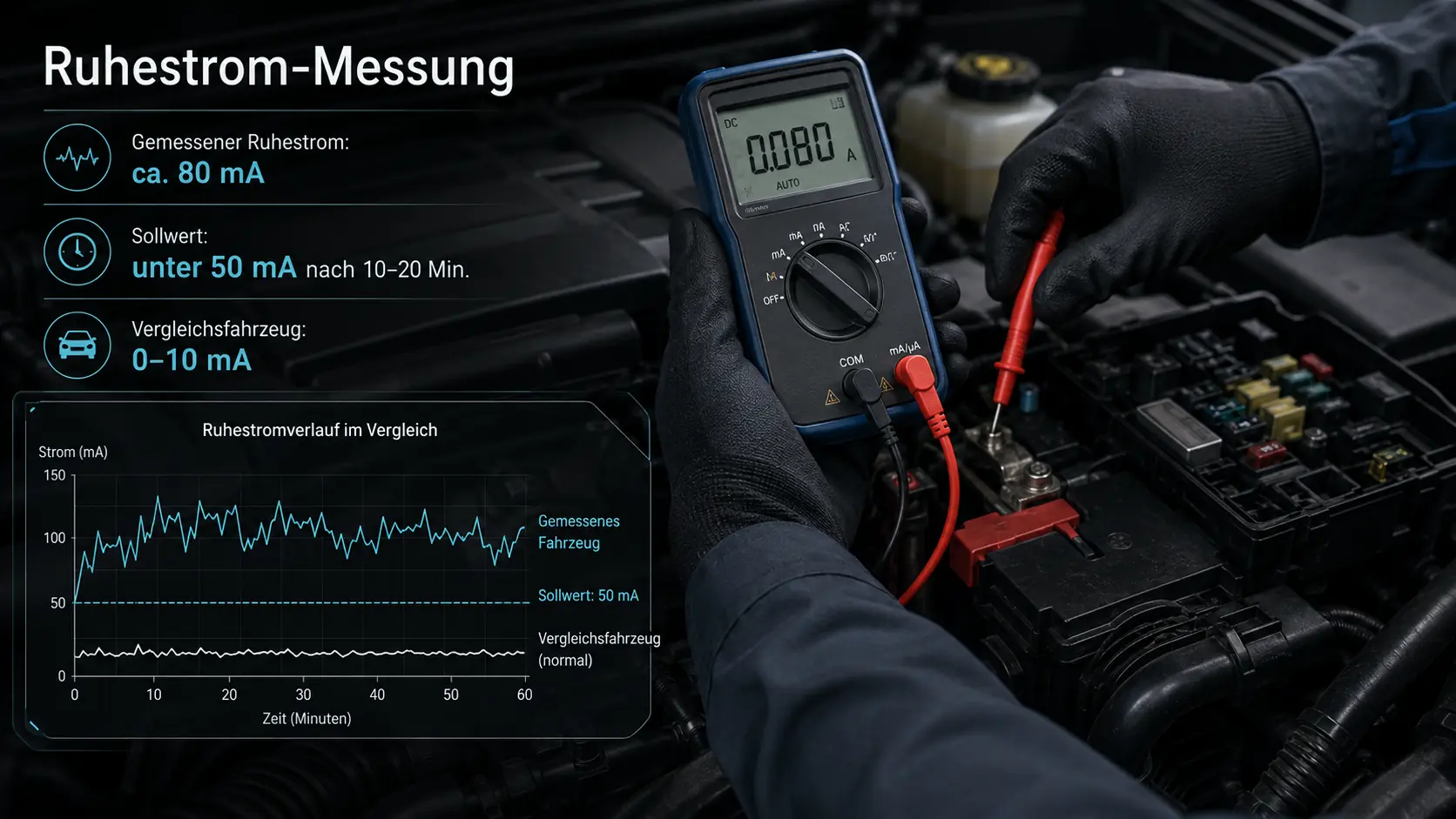
The vehicle had a 12-volt, 45 Ah, 450 A starter battery. Initial voltage was 12.26 V and the fault memory recorded low battery voltage. Technical documents used during the inspection specified quiescent current below 50 mA after approximately ten to twenty minutes.

Measurement time / instrument Affected vehicle Comparison vehicle
After about 5 minutes 19–80 mA, fluctuating —
After 30 minutes 24–79 mA, fluctuating —
After about 45 minutes 22–80 mA, fluctuating —
Second instrument, after about 15 minutes 10–60 mA; repeatedly 50–60 mA —
After about 10 minutes — 0–10 mA, then stable

Measurements from the written vehicle expert report submitted in the proceedings.

The comparison was especially informative: another petrol-engined Hyundai Bayon settled at 0–10 mA after about ten minutes and remained stable. The affected vehicle continued fluctuating, at times reaching 80 mA even after an extended period.

The expert confirms an electronic defect

Based on these measurements and the comparison vehicle, the court expert found an electronic defect. Values partly exceeded tolerance, and fluctuations between 19 and 80 mA were technically inconsistent with proper quiescent current.

The written report has not yet conclusively identified the component causing the fluctuations. Establishing a defect technically requires objective departure from proper condition; locating the exact source may remain important for a later repair.

Why the problem had not recently reappeared

At inspection, the owner reported no further starting problems since January 2026. The vehicle was now used regularly rather than left in the garage for fourteen days or three weeks. The expert considered this consistent with the measurements: regular driving recharges the battery and can temporarily conceal the consequences of abnormal quiescent current.

Was the battery the cause or only the consequence?

A starter battery can itself be defective. But when the same pattern returns over several years despite repeated replacements, the cause of discharge must be systematically investigated. Replacing the battery restores starting temporarily but does not fix another electrical consumer or control fault imposing an excessive load while parked.

This demonstrates the importance of sufficiently long measurements. “It drives and starts now” does not exclude an intermittent electronic defect.

The report is not yet a judgment

The 2022 consumer purchase falls under the Austrian Consumer Warranty Act (VGG). Repair or replacement generally comes first. A price reduction or cancellation is available under section 12 VGG where the relevant conditions are met, for example if restoration to a defect-free condition fails, is not performed or cannot reasonably be expected of the consumer. Cancellation is excluded for a merely minor defect.

Four repairs were carried out here. The court must assess all circumstances to determine whether cancellation is justified. The expert report answers the central technical question in the buyer's favour but does not predetermine the legal outcome.

What buyers should document after repeated battery discharge

  • date, mileage and length of the preceding standstill;
  • roadside assistance reports and whether jump-starting was needed;
  • all repair orders and workshop invoices;
  • battery tests, quiescent-current measurements and fault-memory records;
  • all replaced batteries, sensors and control units;
  • written workshop statements about the suspected cause.

If the problem returns after battery replacement, do not hastily assume another isolated battery failure. Investigate whether an electrical consumer or vehicle control system is responsible.

Conclusion: measurements can reveal an invisible defect

Intermittent electronic faults are especially frustrating: the car works at the workshop, the fault memory may offer no clear clue, and a replacement battery initially appears to solve everything. Weeks or months later, it is flat again.

This case shows that sufficiently long measurements and direct comparison with a technically normal vehicle can make a disputed fault objectively measurable.

If your battery repeatedly discharges and the dealer or workshop finds no defect, a combined legal and technical assessment is worthwhile.

Free initial assessment

As a lawyer and trained motor mechanic, I review both aspects. Send the purchase contract, repair orders and available battery tests, quiescent-current measurements or expert reports for a free initial telephone assessment.

I look forward to hearing from you.

Mag. Patrick Maydell, LL.M.
Attorney at Law
Neustiftgasse 17/1/9
A-1070 Vienna
Telephone: +43 1 295 4251
Email: office@maydell-law.at

Categories: Vehicle law

Tags: Car purchase, Battery discharge, Dealer warranty, Quiescent current, Car purchase rescission

Usage compensation when reversing a car purchase: a formula worth thousands of euros

As a lawyer and trained motor mechanic, I am frequently asked about usage compensation. When returning a seriously defective car and seeking a refund, buyers are often shocked by the dealer's substantial deduction for kilometres already driven.

The calculation can make a difference of several thousand euros. Without knowing the case law and formula, buyers often accept excessive deductions proposed by dealers or insurers.

Why is usage compensation payable?

When a purchase is reversed, whether under warranty law or for mistake, each side returns what it received: the buyer the car and the seller the price.

Use of the vehicle has consumed some of its value. The Supreme Court therefore regularly requires usage compensation to be deducted from the refund.

The Supreme Court formula

Total lifetime mileage is often incorrectly used as the denominator in every case. That is correct only for a new car. For a used car, the relevant figure is expected remaining mileage at the time of purchase.

Usage compensation = purchase price × kilometres driven ÷ expected remaining mileage.

For a used car, expected remaining mileage equals expected total lifetime mileage minus the odometer reading at purchase.

Three values determine the result:

  • Purchase price: the actual gross amount paid.
  • Kilometres driven: the difference between mileage at delivery and at return.
  • Expected remaining mileage: the distance this particular vehicle could reasonably have covered from purchase until the end of its technical life.

The key dispute: expected total mileage

This is often the most contested and financially significant issue. Dealers and insurers may use low total-life figures, often only 150,000 kilometres, increasing the deduction and reducing the refund.

Case law frequently uses higher figures for modern vehicles:

  • Petrol and diesel vehicles: commonly 200,000–250,000 kilometres, sometimes more for high-quality or particularly durable engines.
  • Electric vehicles: case law is developing, with the calendar and cycle life of the traction battery increasingly considered as a separate, often long-lasting factor.

Example: a new car

A new vehicle costs EUR 30,000 and covers 40,000 kilometres before reversal.

Variant 1: the dealer's low-mileage calculation

Using only 150,000 kilometres as expected total mileage:

  • price: EUR 30,000;
  • distance driven: 40,000 kilometres;
  • usage deduction: EUR 8,000;
  • refund: EUR 22,000.

Variant 2: a technically realistic mileage figure

Using a court-accepted total mileage of 250,000 kilometres:

  • price: EUR 30,000;
  • distance driven: 40,000 kilometres;
  • usage deduction: EUR 4,800;
  • refund: EUR 25,200.

The more realistic, technically supported mileage figure reduces the deduction and produces an additional EUR 3,200 refund in this example.

Important Supreme Court decisions

1. Scratches, dents and wheel damage do not belong in the formula: 2 Ob 82/23g

Dealers sometimes seek higher usage compensation because the car acquired scratches, dents or wheel damage. The Court distinguishes these from the pure transport benefit measured by the formula. A dealer seeking compensation for damage must make and prove a separate damages claim, which can face legal obstacles.

2. The low-mileage adjustment is impermissible: 9 Ob 67/24d

A buyer purchased a Skoda Fabia with the emissions-scandal EA189 engine in 2010 and drove only about 63,700 kilometres over more than thirteen years.

The lower courts reduced expected total mileage to 94,380 kilometres by multiplying annual mileage of about 4,719 by an assumed twenty-year ownership period. This pushed usage compensation above EUR 10,700, more than three times the buyer's calculation.

The Supreme Court rejected this method. Limited use must not alter the formula to the buyer's disadvantage: only actual transport use is compensated, not kilometres never driven. The full technical lifetime figure, 250,000 kilometres in that case, remains relevant irrespective of infrequent use. The correction saved the buyer EUR 6,680.08.

3. Business purchases and electric cars: 3 Ob 188/24d

The Court confirmed linear calculation for vehicle-purchase reversals, expressly including business-to-business purchases and electric vehicles. Although the case used a general figure of 250,000 kilometres, the specific cycle and ageing characteristics of traction batteries are likely to be increasingly important to expert assessments of remaining life.

The same decision highlights a costly risk: continuing to use the car after asserting withdrawal, while knowing of the right to return it, can in the worst case create liability for accidental damage such as a windscreen stone chip, around EUR 1,500 in that case. Continued use and damage risks therefore need careful consideration.

Other factors that can materially affect the refund

  • Interest: following successful reversal, the dealer may owe 4% interest on the purchase price from purchase under Supreme Court decision 10 Ob 2/23a. For EUR 35,000 over four years, a simplified calculation gives EUR 5,600, potentially offsetting much or all of the usage deduction.
  • Workshop downtime: unsuccessful repairs over several weeks add no mileage, but deprive the buyer of use. Under general damages principles, this may form a separate loss, for example replacement-car hire costs.

A common mistake: accepting the opposing calculation too quickly

I regularly see uncertain buyers sign the dealer's calculation without checking it. Expected mileage is not a fixed statutory number; if disputed, the court estimates it with expert assistance. A combined legal and technical review is therefore usually worthwhile.

Online usage-compensation calculator

For initial guidance, enter the purchase price, mileage at purchase and return, and vehicle type. The calculator offers an initial estimate, but cannot replace assessment of the vehicle's technical features and the legal details of your case.

Usage-compensation calculator

250,000 km is the indicative figure used here for modern engines; the individual vehicle must be assessed.

Your estimated result
Estimated usage deduction:EUR 0.00
Possible purchase-price refund:EUR 0.00

Important legal information

This is a mathematical calculation only. Dealers and insurers may seek inappropriate damage deductions or use an artificially low total-mileage figure.

Under Supreme Court decision 10 Ob 2/23a, a 4% interest claim from purchase may also significantly increase the refund.

Have the result reviewed. Contact me for a free initial legal and technical assessment.

Conclusion

Usage compensation is not an unquestionable fixed deduction. Uncritically accepting the other side's figures can cost money. Before agreeing to reversal or signing a settlement, have the calculation checked by an experienced vehicle lawyer who also understands workshop practice as a trained mechanic.

Free initial assessment

I assess your case legally and technically. Send the purchase contract and available inspection reports for a free initial telephone assessment. I look forward to hearing from you.

Mag. Patrick Maydell, LL.M.
Attorney at Law
Neustiftgasse 17/1/9
1070 Vienna
Telephone: +43 1 2954251
office@maydell-law.at

Categories: Vehicle law

Tags: Vehicles, Reversal of a purchase, Return, Rescission