
Initial assessment

Maydell Law · Lawyer in Vienna

Blog posts

Tag Archives: Cancelling an electric car purchase

VW ID.3, ID.4, ID.7, ID. Buzz and Cupra Born: battery recall – your rights in Austria
By RA Mag. Patrick Maydell, LL.M. | Lawyer and trained vehicle mechanic | Updated: 3 November 2026

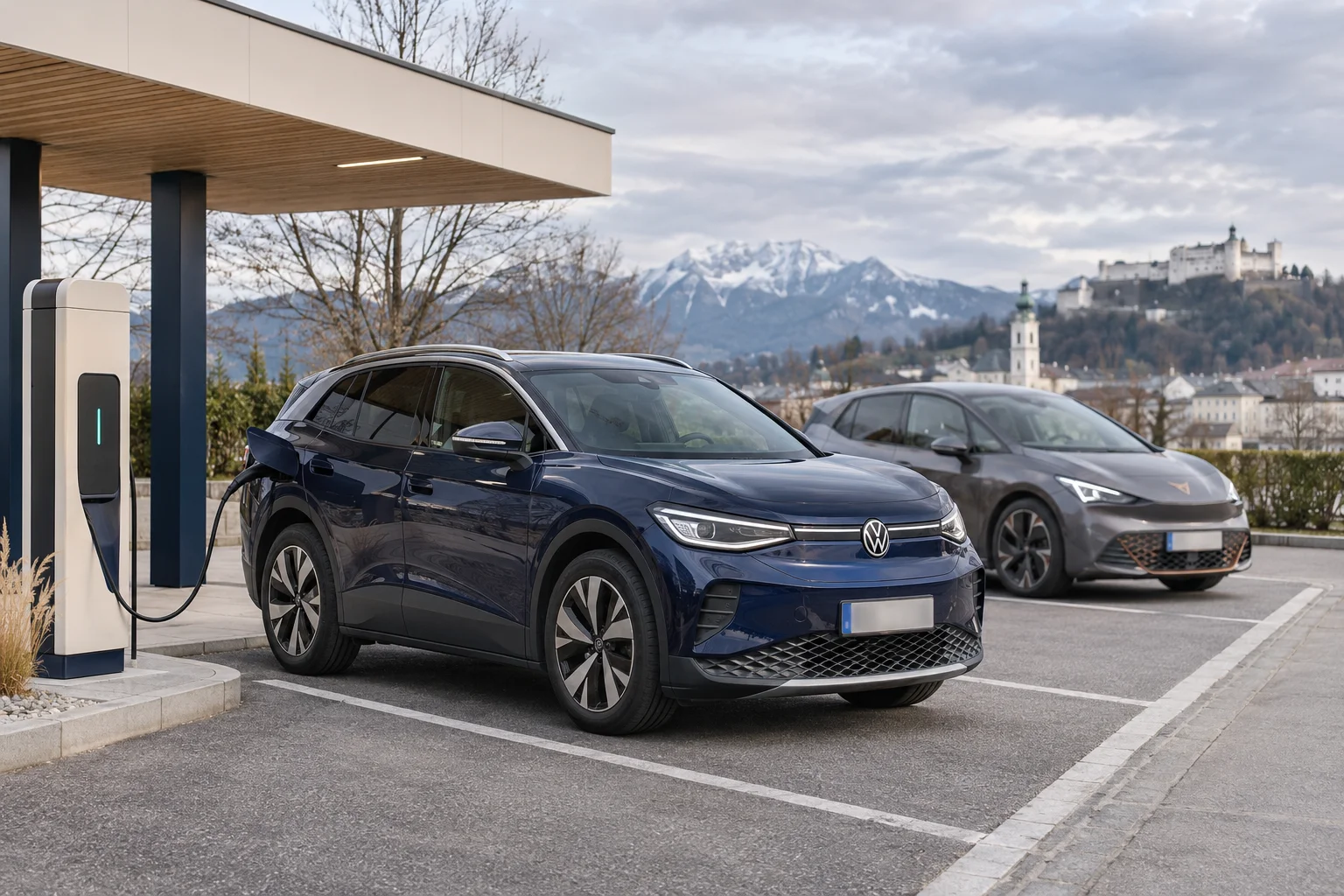
A battery recall with an 80 per cent charge limit can significantly change everyday life with an electric car. Certain VW ID. models and Cupra Born vehicles are affected by possible high-voltage battery defects and a fire risk. I explain what the limit means, which documents matter and when claims against the seller may arise.

The key points

  • Specific vehicles are affected, not every car in a model range. Have the current recall status checked using the vehicle identification number (VIN).
  • A prescribed 80 per cent charge limit must be observed. It restricts the usable charging range but does not, by itself, establish a permanent loss of 20 per cent of battery capacity.
  • For Austria, MeinBezirk reported on 16 October 2026, citing information it obtained from Porsche Holding Salzburg, that around 650 VW ID. vehicles and 200 Cupra Born vehicles were affected. These figures reflect the position at that time.
  • A recall does not automatically entitle you to return the car. The specific defect, the remedy and the requirements of the relevant legal basis are decisive.
  • The seller must remedy the defect within a reasonable time. An update date announced by the manufacturer does not determine that period.
  • Keep purchase documents, recall letters and workshop reports. Have deadlines checked using your contract and delivery date; the production year alone is not decisive.

What the recall concerns

Published manufacturer information describes quality deviations in certain high-voltage batteries. At high charge levels, overheating and even fire may occur. Since October 2026, Germany's Federal Motor Transport Authority (KBA) has listed three recalls: 93MF and 93MV for VW ID.3, ID.4, ID.7 and ID. Buzz vehicles produced between July 2022 and June 2025, and 93W4 for Cupra Born vehicles produced between September 2022 and May 2024. The KBA describes non-compliant high-voltage batteries with overlapping cells that may overheat, particularly during rapid charging. According to these figures, around 72,700 vehicles are affected worldwide. The relevant brand partner must clarify whether your specific vehicle is affected using its VIN.

Models and production periods listed in the German recall database and foreign manufacturer information do not necessarily constitute a complete list for Austria. For Austrian owners, the current recall letter and vehicle-specific information from their VW or CUPRA partner are decisive.

Different campaign codes and earlier recalls should not be treated as identical. Volkswagen UK publishes information on 93MF and 93MV; CUPRA UK on 93W4. A previous workshop visit therefore does not establish that all currently relevant measures have been completed. Obtain written confirmation of outstanding and completed campaigns for your VIN.

The purpose of the charge limit and the remedy process

According to the manufacturers, the limit is intended to reduce battery stress and increase the safety margin until the remedy is completed. It is a temporary protective measure and does not eliminate the underlying cause.

On their British recall pages, Volkswagen and CUPRA describe inspections, a later software measure and replacement of battery modules where necessary. Once all required work has been completed, the original charging and range parameters are to be restored there. The procedure and timing for Austria must be confirmed for the individual vehicle. A foreign announcement is not a binding repair commitment for your car.

After a workshop visit, obtain written confirmation of the campaign and inspection performed, the findings and any continuing usage restrictions. Ask for available diagnostic or inspection reports. Work on high-voltage systems must be carried out exclusively by appropriately qualified specialists.

What the 80 per cent limit means in everyday use

A charge limit may require more frequent charging stops and additional planning. The effect on everyday range depends on driving style, temperature, route and previous charging habits, among other factors. An “80 per cent” display therefore does not establish a standard percentage loss of range.

Legally, the question is whether the vehicle meets its agreed and objectively expected characteristics. These include safety and usability in accordance with the contract. The reason for a charge limit, its duration and its specific effects matter, as does the availability of a permanent remedy. A single snapshot of the range display will usually be insufficient.

A recall does not automatically mean reversal of the purchase

A free recall measure serves product safety. Whether it also restores the condition required under the purchase contract must be assessed separately. In particular, distinguish between:

  • Statutory warranty: your claim is generally against the seller. The Austrian Consumer Warranty Act (VGG) generally applies to consumer purchases from businesses under contracts concluded on or after 1 January 2022. Older contracts and private purchases require separate assessment.
  • Manufacturer's guarantee: this is an additional promise governed by its own terms. Whether it covers a battery defect or a minimum capacity must be checked against the particular guarantee documents. A guarantee does not replace statutory claims against the seller.

Statutory warranty: rights and deadlines

Under the VGG, the warranty period for a consumer purchase is generally two years from delivery. A material defect existing at delivery must become apparent within that period. For used vehicles, a reduction to one year is effective only if individually negotiated and more than one year has passed since first registration (section 10(4) VGG).

If a defect becomes apparent within one year of delivery, it is generally presumed to have existed at delivery (section 11 VGG). This presumption does not apply if incompatible with the nature of the goods or defect. Section 924 ABGB, by contrast, contains a six-month presumption period. The applicable rule depends on the governing law.

The warranty period and the limitation period must be distinguished. Under section 28 VGG, warranty rights generally become time-barred three months after the relevant warranty period ends. These additional months do not extend the period within which the material defect must first become apparent. A complaint letter alone does not automatically preserve claims against limitation.

For contracts from 1 October 2026, a one-off extension of the warranty period by one year additionally applies where a repair under the statutory warranty restores conformity (section 10(2a) VGG). Before the remedy, the trader must inform the consumer of the choice between repair and replacement and this possible extension (section 12(2a) VGG). This does not apply generally to older purchases or every manufacturer measure.

Repair or replacement generally takes priority. The consumer may choose between them unless the chosen remedy is impossible or disproportionately costly compared with the alternative. Under certain conditions, section 12 VGG permits a switch to a price reduction or contract termination, for example where the remedy is refused, delayed or unsuccessful. A particularly serious defect may justify an immediate price reduction or termination. Contract termination is excluded for merely minor defects.

How long you must wait is a central question. The seller must repair or replace within a reasonable time after being notified and without significant inconvenience to you (section 13(1) VGG). What is reasonable depends, among other things, on the nature of the goods and your intended use. An update date announced by the manufacturer does not determine this period. Your claim is against the seller. Where the remedy is unreasonably delayed or use is substantially restricted in the meantime, a price reduction or contract termination may become an option. Notify the seller in a provable manner so that the start of the period can be established.

The production year does not show whether claims have become time-barred. In particular, the contract date, delivery, when the defect became apparent and previous remedial measures matter.

Damages claims may also require examination. Section 933a ABGB requires, in particular, fault on the part of the transferor; the burden-of-proof rules require separate consideration. Damages are therefore not an automatic substitute for an expired warranty. A three-year limitation period generally runs from knowledge of the damage and the responsible person (section 1489 ABGB); its starting point must be determined individually.

In its decision of 27 May 2014, 9 Ob 14/14w, the Austrian Supreme Court confirmed that a buyer may seek reversal through damages for defects attributable to the seller's fault where repair or replacement is not an option. The case concerned a used car that was not safe for road use and operation and had additional defects, not a battery recall of an ID. model or Cupra Born.

When assessing reversal, the following questions are particularly important:

  • Which contractual characteristics and specific impairments can be proved?
  • What remedy was offered or attempted, when will a permanent solution be available, and which restrictions remain until then?
  • Are the statutory requirements for contract termination or reversal through damages met?
  • Which law applies, and are the claims still enforceable?

Successful reversal generally involves returning the car in exchange for repayment of the purchase price. Usage compensation may reduce the refund. Whether and how it is calculated depends on the legal basis and the particular vehicle. Have the likely deduction assessed before deciding on reversal.

What you should do now

  1. Clarify recall status: retain the letter and have outstanding campaigns checked by VIN at a VW or CUPRA partner. Observe current charging and usage instructions.
  2. Keep purchase documents: contract, invoice, delivery date, advertisement or brochure, and specific promises about the battery and range.
  3. Document the effects safely: record mileage, current charge limit, warnings and additional charging stops. Existing older records may provide a comparison. Do not charge above a safety limit to gather evidence.
  4. Retain workshop documents: work order, measures carried out, diagnostic results and written information on remaining restrictions and further appointments.
  5. Have waivers checked: clarify the meaning of any settlement or waiver before signing.
  6. Notify the seller in a provable manner and request a remedy: consumers generally do not have a commercial inspection and notification duty such as that under section 377 UGB. Prompt written notification nevertheless remains useful.
  7. Clarify legal expenses cover: have your insurer's cover for the intended proceedings checked.
  8. Check deadlines independently of the recall: a workshop appointment or correspondence with the manufacturer does not automatically prevent limitation.

Frequently asked questions

I have not received a letter. Could I still be affected?

The absence of a letter alone does not establish that you are unaffected. Have the current status checked by VIN with the relevant brand partner, particularly following a change of owner or previous recall measures.

May I charge normally until the inspection?

If an 80 per cent charge limit applies to your vehicle, observe it until it is lifted under the relevant manufacturer instructions. Do not bypass a safety limit yourself. In the event of warnings or uncertainty, obtain professional advice on whether and how the vehicle may continue to be used.

Am I entitled to a replacement car or compensation for the charge limit?

No general manufacturer commitment for Austrian owners is currently known. Ask the seller for a specific solution and record provable additional costs. Whether replacement mobility, reimbursement or a price reduction can be claimed depends on the legal basis and circumstances. An 80 per cent charge limit does not automatically justify a 20 per cent price reduction.

Support in disputes with sellers or manufacturers

I assist vehicle owners in Vienna and throughout Austria with warranty, damages and purchase reversal matters. Send me your purchase contract, recall letter and available workshop documents for a free, non-binding initial assessment. If you have legal expenses insurance, I will be happy to clarify cover for the intended proceedings.

Contact: office@maydell-law.at | +43 1 2954251 | Neustiftgasse 17/1/9, 1070 Vienna

Further reading

Sources

  • MeinBezirk, 16 October 2026: information from Porsche Holding Salzburg on around 650 VW ID. vehicles and 200 Cupra Born vehicles in Austria.
  • Volkswagen UK: manufacturer information on battery campaigns 93MF and 93MV. Procedures and information relate to the British market.
  • AUTOHAUS: KBA recall information for 93MF, 93MV and 93W4, including production periods, numbers and defect description. These figures come from the German recall database and do not confirm the situation in Austria.
  • CUPRA UK: manufacturer information on battery campaign 93W4. Procedures and information relate to the British market.

About the author

RA Mag. Patrick Maydell, LL.M. is a lawyer in Vienna handling vehicle purchase reversals, warranty and damages matters. As a trained vehicle mechanic, he combines legal assessment with technical understanding of recall letters, diagnostic reports and workshop documents.

This article does not replace individual legal advice.

Categories: Vehicle law

Tags: Cancelling an electric car purchase, Defect, Reversal of a purchase
Jaguar I-PACE: two ongoing cases involving recalls, charge limits and contract termination

By Mag. Patrick Maydell, LL.M. – lawyer and trained automotive mechanic

Last updated: 31 October 2026

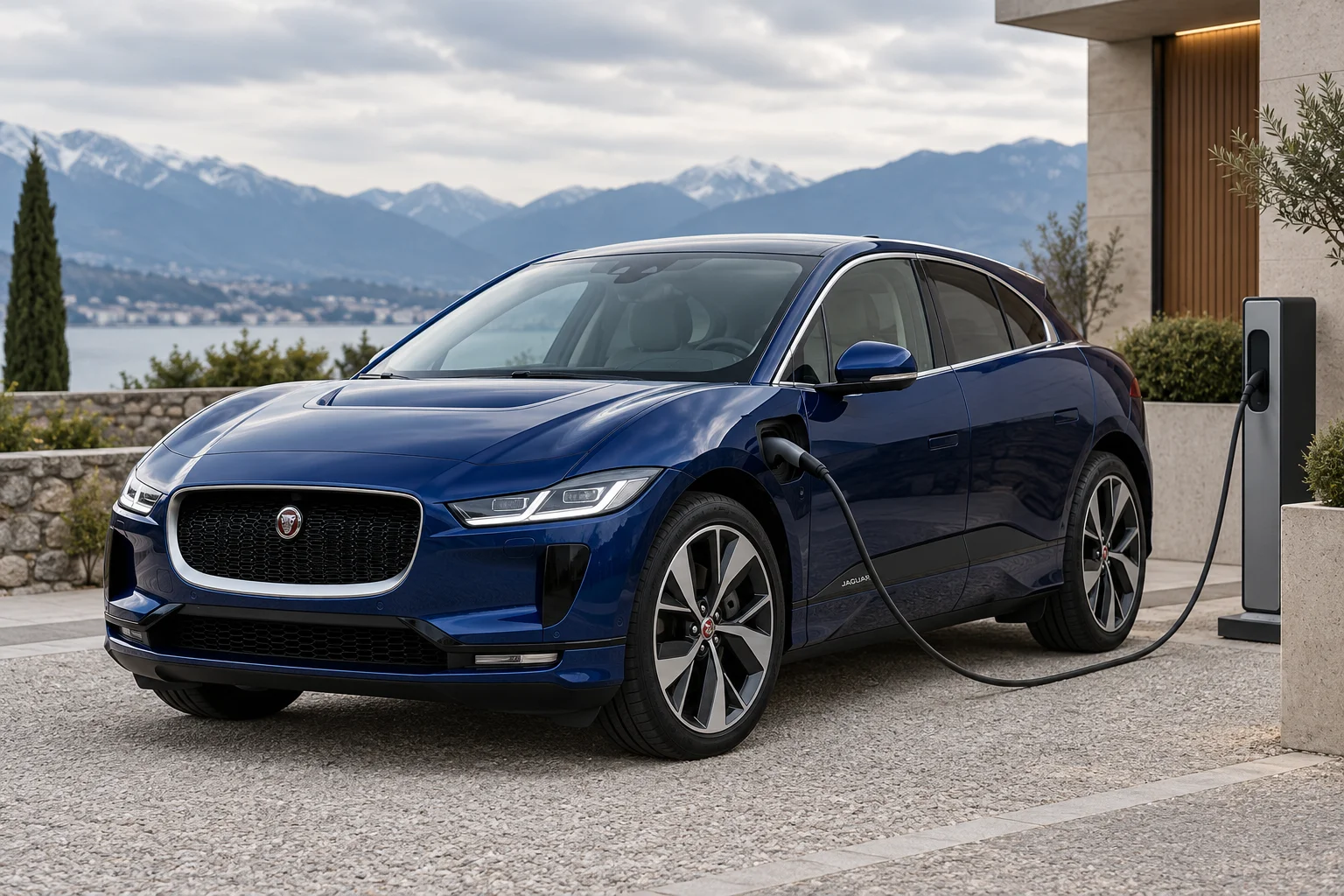
I currently represent two buyers of Jaguar I-PACE vehicles whose cases involve high-voltage battery problems, safety recall H570 and a 90 per cent charge limit. I am seeking to reverse the purchase in both cases. The cases share some features, but differ in their repair histories, evidence and procedural progress.

Claims have now been filed in court in both cases. The outcome of both proceedings remains open. Drawing on these ongoing matters, I explain the technical and legal questions that can be decisive for affected buyers, without anticipating a court decision.

Two Jaguar I-PACE vehicles, two different starting points

Case 1: a battery module was replaced, but the charge limit remains

In the first case, a defective module in the high-voltage battery was replaced following charging problems. A measure relating to safety recall H570 was also carried out. According to my client's latest report, the vehicle nevertheless remains limited to a maximum state of charge of 90 per cent.

In the ongoing court proceedings, I argue that replacing the defective module does not resolve the separate question of the recall and the remaining restriction. The issues include how the charge limit affects use, what remedy is actually available and whether the conditions for the requested termination of the contract are met.

I distinguish between the individual technical questions. A module defect and a safety measure affecting the same battery pack do not establish that they have the same cause. Whether a defect was already inherent at a particular point in time is also a question of evidence. I have requested an expert report on these issues. There has been no final judicial determination.

Case 2: battery work and a charge limit before the purchase

In the second case, a workshop record documents replacement of the high-voltage battery and a measure concerning the charge limit in connection with H570 before the sale. Shortly after taking delivery, the buyer complained that the Jaguar would charge only to 90 per cent. In the exchange with the seller at that time, reference was made to a future update.

An air-conditioning failure and an insulation fault in the high-voltage system recorded in an ÖAMTC diagnostic report were subsequently raised. The technical cause of this fault and any connections between the issues remain to be clarified. My client has not used the vehicle since that finding. I treat these issues separately from the pre-existing charge limit.

For this client, I declared termination of the contract out of court. After the deadline passed without a satisfactory response, I have now filed a claim. There is no court outcome in this case either.

What the two cases have in common

For my clients, both cases involve more than a percentage on a display. What condition was the buyer entitled to expect? What was disclosed before the purchase? What restriction actually remains? Must the buyer continue to wait for a remedy? My role is to assess these questions legally and technically against the individual purchase contract, workshop records and history.

What can lie behind a charge limit?

A user-selected charging limit is different from a restriction imposed by the manufacturer. A driver who chooses to charge only to 80 or 90 per cent in the vehicle menu can normally change that setting again. A technical restriction imposed as a safety measure is not equivalent.

A publicly available US recall report submitted by Jaguar Land Rover on 5 February 2026 describes a risk of thermal overload in the high-voltage battery of certain US-market I-PACE vehicles from model years 2020 and 2021. As an interim measure, it provided for software limiting the maximum state of charge to 90 per cent while a permanent remedy was being developed. The report's chronology refers to vehicles with battery packs from model year 2021 or earlier. The interim restriction is administered under manufacturer campaigns H570 for earlier model years and H571 for model year 2021, with the permanent remedy envisaged under H572. [1]

This is documented technical background, but does not establish that every I-PACE registered in Austria is affected. The vehicle identification number, battery version and manufacturer information applicable to the individual vehicle are decisive. Whether a remedy has since become available must likewise be checked for that vehicle.

When does a legal defect exist?

The following explanation of Austria's Consumer Warranty Act (Verbrauchergewährleistungsgesetz, VGG) concerns purchases by consumers from businesses under contracts concluded on or after 1 January 2022. Older contracts and purchases from private sellers require a separate assessment. [2]

In a consumer sale, a car must have both the agreed characteristics and those ordinarily expected. These include functionality and safety. With a used car, its age, mileage, price and the specific agreement also matter. [2]

A mandatory charge limit can affect use: less charge is available, journeys may require different planning and additional charging stops may be needed. The exact reduction in driving range cannot, however, be calculated from the displayed limit alone. Another key question is whether the measure permanently resolves a safety risk or only limits it temporarily.

If the restriction was disclosed before purchase, the precise contract terms must be examined. Under section 6 VGG, a departure from the objectively required characteristics requires specific information and the consumer's express and separate agreement. A general reference to the vehicle being used or to an exclusion of warranty is not a substitute. [2]

Whom should I contact?

The seller is generally the party responsible for statutory warranty claims under the purchase contract. A manufacturer's guarantee and a recall campaign are separate matters. A report to Jaguar or an authorised workshop should therefore be accompanied by a clear written notification of the defect to the seller.

Describe the specific restriction and when it began. Keep replies, workshop orders and announcements of updates. Whether the seller can remedy the cause itself or needs the manufacturer's support is distinct from the question of your rights against the seller.

Must I wait for a repair or an update?

Under the VGG, repair or replacement is generally the first remedy. Which remedy can be requested also depends on feasibility and proportionality. It must be provided within a reasonable time, free of charge and without significant inconvenience. [3], [4]

There is no single waiting period that applies to every case. Relevant factors include the nature of the defect, whether the car can be used, specific safety instructions and how long the restriction has already lasted. A non-binding prospect of a future update therefore does not by itself answer whether the required remedy is being provided in time.

Buyers should seek clear written answers: what measure is planned, when can it be carried out, will it fully remove the restriction, and what instructions apply to driving, charging and parking until then?

When can the purchase be reversed?

Section 12 VGG permits a move to a price reduction or termination of the contract in defined circumstances. These include refusal to provide a remedy, failure to remedy within a reasonable time, or a defect despite an attempt to remedy it. A particularly serious defect can also justify immediate termination. A merely minor defect is insufficient for termination. [3]

Two questions must be kept separate: is the defect more than minor, and is there already a statutory reason to move from repair or replacement to termination? Answering the first question does not settle the second.

A safety issue does not automatically entitle the buyer to return the car immediately. In its decision of 20 July 2026, 3 Ob 122/26a, the Austrian Supreme Court required a closer assessment; the safety aspect alone was insufficient in that case. It was not a Jaguar case. The decision illustrates why the nature and severity of the risk and the specific remedies available must be carefully assessed. [5]

In my two cases, the interaction between the safety concern, the remaining charge limit, the repair history and the availability of a permanent remedy is therefore important. The claims to reverse the purchases are based on each vehicle's circumstances. Whether the conditions are satisfied has not yet been finally determined. A blanket promise that a recall means a refund would be misleading.

What happens after effective termination?

Following effective termination, the purchase is unwound: the vehicle is returned and the purchase price refunded. The VGG also governs return costs and the seller's right to withhold repayment pending the relevant return requirements. Termination may be exercised by declaration; a written declaration giving reasons is advisable for evidential purposes. [2]

Whether compensation for use is deductible and whether further expenses can be recovered require separate assessment. Buyers who financed the car must also consider the credit arrangement. Do not simply leave the vehicle at the seller's premises: clarify return arrangements, transport and payment.

Documents that help with the assessment

For an initial assessment, try to preserve the following:

  • The purchase contract, advertisement and written assurances about the battery, range and vehicle condition.
  • Recall letters and confirmation of whether the vehicle is affected, based on its vehicle identification number.
  • Workshop orders and records of battery replacement, software measures and charge limits.
  • Photographs of the display, the date and mileage when the problem first appeared, and a description of its practical effects.
  • Defect notifications to the seller and its replies, especially announced repair or update dates.

Follow the manufacturer's and workshop's safety instructions. Do not independently bypass a safety limit. If warning messages appear or there are doubts about safe operation, obtain a professional assessment of whether and how the vehicle may be used or transported.

The legal basis and time limits also depend on the purchase date. Amendments to the VGG effective from October 2026 do not apply indiscriminately to older purchase contracts. Mere correspondence with the seller or manufacturer does not automatically preserve a claim against limitation. [2]

Similar problems with your Jaguar I-PACE?

These two ongoing matters illustrate the importance of combining technical assessment with legal argument. As a lawyer and trained automotive mechanic, I identify which restrictions are documented, what a repair has actually resolved and which questions still require an expert's opinion.

Send me your purchase contract, recall letter and available workshop records for a free initial telephone assessment. We can then discuss whether repair, a price reduction or reversal of the purchase may be appropriate.

Mag. Patrick Maydell, LL.M. | Lawyer
Neustiftgasse 17/1/9, 1070 Vienna

Telephone: +43 1 2954251 · Email: office@maydell-law.at

Sources and further reading

[1] Jaguar Land Rover: US recall report 26V067, 5 February 2026 (H570/H571/H572)

[2] Austrian Consumer Warranty Act (VGG), especially sections 1, 3–6, 10–11, 15 and 28–29

[3] Section 12 VGG: statutory warranty remedies

[4] Section 13 VGG: repair and replacement

[5] Austrian Supreme Court, 20 July 2026, 3 Ob 122/26a: assessing immediate termination

Further reading: Reversing an electric car purchase when the promised range is not achieved, cancelling a car purchase and compensation for use when reversing a purchase.

Categories: Vehicle law

Tags: Cancelling an electric car purchase, Vehicles, Reversal of a purchase

Supreme Court: reversing an electric car purchase when the promised range is not achieved

In decision 3 Ob 188/24d of 24 June 2025, the Austrian Supreme Court clarified that electric car buyers need not accept inaccurate range promises. If a seller promises specific ranges during consultation and the car subsequently fails to achieve them, the contract may be cancelled even if the written agreement requires additional agreements to be in writing.

A company bought an electric car for field work. The seller orally promised approximately 250 kilometres in summer and at least 200 in winter. These figures were decisive for the buyer. In reality, the car managed only about 195–205 kilometres at average temperatures and substantially less in freezing conditions, insufficient for its intended use.

Despite a strict written-form clause, the Court upheld the oral promise. It would be contrary to good faith to rely on that clause after making a specific assurance known to be decisive for the other party's purchase. Range therefore became part of the contract, and the buyer could challenge it for an essential mistake under section 871 ABGB.

The contract was consequently cancelled. The buyer receives the price back and returns the car, but must pay usage compensation for kilometres driven. As in other decisions, the Court calculates this linearly using distance driven and expected total vehicle mileage. There was also a dispute about liability for a stone chip in the windscreen.

Tips for buyers

Buyers should also take care before any dispute arises. Brochure range figures are generally ideal values. Cold, heating, lights and individual driving style can reduce actual range considerably, especially in winter. They should not automatically be treated as a binding promise.

Ask specifically about realistic summer and winter ranges and, wherever possible, obtain confirmation, especially if range is crucial for your journeys. If promised figures are later not achieved, legal remedies up to cancellation may be available. However, expect usage compensation for kilometres already driven.

The decision strengthens buyers who rely on specific promises. Good documentation and realistic expectations also help avoid later disputes.

If your electric car appears not to meet what was promised, I will gladly assess whether cancellation or other remedies are available.

Free initial assessment — call now

Contact me for a free, non-binding first conversation. I will explain whether rescission, laesio enormis or other remedies apply and pursue your rights consistently.

As a lawyer, I know the legal options and have successfully represented dozens of car buyers in court. As a trained motor mechanic, I identify technical problems, assess expert reports and uncover hidden weaknesses, giving you a clear and realistic initial assessment.

I look forward to hearing from you.

Mag. Patrick Maydell, LL.M.
Attorney at Law
Neustiftgasse 17/1/9
1070 Vienna
Telephone: +43 1 2954251
office@maydell-law.at

Categories: Vehicle law

Tags: Cancelling an electric car purchase, Vehicles