
Initial assessment

Maydell Law · Lawyer in Vienna

Blog posts

Author Archives: Patrick Maydell

Inheritance actions: 12 tips from a lawyer
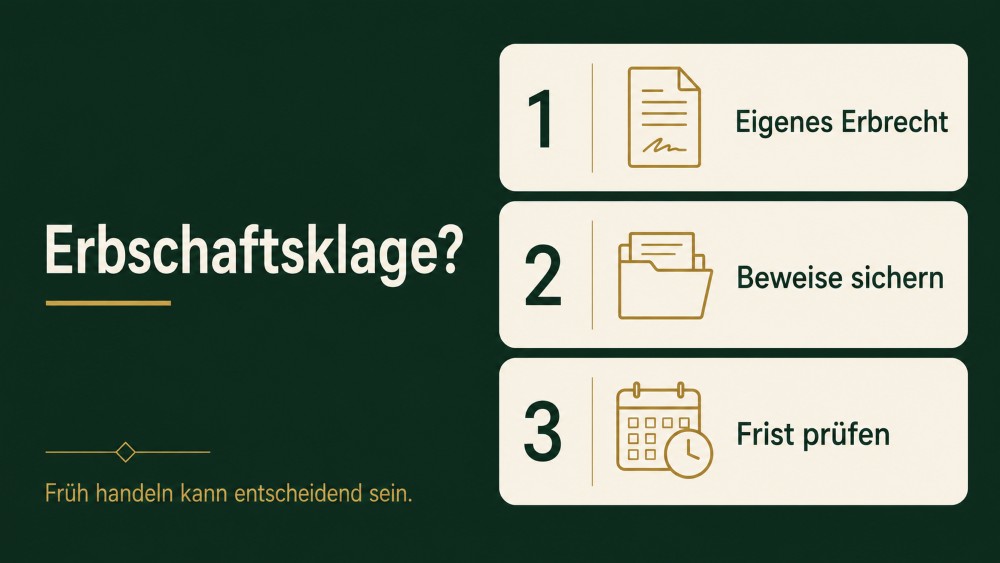
What you can do if the wrong person has inherited after probate

A close relative has died, probate is complete and the court has awarded the inheritance. Later, another will appears, doubts arise about the validity of a will, or someone who should have inherited under an earlier will has been overlooked.

An inheritance action (Erbschaftsklage) may help. It seeks transfer of all or part of the inheritance to the person with the better entitlement. The law uses terms such as Einantwortung, the formal transfer of the estate, and Abtretung der Erbschaft, its surrender to the rightful heir. Put simply: who is the correct heir?

This is not a routine lawsuit. It often concerns old documents, family conflicts, medical records and conversations from years earlier, alongside deadlines and significant cost risks. It is important to identify early what can legally be achieved and what evidence exists.

If something seems wrong with an inheritance, seek advice promptly. Experienced inheritance lawyer Mag. Patrick Maydell, LL.M. offers a free initial telephone assessment to clarify whether an inheritance action is appropriate, which documents are missing and whether a deadline requires urgent action.

1. What is an inheritance action?

It is a claim against the person to whom the court has already awarded the estate. The claimant must assert a better or at least equally strong inheritance right. The action may concern the entire estate or a share.

Einantwortung means that the probate court has determined the heir and legally transferred the estate to that person. Once that decision is final, a later claim to inheritance is generally pursued through an inheritance action.

The action concerns the inheritance as a whole or the claimed share. It is therefore generally unnecessary to list every asset in the claim. The estate includes liabilities as well as assets.

2. Before or after probate is complete?

Timing is decisive. While probate continues, competing inheritance rights are generally determined within those proceedings, where the court examines the rights asserted and the evidence.

Once the estate has been finally awarded, a later asserted better right generally requires a civil inheritance action.

Practical tip: do not delay objections even while probate is ongoing; claims can still become time-barred. Submit wills, messages and other important documents as early as possible.

3. When may an inheritance action be appropriate?

Typical situations include:

  • a will discovered only after probate;
  • several wills with uncertainty about which applies;
  • serious doubts about the deceased's understanding when making the will;
  • a will not written entirely by the testator potentially failing formal requirements;
  • a will that may have been forged, substituted, destroyed or deliberately suppressed;
  • a person potentially unworthy to inherit because they intentionally frustrated the true last wishes.

Not every inheritance dispute is an inheritance action. A person seeking only a compulsory share pursues a monetary claim rather than heir status. A claim to a single asset may also require another action. Choosing the wrong remedy can waste time and money.

4. What must the claimant prove?

It is not enough to attack the opponent's entitlement: the claimant must prove their own inheritance right.

For example, proving that the will favouring the appointed heir is invalid does not automatically win the case. The claimant must also show why they should inherit, perhaps under an earlier valid will or intestate succession.

The Supreme Court is clear: the claimant must establish a better or equivalent right of their own. Merely showing that the defendant should not inherit is insufficient. Before suing, examine both the weaknesses in the other party's right and the basis of your own.

5. What can the action achieve?

If successful, the defendant must surrender the inheritance or relevant share to the rightful heir. This is more than a statement on paper: the judgment corrects the earlier allocation of the estate.

The claim can cover the entire inheritance or a share even if every account, asset or debt is not yet known when proceedings begin. An estate's full extent often becomes clear only later.

Whether additional steps are required for property, accounts or assets already sold must be assessed individually.

6. When is a will invalid?

One common issue is testamentary capacity. The person must understand the meaning and consequences of their disposition and act accordingly: who will receive what after death and what that decision entails.

Doubts may arise with advanced dementia, serious confusion or impairment through illness or medication. A diagnosis alone does not decide the case. The person's actual condition at the precise time of making the will is decisive, making contemporary medical records and specific observations especially important.

Formal errors may also matter. A will not written entirely by the testator is subject to strict rules on signatures, a handwritten declaration and witnesses. Small details can be legally significant, so the original document should be examined.

7. What does unworthiness to inherit mean?

It broadly means being excluded from inheritance because of particularly serious misconduct. Statutory grounds include intentionally frustrating or attempting to frustrate the deceased's true last wishes.

This can involve forging, altering, destroying or suppressing a will, and may also include deliberately preventing proper application of intestate succession. Precise facts and intention are always crucial.

This is a serious allegation. Suspicion is insufficient; concrete documents, messages, witness evidence or unusual events surrounding the will are needed.

8. What deadline applies?

Inheritance claims generally have a three-year limitation period starting when the entitled person knows the facts supporting the claim, with an absolute maximum of thirty years from death.

The three years do not wait until every piece of evidence is secured or every legal issue resolved. Knowledge sufficient to bring a claim with a reasonable prospect of success is enough. When that point is reached depends strongly on the case.

Do not assume negotiations automatically stop time running. Their effect is legally delicate and can depend on how promptly proceedings follow failed talks. Calculate and record the deadline early.

9. Which evidence is particularly important?

Details often decide inheritance cases. Preserve:

  • all wills and other testamentary declarations;
  • the order transferring the estate and key probate documents;
  • medical records around the date of the will;
  • messages, emails and letters showing last wishes or possible influence;
  • names and contact details of people who personally observed the deceased's condition or statements;
  • documents about accounts, property, gifts and transactions already completed.

Medical expert evidence is often important for capacity disputes. The expert was not present when the will was made and relies on records and precise observations. General statements such as “he was very forgetful” are less useful than dated, concrete examples with context.

Practical tip: do not alter original documents, write on them or attach anything. Keep them safe and use copies or scans for everyday work.

10. What happens to the assets during proceedings?

After formal transfer, the recorded heir can generally dispose of inherited assets. Selling property or transferring money can create problems. The law protects good-faith purchasers from an apparent heir under certain conditions.

If a specific sale or transfer is threatened, urgently assess whether protective court measures are available and useful. They have their own requirements and are not automatic.

Delay can be risky. Inform me immediately of a planned sale, gift or substantial transfer.

11. What costs arise?

Costs primarily depend on the value of the disputed estate or share. They include court and legal fees and, depending on the issues, experts, witnesses or translations.

In Austrian civil litigation, a party that loses entirely generally reimburses the opponent's necessary costs. Partial success normally leads to proportionate allocation or offsetting. Recoverable costs follow statutory rules and do not necessarily match every arrangement with your own lawyer.

Before suing, discuss prospects, the amount in dispute, potential expert evidence and cost risks. An honest litigation assessment is part of the advice.

12. Which mistakes should you avoid?

The most common mistake is waiting too long, particularly as the starting point of the three-year period is often disputed.

Another is concentrating solely on weaknesses in the opponent's inheritance right without proving your own. Vague allegations such as “the will cannot be right” are also unhelpful. Courts need precise facts: what was wrong, when, who was present and which document or message supports it?

Finally, a successful claim does not automatically resolve every practical consequence. Accounts, property, assets already sold or foreign assets may require further steps.

What you can do now

Collect available key documents: the estate transfer order, wills, correspondence, medical records and a short chronology. Record when you learned each relevant fact, as that date can matter for limitation.

Then clarify:

  • Has probate finally concluded?
  • What is the basis of your own inheritance right?
  • Which facts challenge the other person's right?
  • What evidence exists and what still needs securing?
  • When might limitation have begun?
  • Is a sale or transfer of assets threatened?

Early assessment can prevent an expensive, hopeless case or show why urgent action is necessary.

Free assessment of an inheritance action

Do you doubt a will, were you overlooked in probate, or did you only later discover a possible inheritance right? I review your documents and evidence and discuss prospects, risks and next steps.

Arrange a free initial telephone conversation with Mag. Patrick Maydell, LL.M. I look forward to hearing from you.

Mag. Patrick Maydell, LL.M.
Attorney at Law
Neustiftgasse 17/1/9
1070 Vienna
Telephone: +43 1 2954251
office@maydell-law.at

Categories: Inheritance law

Tags: Inheritance action, Will

Usage compensation when reversing a car purchase: a formula worth thousands of euros

As a lawyer and trained motor mechanic, I am frequently asked about usage compensation. When returning a seriously defective car and seeking a refund, buyers are often shocked by the dealer's substantial deduction for kilometres already driven.

The calculation can make a difference of several thousand euros. Without knowing the case law and formula, buyers often accept excessive deductions proposed by dealers or insurers.

Why is usage compensation payable?

When a purchase is reversed, whether under warranty law or for mistake, each side returns what it received: the buyer the car and the seller the price.

Use of the vehicle has consumed some of its value. The Supreme Court therefore regularly requires usage compensation to be deducted from the refund.

The Supreme Court formula

Total lifetime mileage is often incorrectly used as the denominator in every case. That is correct only for a new car. For a used car, the relevant figure is expected remaining mileage at the time of purchase.

Usage compensation = purchase price × kilometres driven ÷ expected remaining mileage.

For a used car, expected remaining mileage equals expected total lifetime mileage minus the odometer reading at purchase.

Three values determine the result:

  • Purchase price: the actual gross amount paid.
  • Kilometres driven: the difference between mileage at delivery and at return.
  • Expected remaining mileage: the distance this particular vehicle could reasonably have covered from purchase until the end of its technical life.

The key dispute: expected total mileage

This is often the most contested and financially significant issue. Dealers and insurers may use low total-life figures, often only 150,000 kilometres, increasing the deduction and reducing the refund.

Case law frequently uses higher figures for modern vehicles:

  • Petrol and diesel vehicles: commonly 200,000–250,000 kilometres, sometimes more for high-quality or particularly durable engines.
  • Electric vehicles: case law is developing, with the calendar and cycle life of the traction battery increasingly considered as a separate, often long-lasting factor.

Example: a new car

A new vehicle costs EUR 30,000 and covers 40,000 kilometres before reversal.

Variant 1: the dealer's low-mileage calculation

Using only 150,000 kilometres as expected total mileage:

  • price: EUR 30,000;
  • distance driven: 40,000 kilometres;
  • usage deduction: EUR 8,000;
  • refund: EUR 22,000.

Variant 2: a technically realistic mileage figure

Using a court-accepted total mileage of 250,000 kilometres:

  • price: EUR 30,000;
  • distance driven: 40,000 kilometres;
  • usage deduction: EUR 4,800;
  • refund: EUR 25,200.

The more realistic, technically supported mileage figure reduces the deduction and produces an additional EUR 3,200 refund in this example.

Important Supreme Court decisions

1. Scratches, dents and wheel damage do not belong in the formula: 2 Ob 82/23g

Dealers sometimes seek higher usage compensation because the car acquired scratches, dents or wheel damage. The Court distinguishes these from the pure transport benefit measured by the formula. A dealer seeking compensation for damage must make and prove a separate damages claim, which can face legal obstacles.

2. The low-mileage adjustment is impermissible: 9 Ob 67/24d

A buyer purchased a Skoda Fabia with the emissions-scandal EA189 engine in 2010 and drove only about 63,700 kilometres over more than thirteen years.

The lower courts reduced expected total mileage to 94,380 kilometres by multiplying annual mileage of about 4,719 by an assumed twenty-year ownership period. This pushed usage compensation above EUR 10,700, more than three times the buyer's calculation.

The Supreme Court rejected this method. Limited use must not alter the formula to the buyer's disadvantage: only actual transport use is compensated, not kilometres never driven. The full technical lifetime figure, 250,000 kilometres in that case, remains relevant irrespective of infrequent use. The correction saved the buyer EUR 6,680.08.

3. Business purchases and electric cars: 3 Ob 188/24d

The Court confirmed linear calculation for vehicle-purchase reversals, expressly including business-to-business purchases and electric vehicles. Although the case used a general figure of 250,000 kilometres, the specific cycle and ageing characteristics of traction batteries are likely to be increasingly important to expert assessments of remaining life.

The same decision highlights a costly risk: continuing to use the car after asserting withdrawal, while knowing of the right to return it, can in the worst case create liability for accidental damage such as a windscreen stone chip, around EUR 1,500 in that case. Continued use and damage risks therefore need careful consideration.

Other factors that can materially affect the refund

  • Interest: following successful reversal, the dealer may owe 4% interest on the purchase price from purchase under Supreme Court decision 10 Ob 2/23a. For EUR 35,000 over four years, a simplified calculation gives EUR 5,600, potentially offsetting much or all of the usage deduction.
  • Workshop downtime: unsuccessful repairs over several weeks add no mileage, but deprive the buyer of use. Under general damages principles, this may form a separate loss, for example replacement-car hire costs.

A common mistake: accepting the opposing calculation too quickly

I regularly see uncertain buyers sign the dealer's calculation without checking it. Expected mileage is not a fixed statutory number; if disputed, the court estimates it with expert assistance. A combined legal and technical review is therefore usually worthwhile.

Online usage-compensation calculator

For initial guidance, enter the purchase price, mileage at purchase and return, and vehicle type. The calculator offers an initial estimate, but cannot replace assessment of the vehicle's technical features and the legal details of your case.

Usage-compensation calculator

250,000 km is the indicative figure used here for modern engines; the individual vehicle must be assessed.

Your estimated result
Estimated usage deduction:EUR 0.00
Possible purchase-price refund:EUR 0.00

Important legal information

This is a mathematical calculation only. Dealers and insurers may seek inappropriate damage deductions or use an artificially low total-mileage figure.

Under Supreme Court decision 10 Ob 2/23a, a 4% interest claim from purchase may also significantly increase the refund.

Have the result reviewed. Contact me for a free initial legal and technical assessment.

Conclusion

Usage compensation is not an unquestionable fixed deduction. Uncritically accepting the other side's figures can cost money. Before agreeing to reversal or signing a settlement, have the calculation checked by an experienced vehicle lawyer who also understands workshop practice as a trained mechanic.

Free initial assessment

I assess your case legally and technically. Send the purchase contract and available inspection reports for a free initial telephone assessment. I look forward to hearing from you.

Mag. Patrick Maydell, LL.M.
Attorney at Law
Neustiftgasse 17/1/9
1070 Vienna
Telephone: +43 1 2954251
office@maydell-law.at

Categories: Vehicle law

Tags: Vehicles, Reversal of a purchase, Return, Rescission

Undisclosed accident damage: recovering your money even with a warranty exclusion

If a vehicle is sold as “accident-free”, this is an essential characteristic affecting its value. Discovering substantial previous damage later is frustrating, but buyers have remedies. Alongside statutory warranty, avoidance for mistake is often the most effective route to reversing the purchase, even where warranty was contractually excluded.

I frequently see clients who bought a used car relying on an accident-free assurance. Months or years later, a section 57a inspection or workshop visit reveals filler beneath the paint, non-original welds or a badly replaced wing. This is a substantial discrepancy between the agreed condition and reality. In such cases, we seek reversal for our clients.

When is a car legally accident-damaged?

Not every scratch makes a car accident-damaged in law. Austrian case law distinguishes:

  • Minor damage: light paint damage or superficial parking scratches repairable without filler or welding often need not be disclosed without being asked.
  • Damage requiring disclosure: replacement parts, deformed panels or chassis-straightening work indicate an accident-damaged car. Selling such a vehicle as “accident-free” or “immaculately maintained” misrepresents an essential characteristic.

Recovering your money: avoidance for mistake under section 871 ABGB

Many buyers assume they have no chance because warranty has expired or was excluded. That is often wrong. If you bought the car believing it was accident-free, you were mistaken about an essential characteristic. If that mistake was decisive — you would not have bought it, or would have paid much less — we can challenge the contract.

The legal result is cancellation with retroactive effect (ex tunc). You return the car and the seller must refund the purchase price less usage compensation, plus 4% interest.

Why a warranty exclusion does not apply here

This is a key advantage over an ordinary warranty claim:

  • Dealer purchases: dealers often validly shorten warranty on used vehicles to one year. Discover the damage after thirteen months and many refuse assistance.
  • Private purchases: private sellers often exclude warranty entirely with terms such as “bought as inspected”.

Section 871 ABGB: warranty exclusions generally do not cover promised characteristics

If accident-free condition was promised in the advertisement or contract, you can rely on the mistake even where statutory warranty was excluded.

Watch the deadline: the three-year rule

While warranty may end after one year, avoidance for mistake has a longer period: under section 1487 ABGB, the right becomes time-barred three years after the contract was concluded. Discovering damage after two years may therefore still permit a successful claim based on mistake.

After three years, a challenge remains possible only if fraudulent deception can be proved. The period for that is thirty years.

Evidence: how we uncover the damage

Allegations alone are insufficient in court. Previous damage must be proved. As a lawyer and motor mechanic, I recommend:

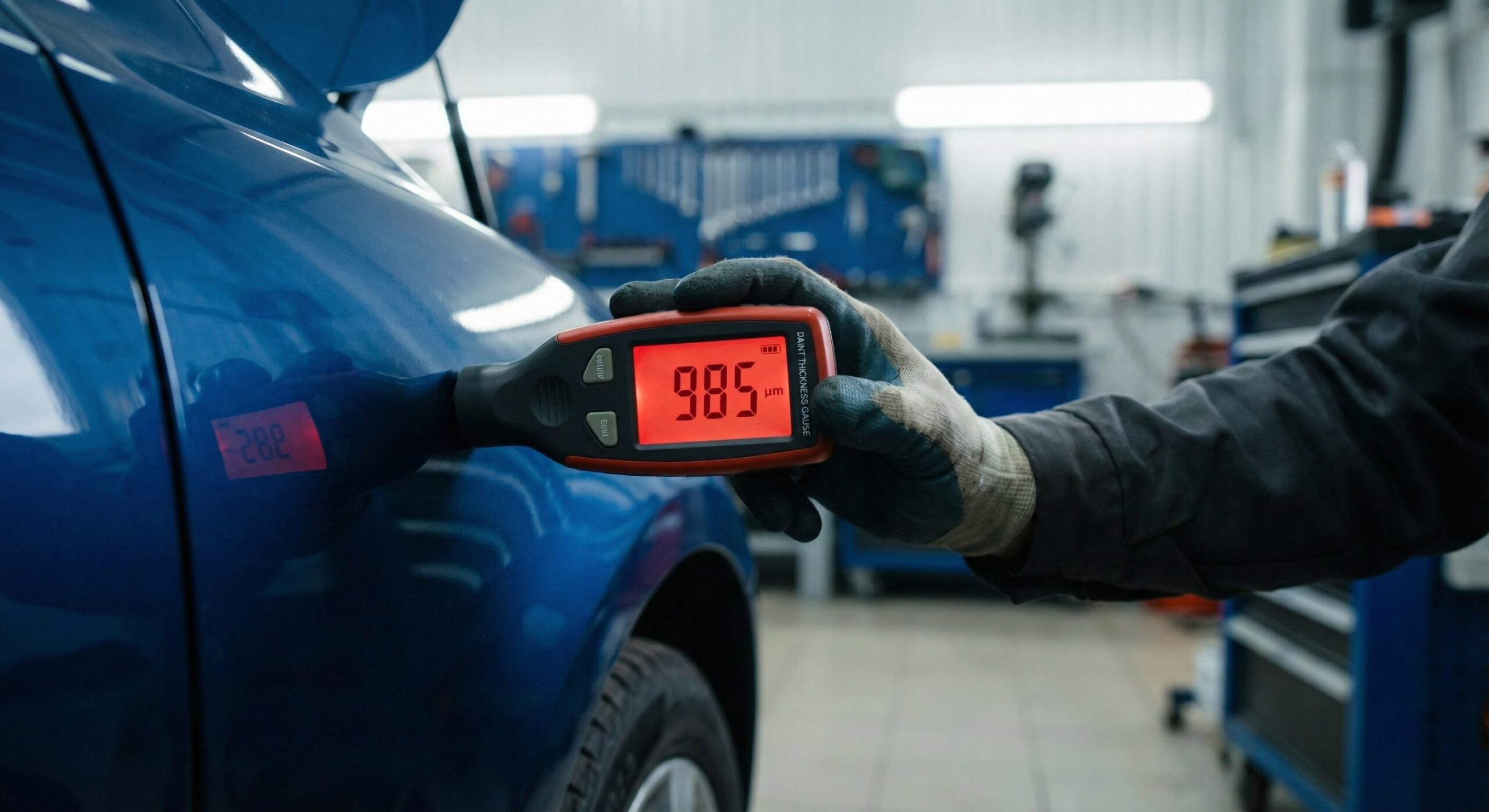
  • Paint thickness measurement: original paint is commonly about 100–160 micrometres. Around 200 or more suggests repainting; 500 or 1,000 indicates filler beneath the paint.
  • Panel gaps and spot welds: irregular gaps or missing original welds indicate substantial repairs.
  • Contract analysis: preserve the advertisement and correspondence as evidence of the accident-free assurance.

Conclusion: act promptly

If you suspect your supposedly accident-free car was in fact damaged in an accident, do not accept excuses. Whether a dealer or a private individual, a seller who misrepresents the facts must answer for it.

Free initial assessment

Contact me for a free initial assessment. I will review the contract and advise whether we can recover your money.

Mag. Patrick Maydell, LL.M.
Attorney at Law
Neustiftgasse 17/1/9, 1070 Vienna
Telephone: +43 1 2954251
Email: office@maydell-law.at

Categories: Vehicle law

Tags: Car purchase, Vehicles, Accident-damaged car, Rescission

VW T5 Multivan using 2–3 litres of oil: why dealers reject warranty claims and what you can do

As a lawyer and trained motor mechanic, I repeatedly encounter serious technical defects, including those affecting the VW T5 with the 2.0 BiTDI engine, code CFCA. A recent case illustrates the gap between theory and practice in the used-car market.

Even when a court expert report confirms a disastrous technical condition, dealers often continue resisting warranty claims to the very end.

The starting point: a dream Multivan becomes a nightmare

Our client bought a 2013 VW T5 Multivan with approximately 213,000 kilometres in January 2024 for EUR 23,000. Extremely high oil consumption became apparent shortly after delivery in February 2024.

The dealer's response was typical of many Austrian cases: a blanket denial that the vehicle had been defective at delivery and refusal to repair. The dealer also demanded compensation for kilometres driven if the purchase were reversed. With no agreement possible, we sued for rescission and requested a court-appointed expert report.

The facts established by the expert

The sworn, court-certified expert conducted a precise oil-consumption test drive in October 2025. The results dated 8 November 2025 were clear:

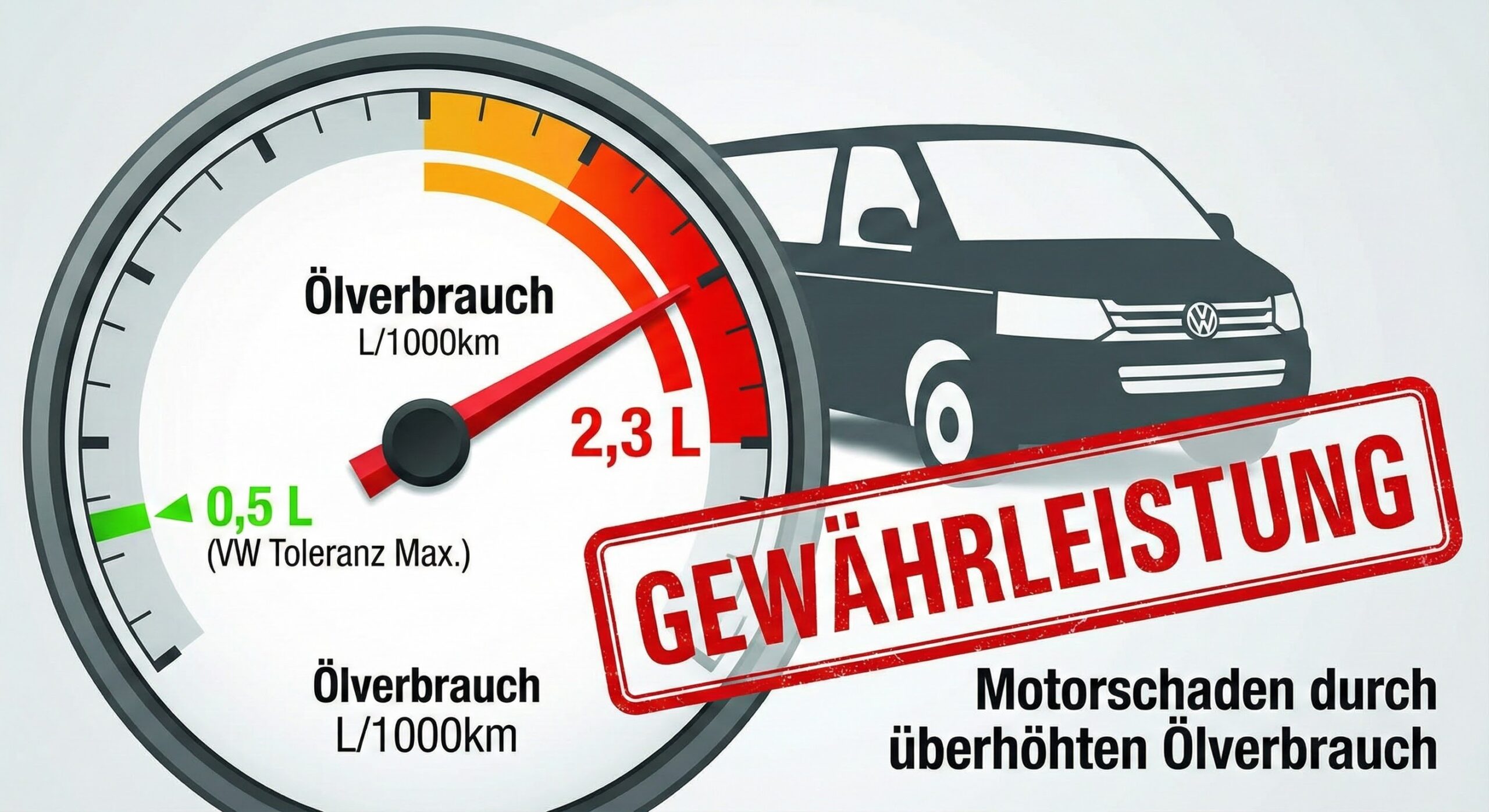
  • Actual consumption: over 576 kilometres, the oil level fell below minimum, corresponding to 2.3 litres per 1,000 kilometres.
  • Manufacturer's limit: VW permits a maximum of 0.5 litres, so consumption was almost five times the limit.
  • Technical diagnosis: worn cylinder bores and piston rings.

The expert unequivocally concluded that the engine had to be replaced to remedy the defect. The estimate put the cost at EUR 14,352.58.

The legal position: why the dealer remains liable

Dealers often dismiss such damage as wear and tear or as arising after delivery. The report technically refuted this and substantially strengthened the buyer's position:

  • The defect existed at delivery: the expert explained that this wear develops slowly over long periods. Technically, the damage must therefore be assumed to have existed when the car was purchased.
  • Repair is economically unreasonable: repair costs exceeding EUR 14,000 against a EUR 23,000 purchase price can make repair disproportionate. The aim is rescission: cancellation, refund of the price less reasonable usage compensation, and return of the vehicle to the dealer.

The three most common dealer excuses — and why they fail

The defendant used arguments we hear almost daily. Do not be intimidated: this case shows that they often fail in court.

1. “The car was fine at delivery.”

The dealer claims the defect arose through your use. In reality, as the expert confirmed, cylinder-bore wear develops gradually. This kind of damage does not suddenly appear after three weeks.

2. “You drove too much: usage compensation.”

Here, the dealer sought compensation for over 10,000 kilometres and effectively argued that a car driven that far could not have engine damage. But a car still being able to drive does not mean its engine is healthy; failure often develops slowly. We also scrutinise whether the compensation calculation is reasonable and reject arbitrary figures.

3. “That is normal wear at this age.”

Consumption of 2.3 litres per 1,000 kilometres is not normal wear. It is a technical defect seriously impairing road suitability and far outside the manufacturer's tolerance.

Frequently asked question about VW T5 oil consumption

Must the engine be dismantled to prove the defect? No. In this case, the test result of 2.3 litres per 1,000 kilometres was so clear that the expert could establish engine damage without costly dismantling. The measurements provided compelling evidence.

Conclusion

This case demonstrates that oil consumption of 2.3 litres can amount to an economic total loss. Dealers nevertheless often refuse to acknowledge the problem until a court report is available.

If your vehicle consumes excessive oil and the dealer denies liability, a thorough assessment is needed. As a lawyer and trained motor mechanic, I review the legal and technical aspects. Send me the purchase contract and any inspection reports for a free initial telephone assessment.

I look forward to hearing from you.

Mag. Patrick Maydell, LL.M.
Attorney at Law
Neustiftgasse 17/1/9
1070 Vienna
Telephone: +43 1 2954251
office@maydell-law.at

Categories: Vehicle law

Tags: Traffic lawyer in Vienna, Dealer warranty, CFCA engine damage, Lawyer for VW T5 oil consumption, VW T5 oil consumption, Car purchase rescission

Supreme Court: reversing an electric car purchase when the promised range is not achieved

In decision 3 Ob 188/24d of 24 June 2025, the Austrian Supreme Court clarified that electric car buyers need not accept inaccurate range promises. If a seller promises specific ranges during consultation and the car subsequently fails to achieve them, the contract may be cancelled even if the written agreement requires additional agreements to be in writing.

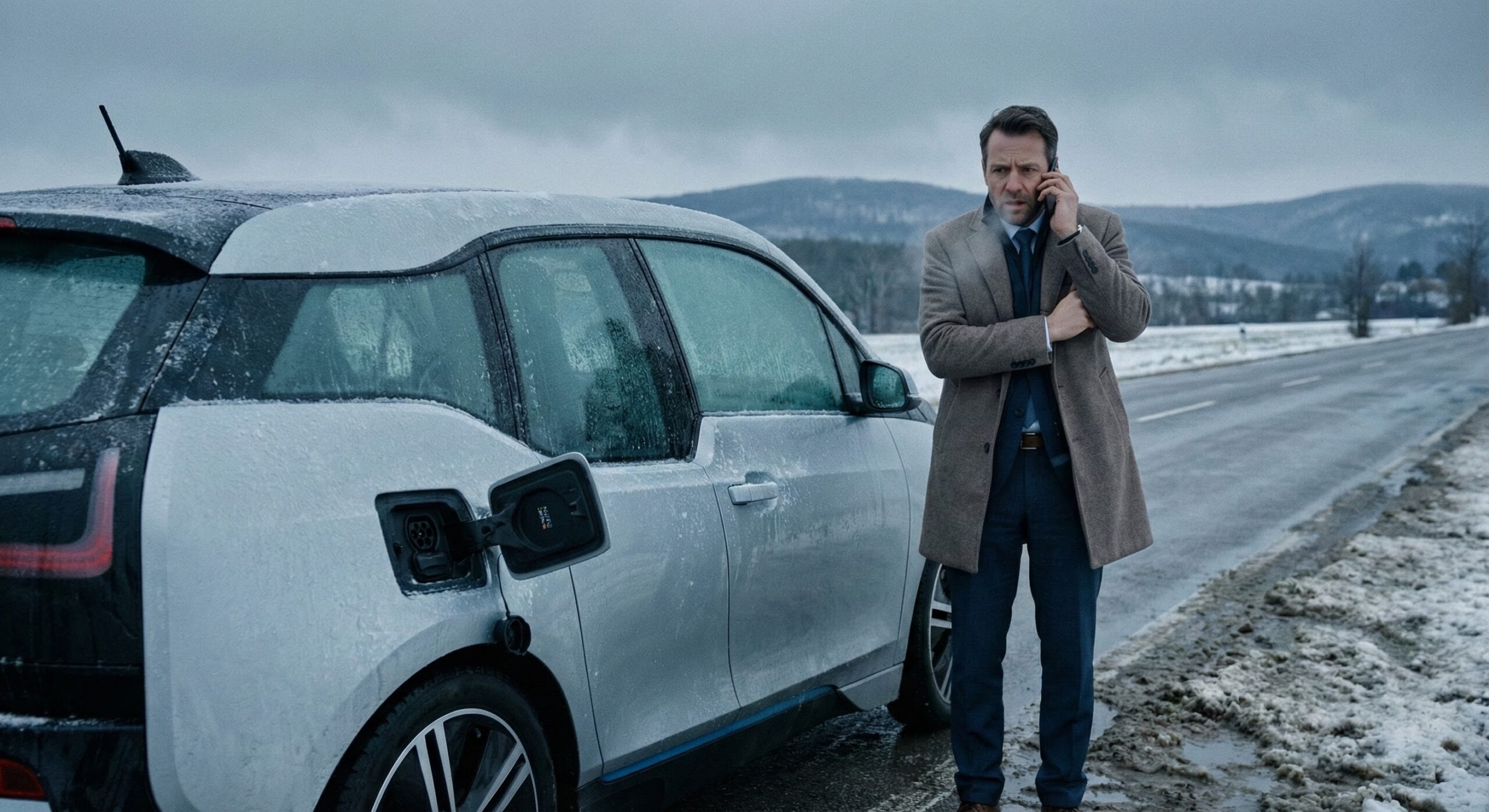
A company bought an electric car for field work. The seller orally promised approximately 250 kilometres in summer and at least 200 in winter. These figures were decisive for the buyer. In reality, the car managed only about 195–205 kilometres at average temperatures and substantially less in freezing conditions, insufficient for its intended use.

Despite a strict written-form clause, the Court upheld the oral promise. It would be contrary to good faith to rely on that clause after making a specific assurance known to be decisive for the other party's purchase. Range therefore became part of the contract, and the buyer could challenge it for an essential mistake under section 871 ABGB.

The contract was consequently cancelled. The buyer receives the price back and returns the car, but must pay usage compensation for kilometres driven. As in other decisions, the Court calculates this linearly using distance driven and expected total vehicle mileage. There was also a dispute about liability for a stone chip in the windscreen.

Tips for buyers

Buyers should also take care before any dispute arises. Brochure range figures are generally ideal values. Cold, heating, lights and individual driving style can reduce actual range considerably, especially in winter. They should not automatically be treated as a binding promise.

Ask specifically about realistic summer and winter ranges and, wherever possible, obtain confirmation, especially if range is crucial for your journeys. If promised figures are later not achieved, legal remedies up to cancellation may be available. However, expect usage compensation for kilometres already driven.

The decision strengthens buyers who rely on specific promises. Good documentation and realistic expectations also help avoid later disputes.

If your electric car appears not to meet what was promised, I will gladly assess whether cancellation or other remedies are available.

Free initial assessment — call now

Contact me for a free, non-binding first conversation. I will explain whether rescission, laesio enormis or other remedies apply and pursue your rights consistently.

As a lawyer, I know the legal options and have successfully represented dozens of car buyers in court. As a trained motor mechanic, I identify technical problems, assess expert reports and uncover hidden weaknesses, giving you a clear and realistic initial assessment.

I look forward to hearing from you.

Mag. Patrick Maydell, LL.M.
Attorney at Law
Neustiftgasse 17/1/9
1070 Vienna
Telephone: +43 1 2954251
office@maydell-law.at

Categories: Vehicle law

Tags: Cancelling an electric car purchase, Vehicles